


For many people, the word “Masons” brings to mind mystery, history, or references from movies like The Da Vinci Code or National Treasure. Yet behind the symbolism and long tradition is something far more grounded—an organization centered on personal growth, community service and brotherhood.
Members of Pahrump Masonic Lodge No. 54 say their goal is simple: to help men become better versions of themselves while supporting the community around them.
During a recent conversation with several lodge leaders—including Secretary Greg Curtin, Senior Deacon Shane Hodge, Treasurer Cameron McRae, and Chaplain Kent Storer—the group shared insights into the history, values and mission of Freemasonry, as well as what the organization means to them personally and how it continues to serve the Pahrump community.
Freemasonry itself is one of the oldest fraternal organizations in the world. While its traditions stretch back centuries, its purpose has remained consistent: to promote moral development, brotherhood, charity and the pursuit of truth. According to Curtin, those principles form the foundation of everything the lodge does.
“Freemasonry is dedicated to the moral development of brotherhood, charity and the pursuit of truth,” Curtin explained. “We use symbolism drawn from the tools of the traditional stonemasons of medieval times to teach those lessons. The idea is to make good men better.”
The symbolism comes from the craft of stonemasonry, which historically required apprentices to learn their trade through experience and mentorship. That structure still exists within modern Freemasonry through three degrees: Entered Apprentice, Fellow Craft and Master Mason. Curtin compares the process to learning a trade.
“When someone first joins, they’re like an apprentice—they’re learning the craft,” he said. “Then they move on to Fellow Craft, which is more like a journeyman, where they begin applying what they’ve learned. Finally, they become a Master Mason, which represents completing the learning process.”
While the teachings draw inspiration from religious and philosophical traditions, lodge members emphasize that Freemasonry is not itself a religion. Members must believe in a higher power, but they may come from any faith background.
“We don’t ask what denomination someone is,” Curtin said. “But you do have to believe in a supreme being. Freemasonry doesn’t replace religion—it complements the moral teachings that people already follow.”
The Pahrump lodge itself has been part of the community for nearly four decades. The group first received permission to organize in July 1985, when a group of at least 15 Freemasons petitioned the Grand Lodge of Nevada for a dispensation to form a lodge in Pahrump. After successfully completing the required work, the organization officially received its charter on November 11, 1985, becoming Pahrump Masonic Lodge No. 54.
In those early years, the lodge did not even have its own building. Members met wherever they could find space, including the Pahrump Community Center and even private garages.
“We were nomads for a long time,” McRae said. “We didn’t have this building until 2001. But the lodge isn’t the building—it’s the people.”
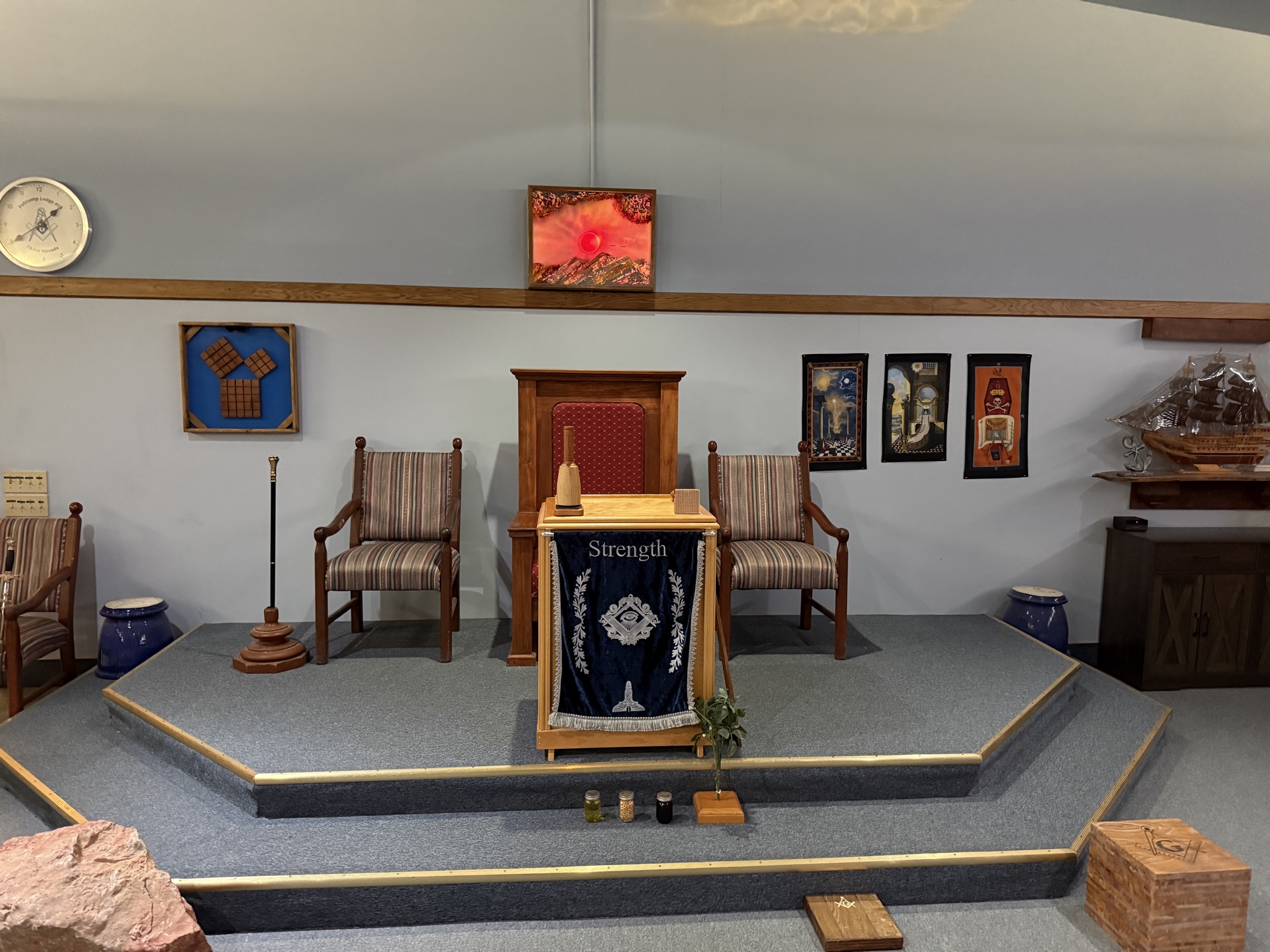
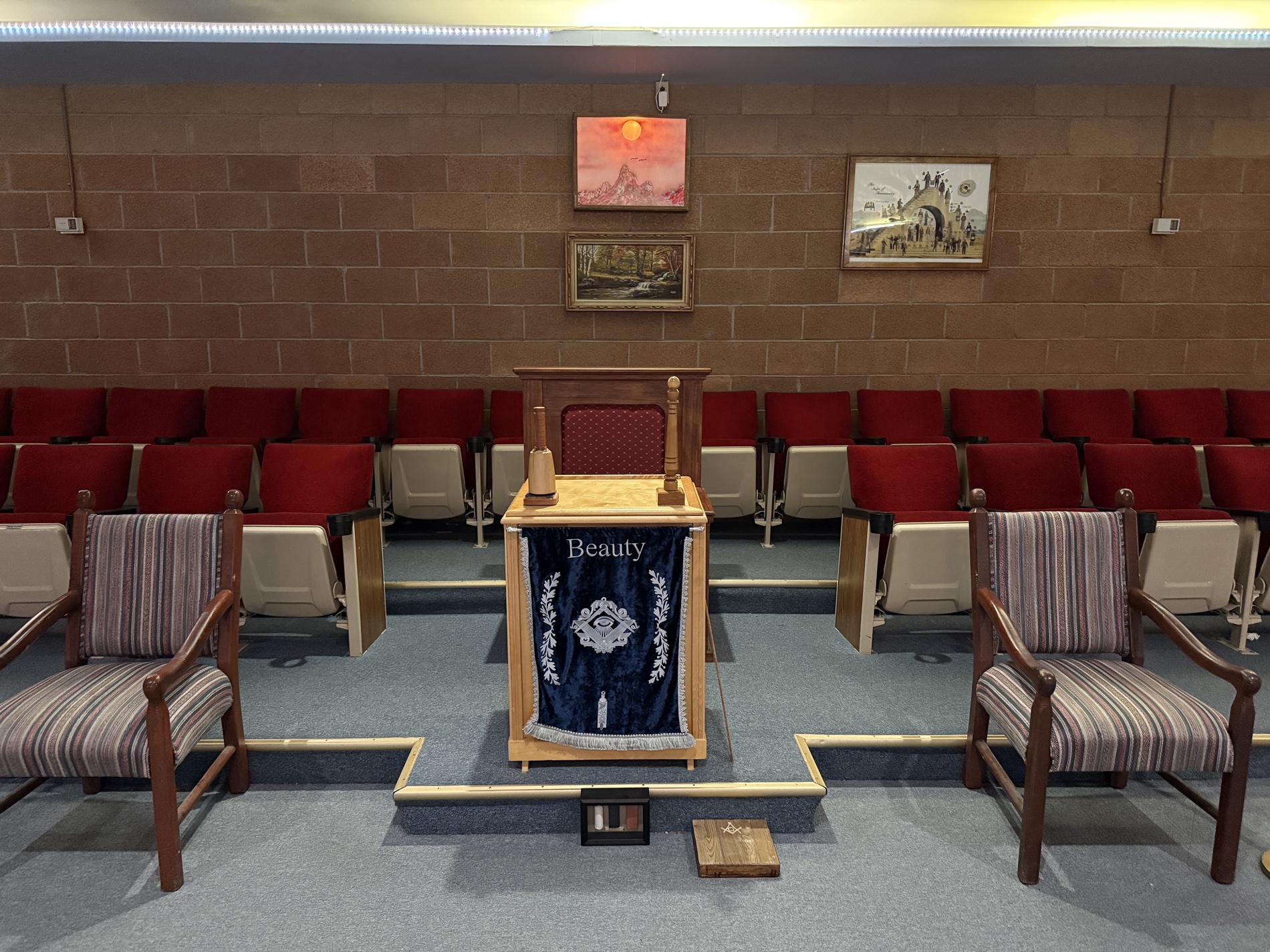
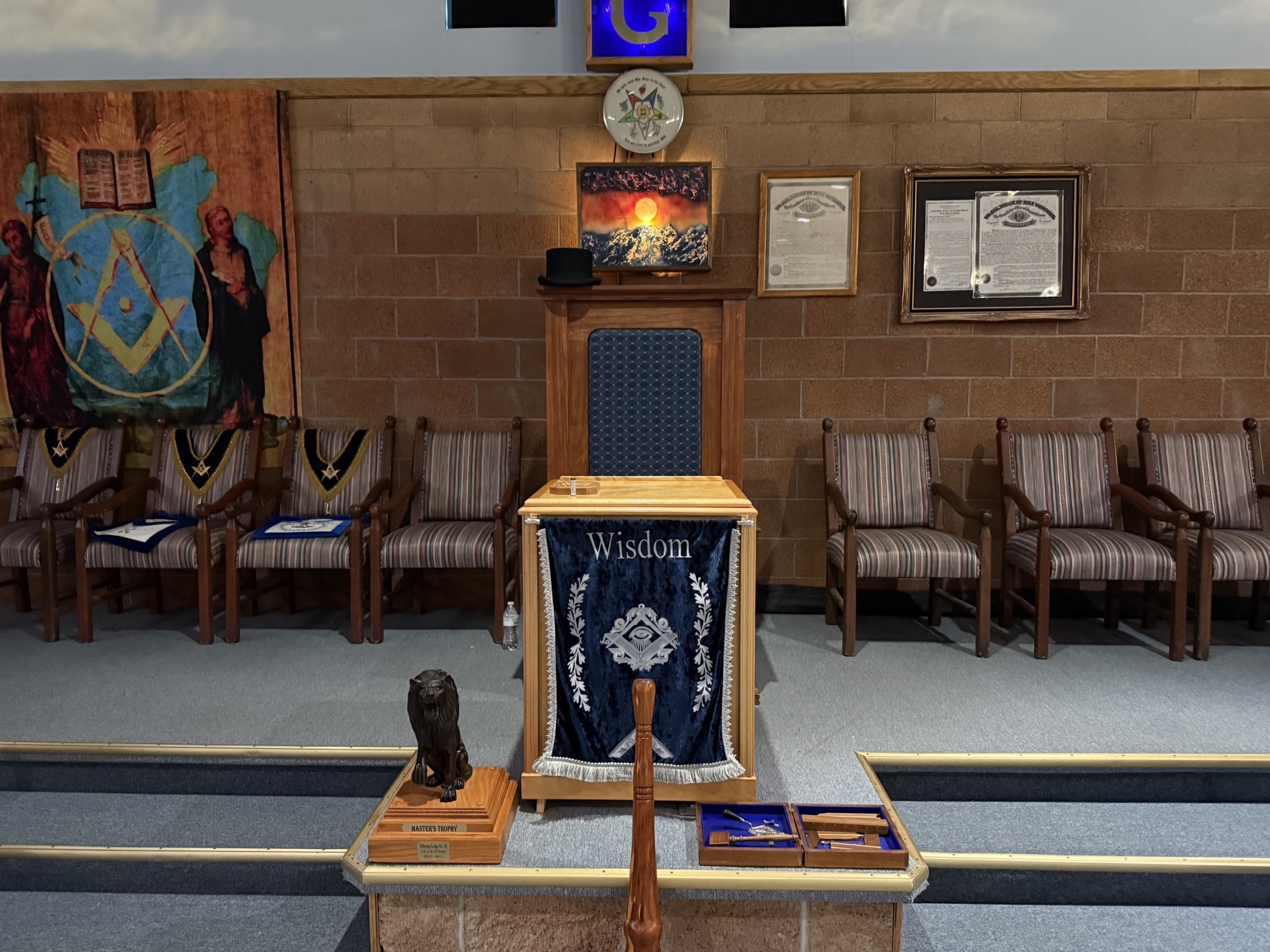
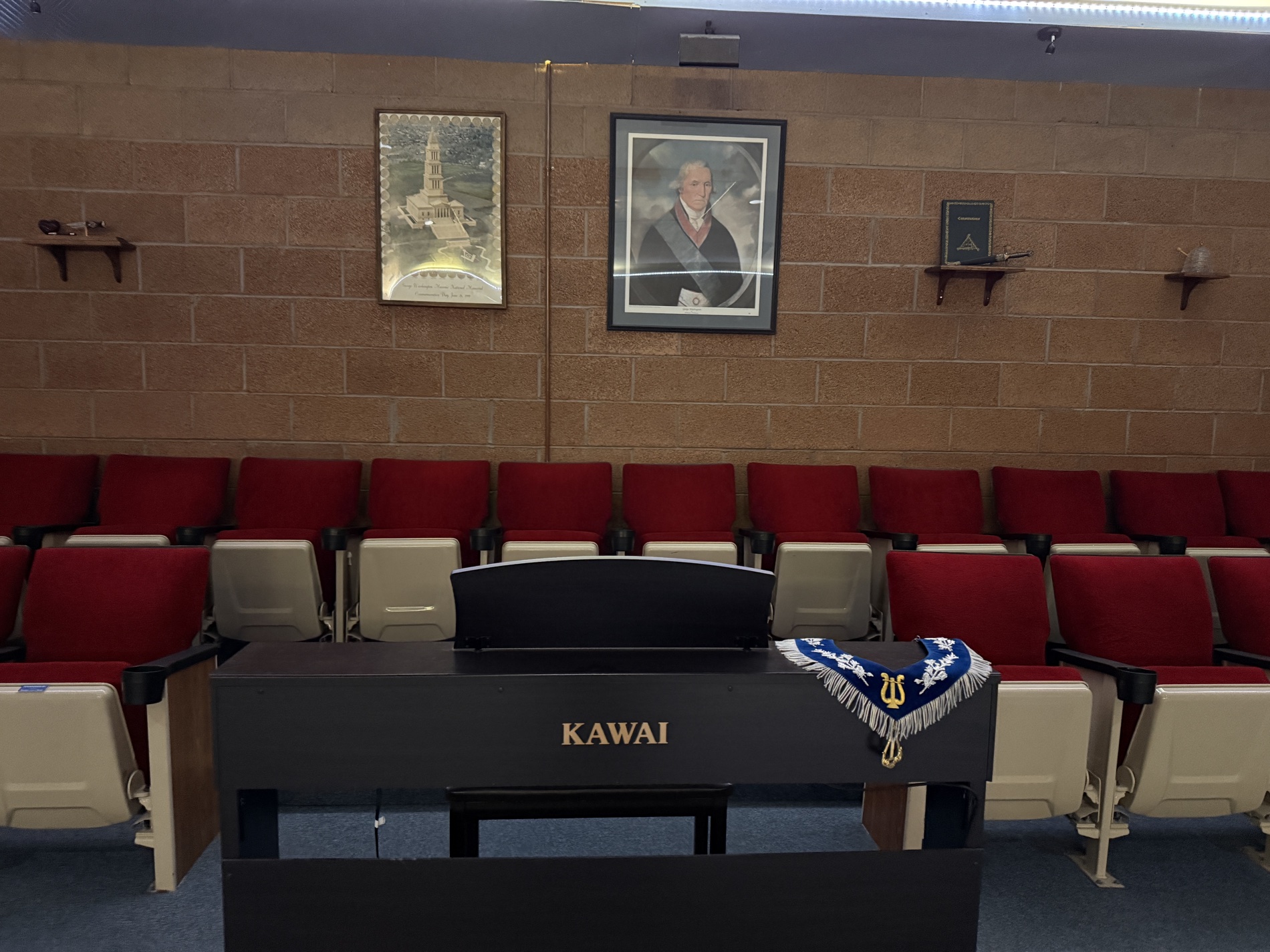
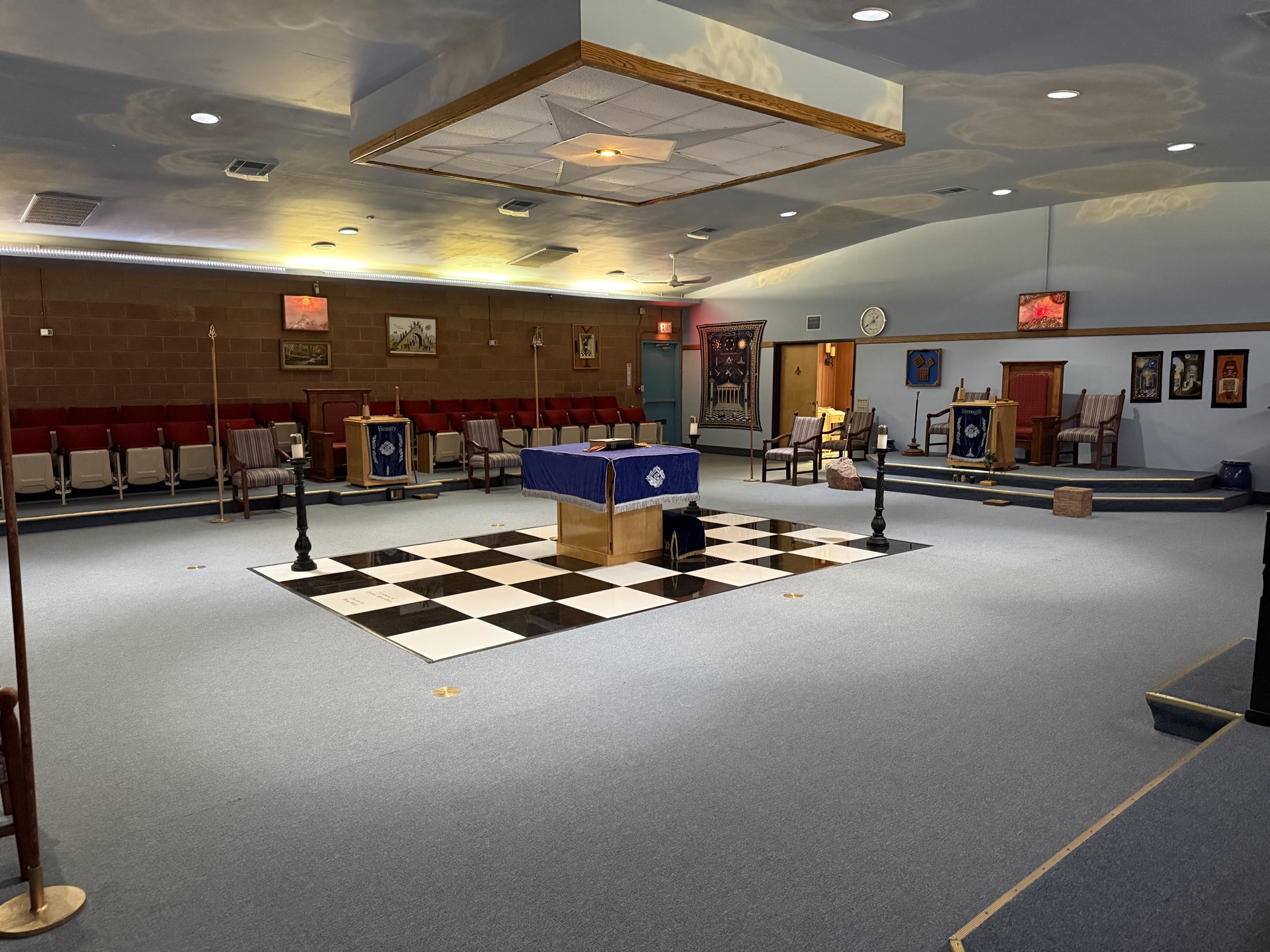
Today the lodge has approximately 86 members. Their backgrounds reflect the diversity of the community itself. Members include doctors, law enforcement officers, military veterans, educators, carpenters, retirees and professionals across multiple industries.
“Realistically, it’s all walks of life,” Curtin said. “You’ll find people from every profession and background.”
Within the lodge, leadership follows a structure similar to many organizations, with officers elected annually by the membership. The Worshipful Master serves as the presiding officer, similar to a president. Supporting him are the Senior Warden and Junior Warden, who help oversee lodge activities and member welfare.
Despite the formal structure, members stress that status outside the lodge holds no weight inside it.
“One of our mottos is that we meet on the level,” Hodge said. “That means we’re all equal. Someone could be the president of the United States, but when they walk into the lodge and put on the apron, they’re equal with everyone else.”
Much of Freemasonry’s philosophy centers on the idea of personal reflection and self-improvement. Hodge described the teachings as a kind of internal journey.
“We use symbols to help men reflect and understand themselves,” Storer said. “The goal is to chip away the things that don’t belong—things that keep you from being a better father, a better husband, a better member of the community.”
Each member’s path through Freemasonry is unique, shaped by their life experiences.
“Everybody’s journey is different,” McRae said. “Something that someone else has experienced may help you with something you’re going through. It’s about sharing those experiences and learning from them.”
For Storer, Freemasonry serves almost like a guidebook for life.
“It helped me understand how to deal with people better,” he said. “I spent most of my career as a manager, and I had a bad habit of bringing that management style home with me. Masonry helped me step back and think about things differently. It gives you perspective.”
Beyond personal development, Freemasonry places a strong emphasis on charity and service. The lodge supports a variety of causes, particularly those benefiting youth and education. Members sponsor scholarships that are open not only to graduating high school students but also to adults pursuing higher education or trade schools.
“Our scholarship isn’t limited to traditional college,” Hodge said. “A lot of trade school students can’t get financial aid, so we try to help them pursue those careers.”
The broader Masonic community also supports a range of philanthropic efforts. Organizations connected to Freemasonry include the Shriners, known worldwide for their children’s hospitals. Other affiliated bodies contribute to speech therapy programs, eye research and medical advancements through institutions like the Masonic Medical Research Institute.
According to Curtin, that long history of philanthropy has quietly influenced many aspects of modern society.
“Freemasonry has funded a lot of research and medical advancements over the years,” he said. “A lot of people don’t realize how much of that work traces back to Masonic philanthropy.”
Despite its long legacy, misconceptions about Freemasonry still persist.
“A lot of people think we’re some kind of secret society or cult trying to take over the world,” Curtin joked. “We always say we’re taking over the world one breakfast at a time.”
In reality, lodge activities are far more down-to-earth. One of the most popular community events hosted by the lodge is its monthly public breakfast, held on the third Saturday of each month.
“We serve breakfast starting at seven dollars, and it’s basically all you can eat,” Curtin said. “Anyone in the community is welcome.”
The lodge also hosts barbecues, charity dinners, appreciation events for educators and first responders, and community gatherings like “Cabs and Colors,” a public wine-and-paint evening. Members also organize an annual Fourth of July barbecue and plan to participate in local events like the Fall Festival with a booth offering cold water, face painting for children and a raffle fundraiser.
“We want to get our presence back out there in the community,” McRae said. “It’s about connecting with people and letting them know we’re here.”
Freemasonry can also extend to the entire family. While the Blue Lodge is specifically for men, affiliated organizations exist for women and youth. The Order of the Eastern Star welcomes women, while young people can participate in groups such as DeMolay for boys and the Rainbow Girls or Job’s Daughters for girls.
For many members, that sense of extended family is one of the most meaningful aspects of the fraternity.
“When someone joins, they gain a brotherhood,” Curtin said. “If you need help, people show up.”
He recalled a personal experience where fellow Masons rallied to help him move houses after he casually mentioned it at a lodge meeting.
“I didn’t even have to rent a truck,” he said with a laugh. “People just came out of the woodwork with trailers and trucks. That’s the kind of brotherhood you find here.”
For Hodge, the lodge represents a place where his children feel safe and connected.
“My kids come here with me,” he said. “They have free run of the place. They know this is family. And long after I’m gone, they’ll still have that family.”
Storer credits the example of a Mason from his childhood with shaping his life.
“He lived next door to me and was my godfather,” Storer said. “He was a Mason for 70 years and the finest man I ever knew. He taught me how to be a better husband and father. That’s the best example of what a Mason should be.”
Looking ahead, lodge leaders say their focus is on strengthening the organization’s future and increasing its visibility within the community. The lodge has developed a five-year strategic plan aimed at improving outreach, supporting charitable programs and maintaining the historic building that serves as its home.
Part of that effort involves encouraging younger members to join and ensuring the organization remains relevant to new generations.
“The principles of Masonry—friendship, brotherly love and meeting people as equals—are needed now more than ever,” Hodge said. “In today’s world, people are looking for connection and guidance.”
Men interested in learning more about Freemasonry can visit nvmasons.org or the lodge’s website at pahrumpmasons54.org, where they can submit an inquiry form and connect with local members. The lodge also maintains a Facebook page under Pahrump Masonic Lodge 54.
Those curious about the organization can also stop by one of the lodge’s public breakfasts or dinners.
As Curtin explained, the path into Freemasonry has always been simple.
“To become a Mason,” he said, “you just have to ask.”


1 Comment
On behalf of Pahrump Lodge No.54 and all Masons. Thank you for taking the time to meet with us and for writing such a meaningful article, and capturing the true meaning of what we stand for.