


In the wide-open landscapes of Southern Nevada, wild mustangs and burros have roamed freely for generations, symbols of the rugged beauty and spirit of the American West. But today, their survival is increasingly threatened—not only by urban development, highways, and shrinking habitat, but also by federal policy shifts and well-intentioned but harmful human interference. In Pahrump, one nonprofit is leading the charge to protect these iconic animals before it’s too late.
Southwestern Wilds, founded by Victoria Balint, is a grassroots organization that has grown into a multi-state operation with a clear mission: to rescue, rehabilitate, and rewild wild horses and burros, while educating the public and building long-term solutions through partnerships with local agencies. “This is a ticking time bomb,” said Balint, who serves as the organization’s president. “Protections have been stripped away, and if we don’t act fast, these beautiful animals are all going to be gone.”
Balint’s journey began two years ago, after retiring with her husband. At the time, several herds—including one led by a charismatic mustang named Fred—had been rounded up by the Bureau of Land Management (BLM). With euthanasia pending under BLM guidelines, Balint stepped in. “They were going to put Fred and Rosie down, and probably more. I couldn’t let that happen,” she said. “So my husband and I put together a team and got to work. It was essentially a covert rescue.”
What followed was a community-powered effort to find forever homes, provide medical care, and save dozens of sick foals who might have otherwise died. Those efforts evolved into Southwestern Wilds, a fully registered 501(c)(3) nonprofit that now works on everything from on-the-ground rescues to policy advocacy and public education.
Balint’s daughter, Vanessa Fernandez, serves as vice president and brings a strategic focus to their work. “We’re solution-based,” Fernandez said. “Our goal is to build relationships with the very agencies that manage these animals—BLM, the Forest Service, the Department of Forestry—so we can be part of the solution. We want to create an alternative pipeline. One that leads not to slaughter but to sanctuaries.”
That vision includes a future Pahrump area sanctuary—an expansive wildland habitat where mustangs and burros can live freely and safely. The exact location is being kept confidential for security reasons, but the team promises it won’t be like living in captivity. “They’ll live like they’re in the wild,” said Balint. “Big, open space, no crowds, no unsafe feeding. Just freedom.”
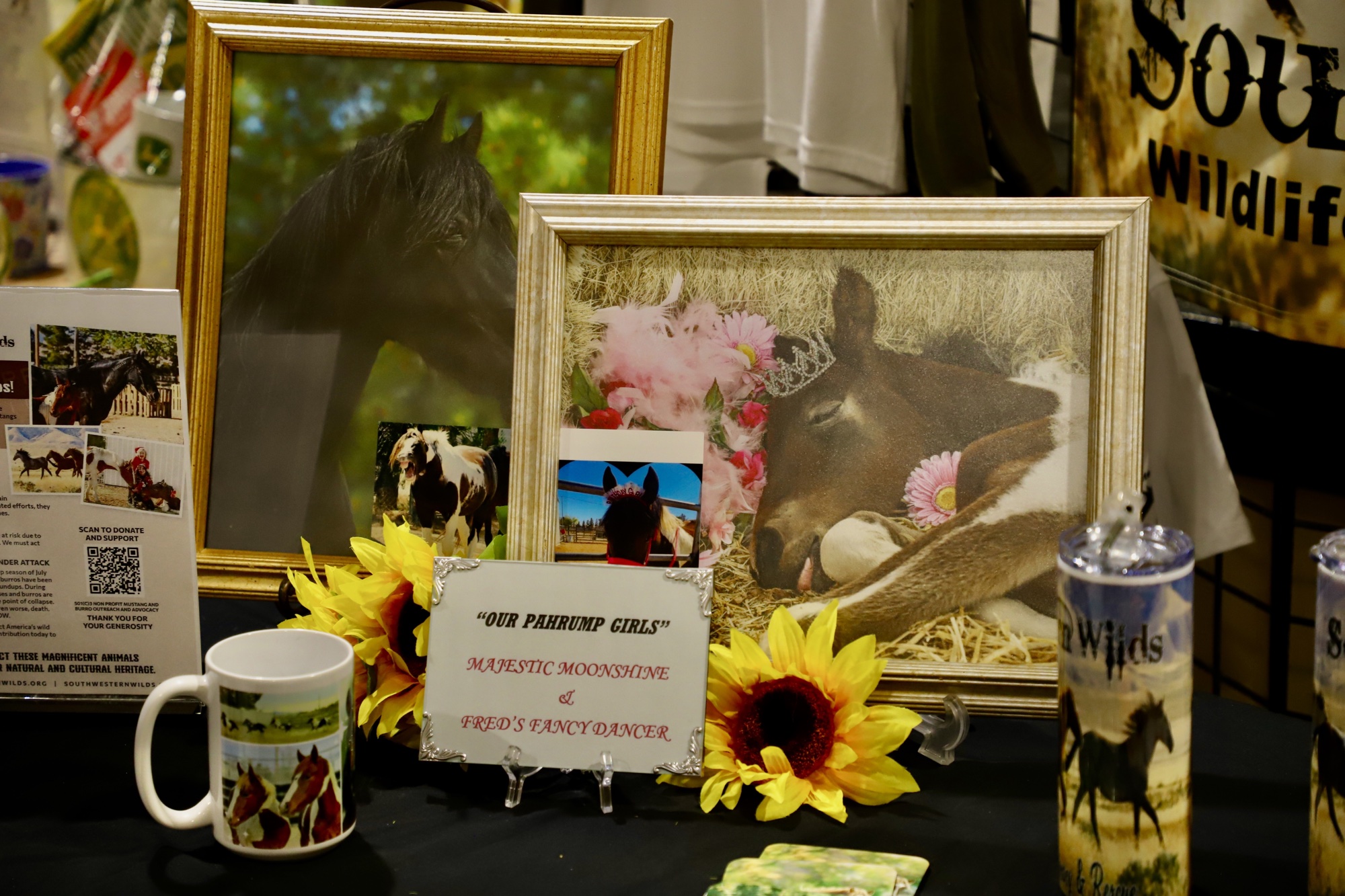
The sanctuary will be designed to rewild the animals—training them just enough to receive medical care but otherwise letting them live as naturally as possible. Some horses, like Fred’s Fancy Dancer, Fred’s last filly, and her Mom, Moonshine, are being trained as public ambassadors who will represent the mission at events, parades, and other venues. Southwestern Wilds has their eye on competing in the Mustang Challenge at the South Point as well. “The American mustang is one of the oldest and most intelligent breeds in this country,” Fernandez said. “They’re sure-footed, thoughtful, and incredibly smart. We want people to see that.”
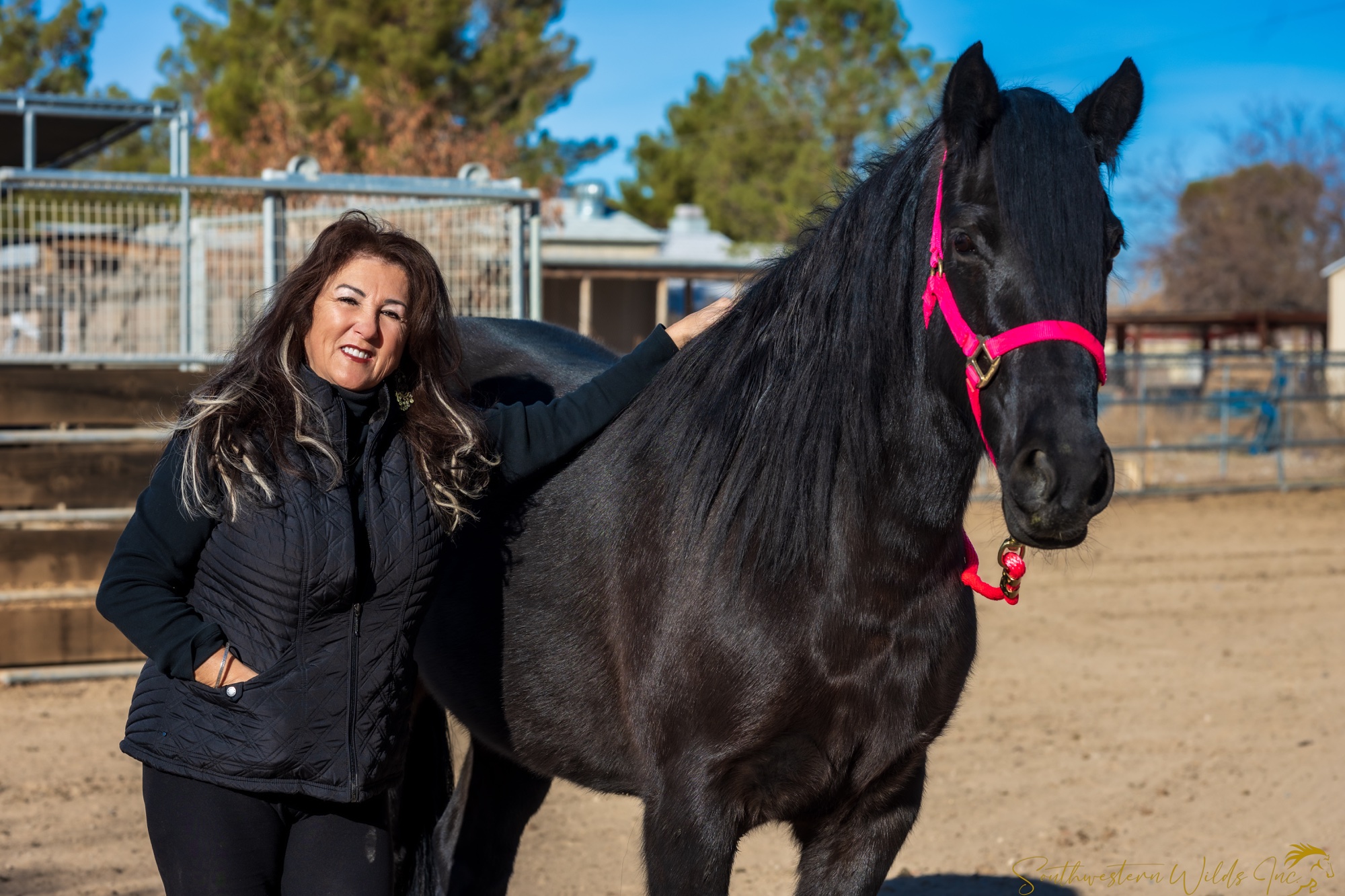
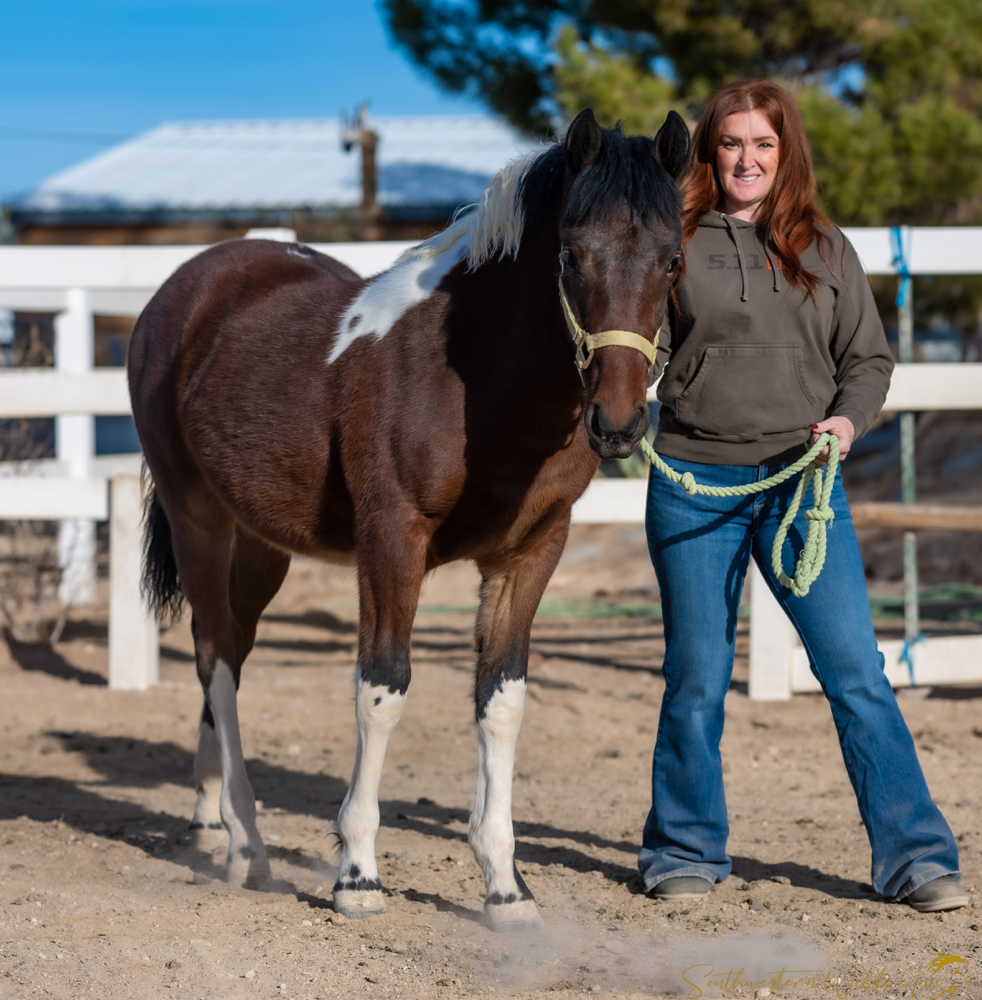
The organization also works closely with other sanctuaries across state lines. When the Mount Charleston herd was recently rounded up, Southwestern Wilds collaborated with the United States Forest Service and other nonprofits to ensure the horses were relocated safely. “No one group should shoulder all of this,” said Balint. “It has to be a partnership—for the animals.”
Much of their time is spent dealing with the consequences of human behavior—particularly feeding. Despite signs and warnings, tourists and locals continue to offer carrots, crab apples, and other food to wild herds, creating dependence and drawing them dangerously close to roads. “We’re seeing obesity and colic in horses that should be thriving,” Fernandez explained. “Zamora, a young foal, nearly died after eating a pile of rotten crab apples someone dumped. That’s what happens when people interfere.”
The tragedy of Valor, a mustang stallion who was struck by a car in front of Albertsons and had to be euthanized due to his injuries, haunts the team. “The woman who hit him didn’t know what to do,” Fernandez said. “She, like so many others, are unaware of the process when an animal strike happens. By the time anyone knew, it was too late. But we got there. We were there. And it’s something we never want to see again.”
To reduce these incidents, Southwestern Wilds pushed for the installation of official signage throughout Nye County. Thanks to consistent pressure and personal advocacy from both Balint and Reneé Jones, a volunteer on the board, the Board of County Commissioners approved signs that include enforceable NRS codes—specifically NRS 569.040—making it clear that feeding wild animals is a crime, not a courtesy. “It carries up to a $2,000 fine,” said Jones. “People think it’s just a suggestion. It’s not. It’s the law.”
Still, enforcement is only one piece of the puzzle. Education remains at the heart of the organization’s mission. Through their highly active Facebook page, the team posts daily updates, safety alerts, and guidance for residents who want to help without harming. “Sometimes the best thing you can do is call us,” said Fernandez. “You see a burro at mile marker 26? Let us know. We’ll coordinate with NDOT. We’ll get someone out there.”
Volunteers wear Southwestern Wilds vests and carry flashlights and flags to patrol high-risk roadways at dusk, often standing between herds and oncoming traffic. They also monitor key areas like the Calvada Eye, where mustangs like Spirit and Stardust have become familiar local figures—and unfortunately, targets for selfies, feeding, and even attempted petting. “They’re not pets,” said Balint. “They’re wild animals. You wouldn’t put your baby on a bobcat, would you?” Jones added.
At the heart of it all is a simple plea: enjoy the beauty, but don’t interfere. “Watch the beauty. Don’t touch it,” Jones said.
The group recommends keeping at least 50 feet distance from the animals. “Every time someone lays on the grass near a foal or tries to take a photo up close, they’re increasing the risk that animal will be rounded up or killed,” Jones said. “We’ve tried to be polite. We’ve tried to educate. But at some point, we need accountability.”
The organization is now fundraising for its sanctuary, offering tiered sponsorship packages, donation incentives, and the promise of something truly unique: a future destination where people can observe and appreciate mustangs and burros the right way. “Imagine having family visit from out of town and instead of going to Vegas, you say, ‘Let’s go to the Southwestern Wilds sanctuary,’” said Fernandez. “You’ll be able to learn, observe, maybe even feed them—but only what’s safe, only what we provide.”
As the group pushes toward their fundraising goals, they’re rolling out opportunities for the public to get involved. To promote donations, Southwestern Wilds has a large selection of merchandise to help promote the cause. “Everything costs money—fencing, hay, water, land—but we’re negotiating the best prices we can,” Balint said. “We don’t want people to just love the horses. We need them to act.”
In addition to their boots-on-the-ground work, Southwestern Wilds is planning educational outreach efforts, including school programs and community events like “Crafting for a Cause,” a booth at Fall Festival and their upcoming charity golf tournament in October. “We want people to understand how to coexist with these animals. To see their value. To preserve what makes this region so special,” Balint said.
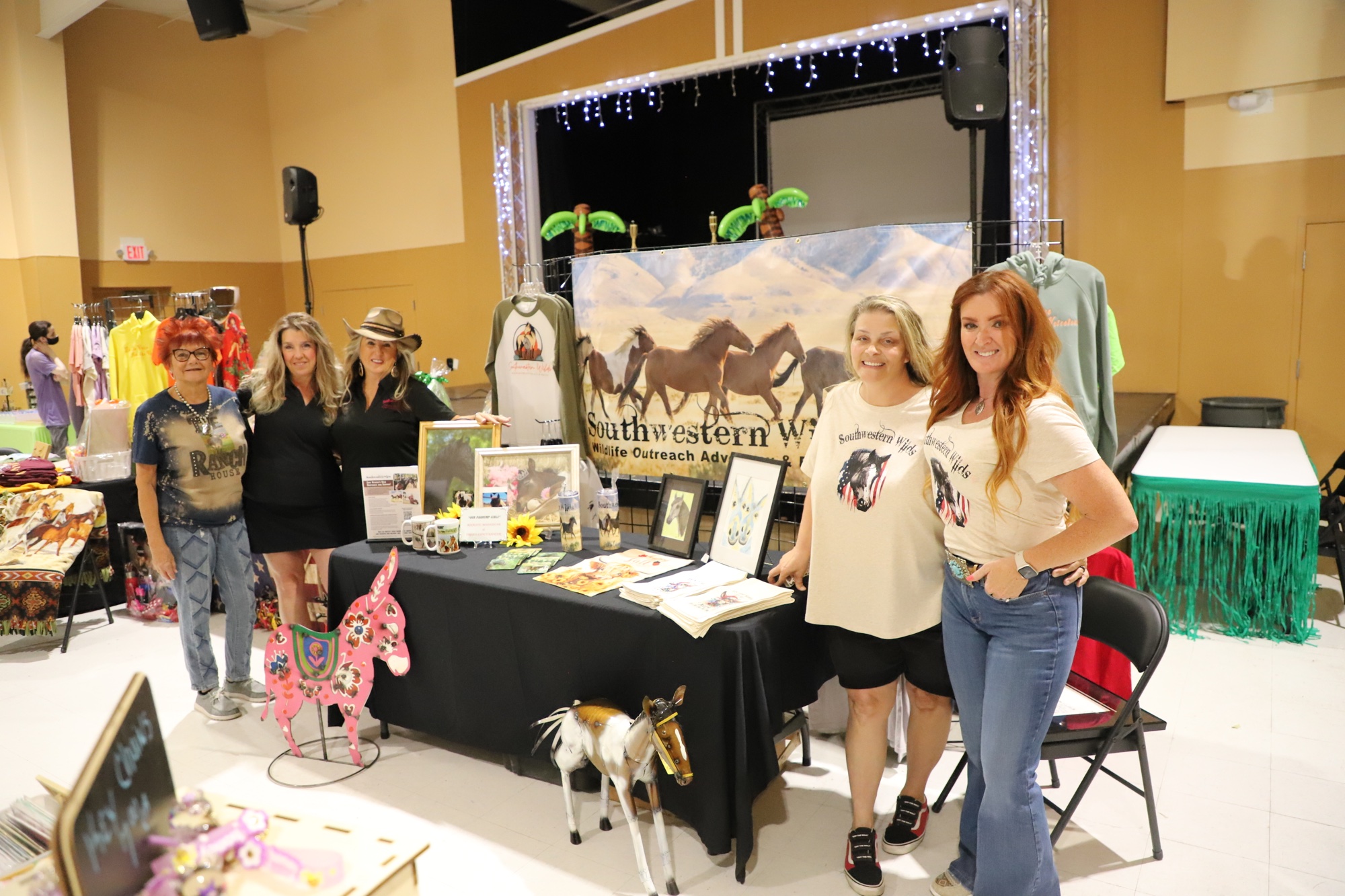
As a 501(c)(3), Southwestern Wilds relies on donations, corporate sponsorships, and community involvement. And while money is critical—fencing, water, land, hay, and transport all cost thousands—Fernandez stressed that support doesn’t have to be financial. “Just sharing our page, reporting what you see, or even volunteering to monitor the roads can help save lives,” she said.
For the Executive Board, which consists of Balint, Fernandez, and Christine McCarty, as well as their growing team of dedicated volunteers, it’s not about glory or ownership—it’s about doing what’s right. “Nobody owns these horses,” Balint said. “Not us. Not BLM. But we all share a responsibility to protect them.”
To learn more, donate, or get involved, visit www.southwesternwilds.org or follow them on Facebook.


1 Comment
Thank you so much for this extremely well written article. It was a pleasure for us to do this interview and knowing that you’d get the facts and compassion behind what we do! Thank you to Amy and the community for such amazing support in our plight at Southwestern Wilds!