


In a community-wide effort rooted in awareness, compassion, and prevention, Soroptimist Pahrump Valley has launched a Human Trafficking Awareness Campaign that meets people where they already are—inside local coffee shops and cafés across Pahrump. By pairing everyday routines with critical information, the campaign aims to spark conversations, increase understanding, and remind residents that human trafficking is not a distant issue, but one that can exist quietly in any town, including small rural communities.
Leading this initiative is Elaine Cassell, the Human Trafficking Awareness Chair for Soroptimist Pahrump Valley. While Cassell also serves as District 6 Director for the region, she emphasized that this specific role within her local club is especially personal. Human trafficking awareness, she explained, is something she holds deep passion for because of how often it goes unseen. “You hear about it, but you don’t see it directly,” Cassell said, noting that much of the danger lies in how easily it stays under the radar. Many people believe trafficking only happens in large cities or foreign countries, but real-world experiences have proven otherwise.
Cassell recalled participating in regional training in Hawthorne, a town even smaller than Pahrump, where authorities were actively dealing with an incident involving a trafficker targeting high school girls. That experience underscored a harsh reality: population size does not provide immunity. Traffickers look for vulnerability, not geography.
One of the most persistent misconceptions Cassell works to dispel is the idea that human trafficking looks like dramatic scenes portrayed in movies. In reality, trafficking often begins quietly and strategically. Victims are frequently individuals who feel isolated, excluded, or disconnected—particularly youth. Cassell pointed to connections between bullying and vulnerability, explaining that young people who feel pushed away from family or peers may be more easily groomed by someone offering attention, validation, or a sense of belonging. That grooming can gradually evolve into manipulation and exploitation.
Human trafficking, Cassell explained, takes many forms. There is labor trafficking, where individuals are forced into servitude or exploitative work conditions. In some cases, people seen selling items on street corners or in parking lots may not be operating independently at all, but instead have been dropped off, monitored, and forced to turn over their earnings. There is also sex trafficking, where individuals are exploited through brothels or coerced into selling themselves, often repeatedly.
Globally, human trafficking is the second-largest criminal enterprise. Unlike drugs, which can only be sold once, a human being can be sold many times in a single day. Because of this, experts believe it may eventually surpass drug trafficking altogether. Cassell noted that the most at-risk age group is between 11 and 18 years old, a statistic that highlights just how critical early awareness and education truly are.
Trafficking does not always involve kidnapping or crossing international borders. Some victims are moved across state lines to meet demand during large events, such as sporting events or conventions. Others never leave their communities. Some are manipulated through false romantic relationships, convinced they are loved and protected, only to be slowly coerced into exploitation. In some of the most heartbreaking cases, trafficking is carried out by someone the victim knows and trusts, including family members. Cassell shared that a speaker at last year’s Soroptimist luncheon spoke openly about being trafficked by her own husband, a powerful reminder that trafficking can hide behind familiar faces.
With these realities in mind, Soroptimist Pahrump Valley sought a way to place awareness directly into daily life. That is where the local coffee shops came in.
The campaign began with Our Place, which was the first business to say yes when approached last year. From there, the effort expanded to include Java Junkies, Cafe Chilli, Black Cow Coffee, and Living Free Cafe. Together, these locally owned businesses are helping distribute specially designed coffee sleeves throughout January.
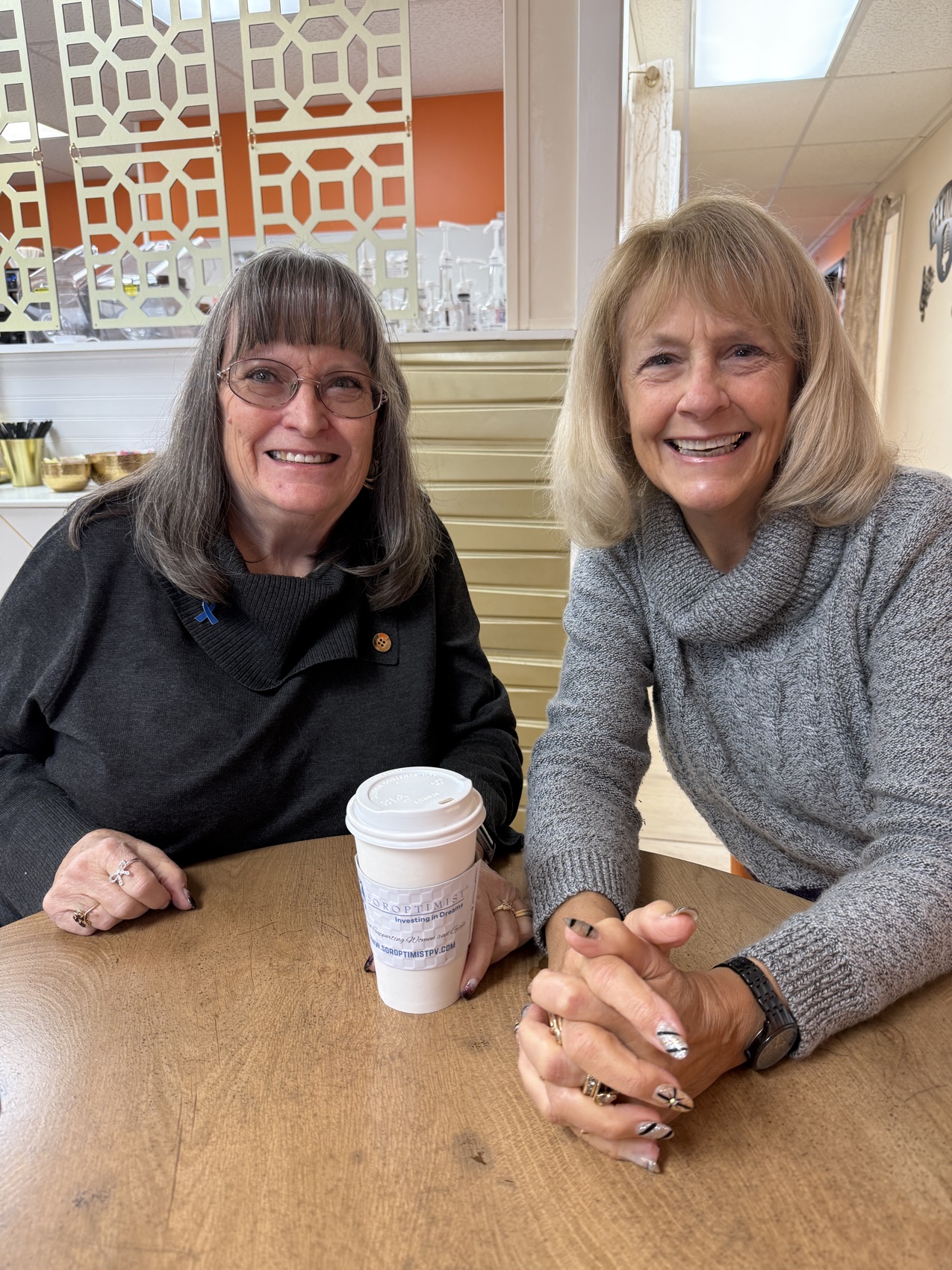
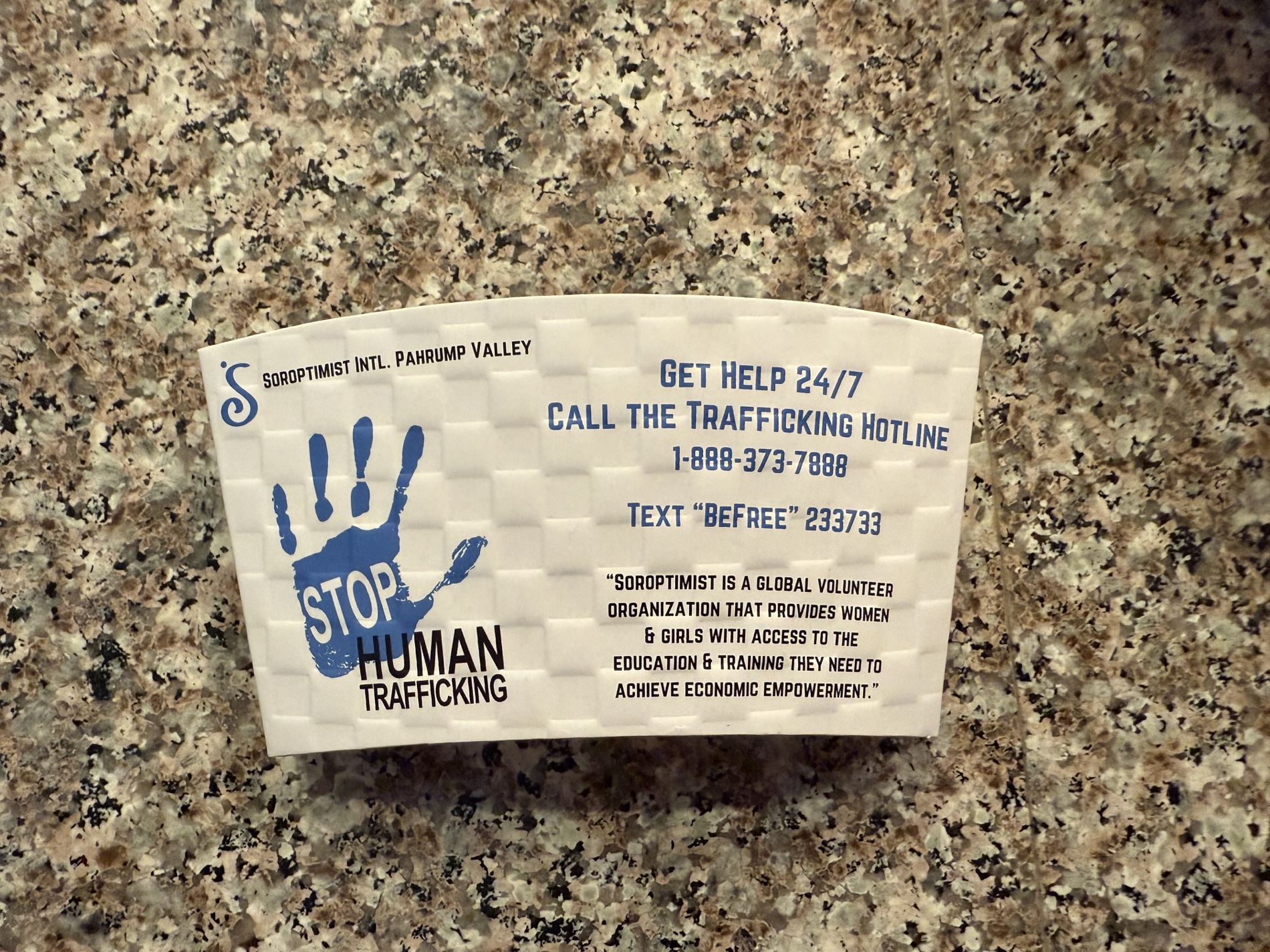
The sleeves serve a dual purpose. One side highlights Soroptimist Pahrump Valley and the work the club does in the community. The other features the Stop Human Trafficking logo along with the national helpline number, 1-888-373-7888. The goal is simple but powerful: place critical information directly into someone’s hands, create a moment of pause, and encourage awareness.
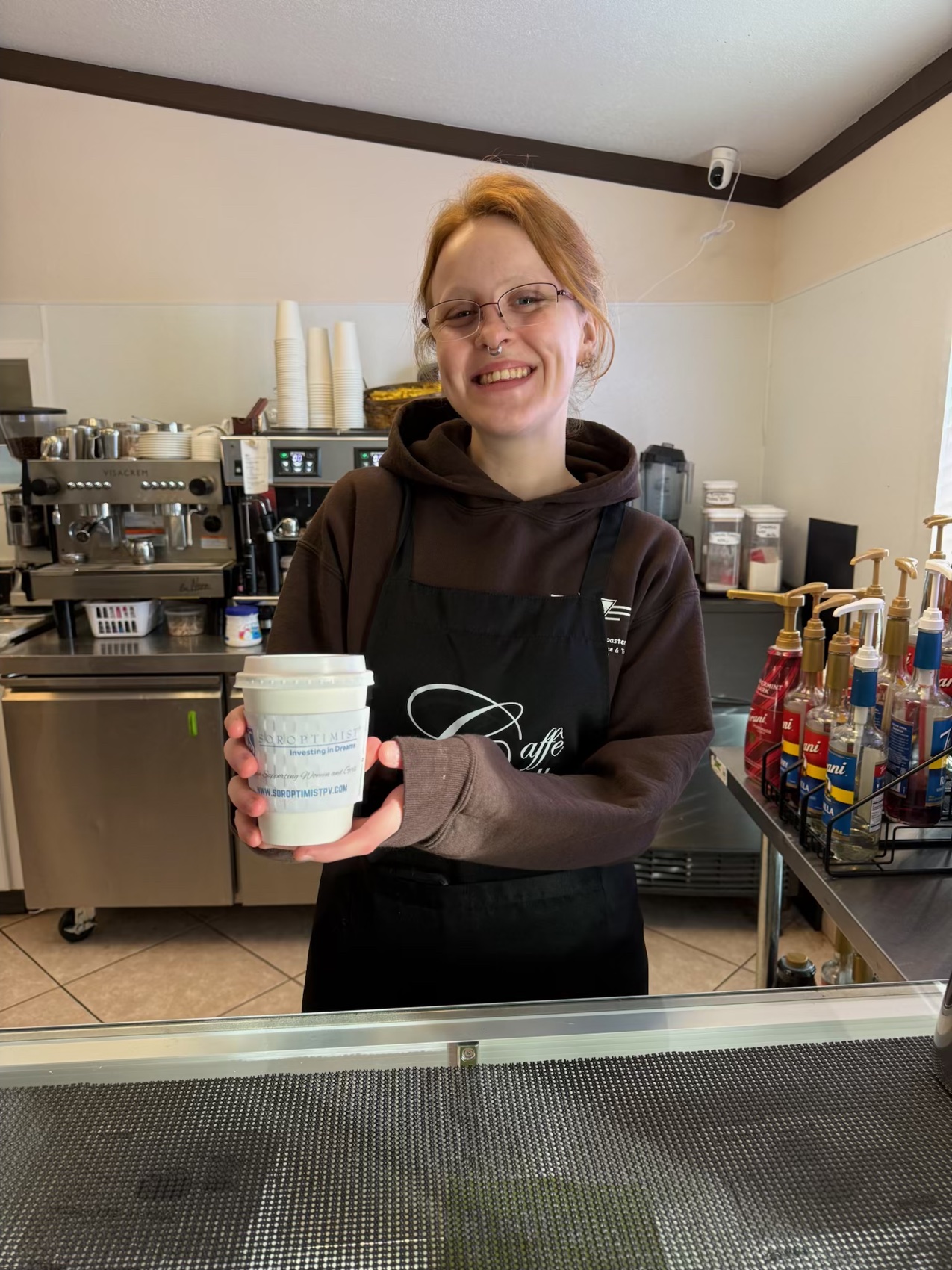
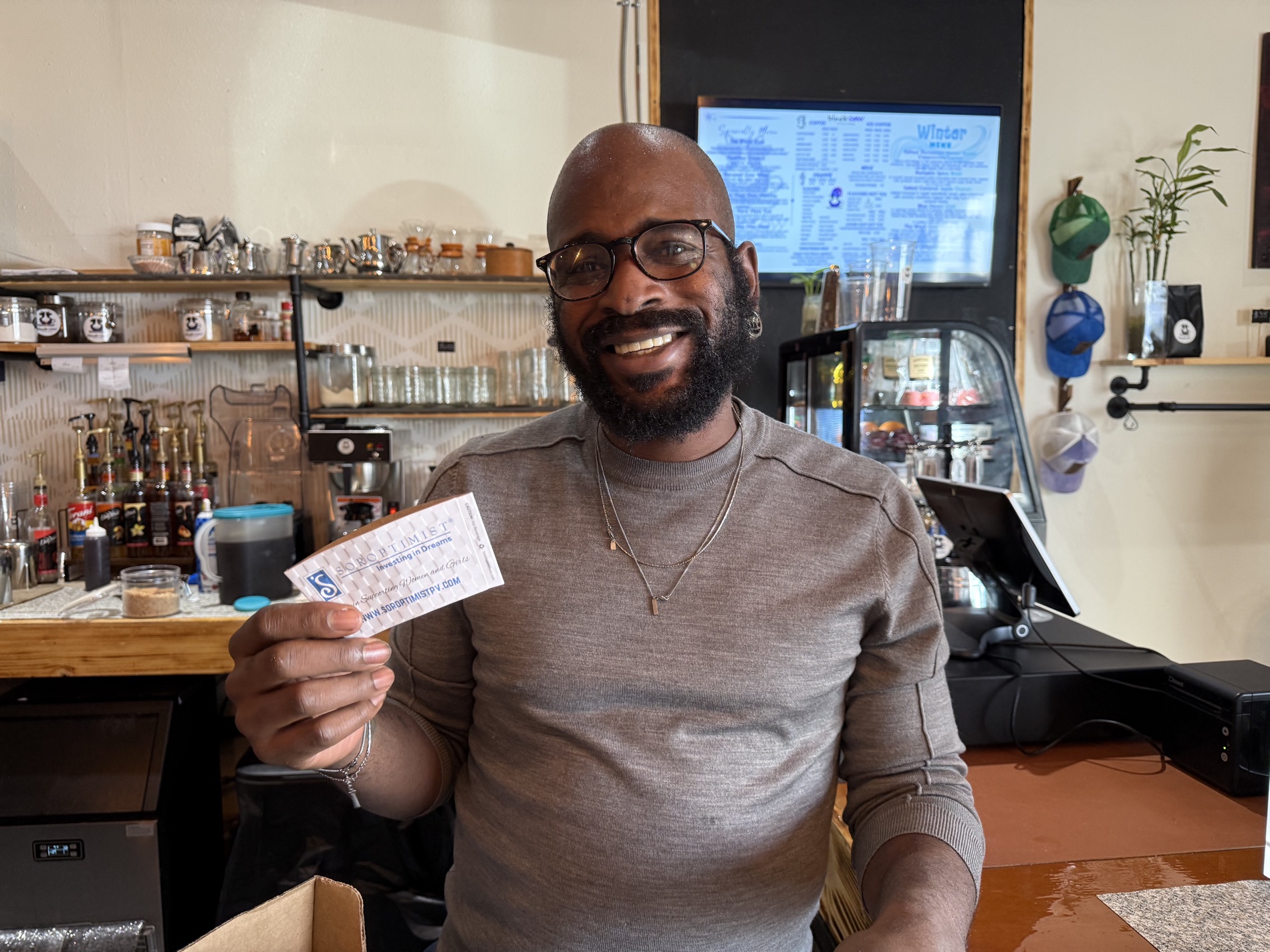
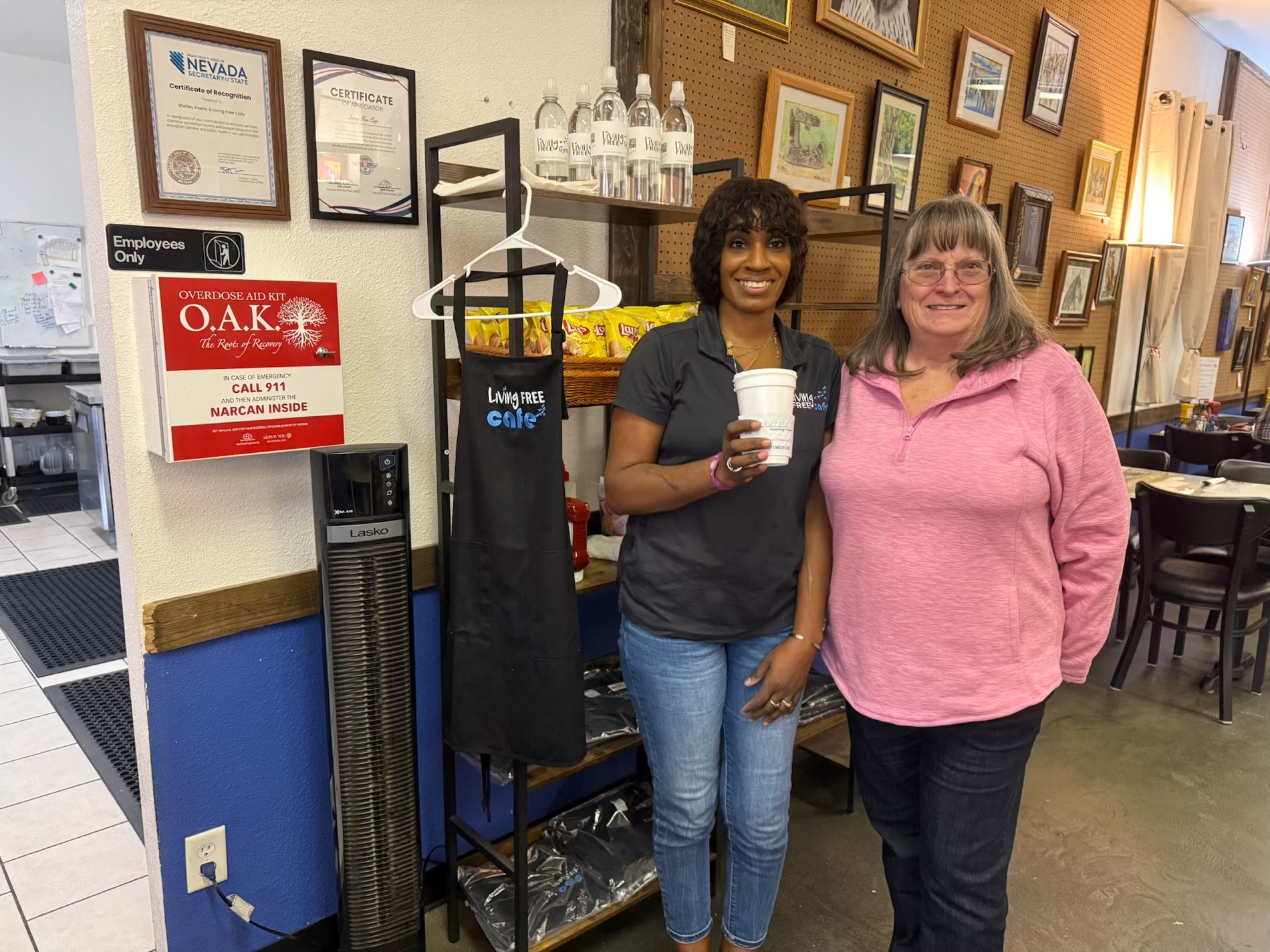
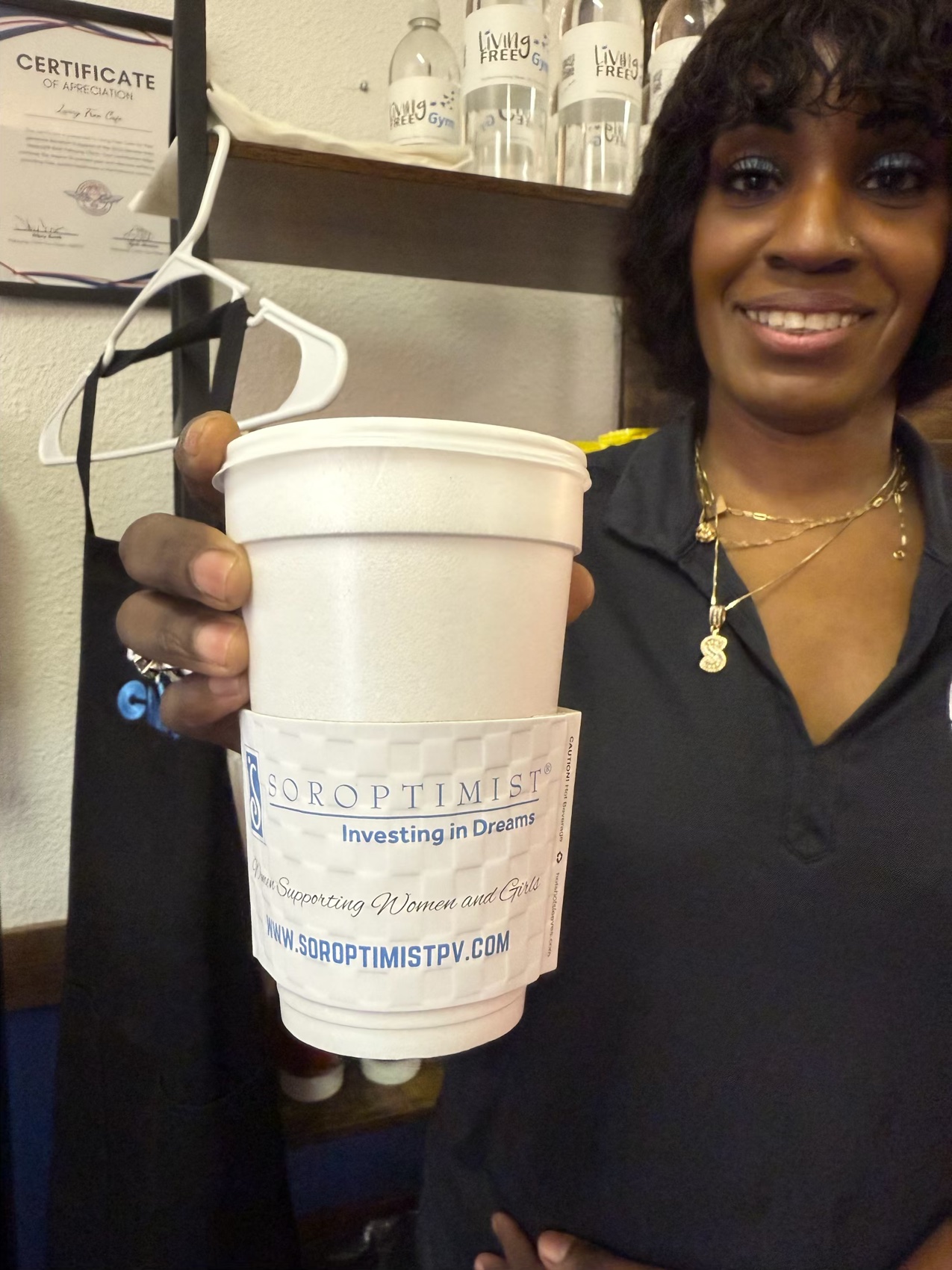
Cassell explained that many people don’t realize how impactful a small visual cue can be. A person might be sipping their morning coffee when they notice the blue hand symbol or the helpline number and suddenly think, “I didn’t know about that.” That moment of recognition is exactly what the campaign hopes to achieve.
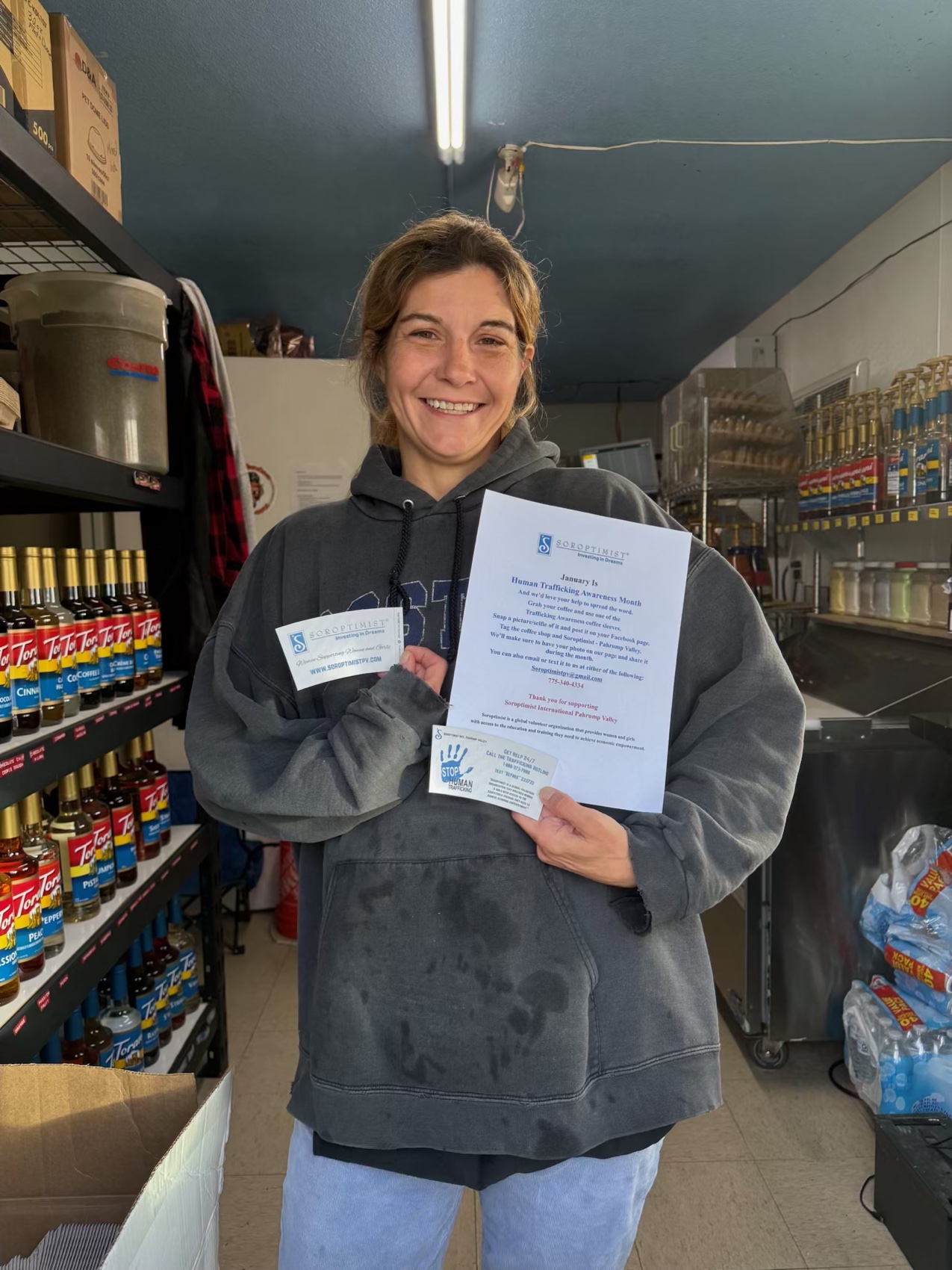
In addition to the sleeves, participating locations are displaying informational flyers that explain the campaign and encourage customers to get involved. Patrons are invited to take a selfie with their coffee sleeve, tag the coffee shop and Soroptimist Pahrump Valley on social media, and share the post. Soroptimist members then help amplify those posts, extending the reach far beyond the club’s own audience. Cassell emphasized that awareness grows exponentially when information travels through many different social circles.
To further expand visibility, Soroptimist Pahrump Valley has also placed 8.5-by-11 posters in acrylic frames in bathrooms and other discreet locations throughout the community. These placements are intentional. Bathrooms are often considered safe, private spaces where someone who may be in danger can read information or discreetly access a phone number without drawing attention.
January was chosen for the campaign because it is National Human Trafficking Awareness Month, with January 11 recognized as National Human Trafficking Awareness Day. On that day, community members are encouraged to wear blue, the official color associated with trafficking awareness, as a visible show of solidarity and support.
Local businesses have embraced the effort wholeheartedly, and nearly all participating coffee shops received their sleeves at the start of the month. Soroptimist members have been sharing photos online, publicly thanking each business for their involvement and highlighting the strength of community collaboration.
Kimberley Loveless, owner of Our Place, spoke about why participation was an easy decision. “Our Place has supported Soroptimist Pahrump Valley since the very beginning of our opening. As soon as we understood what they were trying to do with this campaign, we were more than happy to help.” Loveless went on to add, “Soroptimist does so much good in the community that anytime they come to us, we’re willing to support them. With this particular effort, human trafficking is real, it’s a big deal, and it’s one of those things that, with our busy lives, people can easily look past. But when you’re handed something as normal and everyday as a cup of coffee and you see that blue hand and a phone number, it makes you stop and look. While it may seem like a simple idea, it takes a lot of time and preparation, and they absolutely deserve the support. I’m also incredibly proud to be part of a local community where businesses come together to support causes like this — we’re all in it for the greater good.”
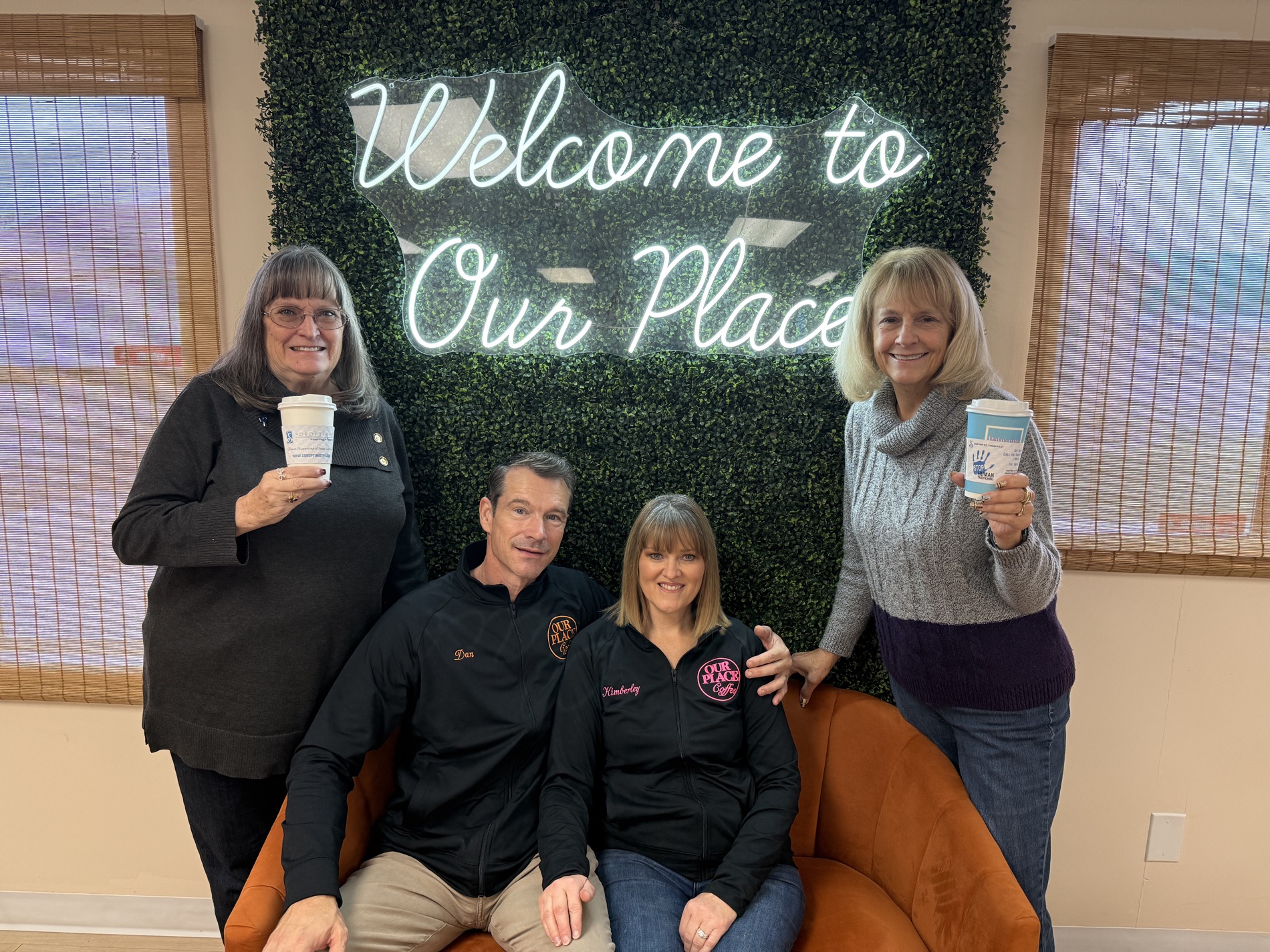
At its heart, the Human Trafficking Awareness Campaign is about education, visibility, and prevention. Soroptimist Pahrump Valley is not asking residents to do something complicated or time-consuming. The message is intentionally accessible: buy your coffee, notice the sleeve, share a photo, start a conversation. In doing so, each person helps ensure that critical information reaches someone who may need it, or someone who can help someone else.
Through small actions multiplied across a caring community, Soroptimist Pahrump Valley and its local business partners are proving that even something as simple as a cup of coffee can help shine light on an issue too often kept in the shadows.

