

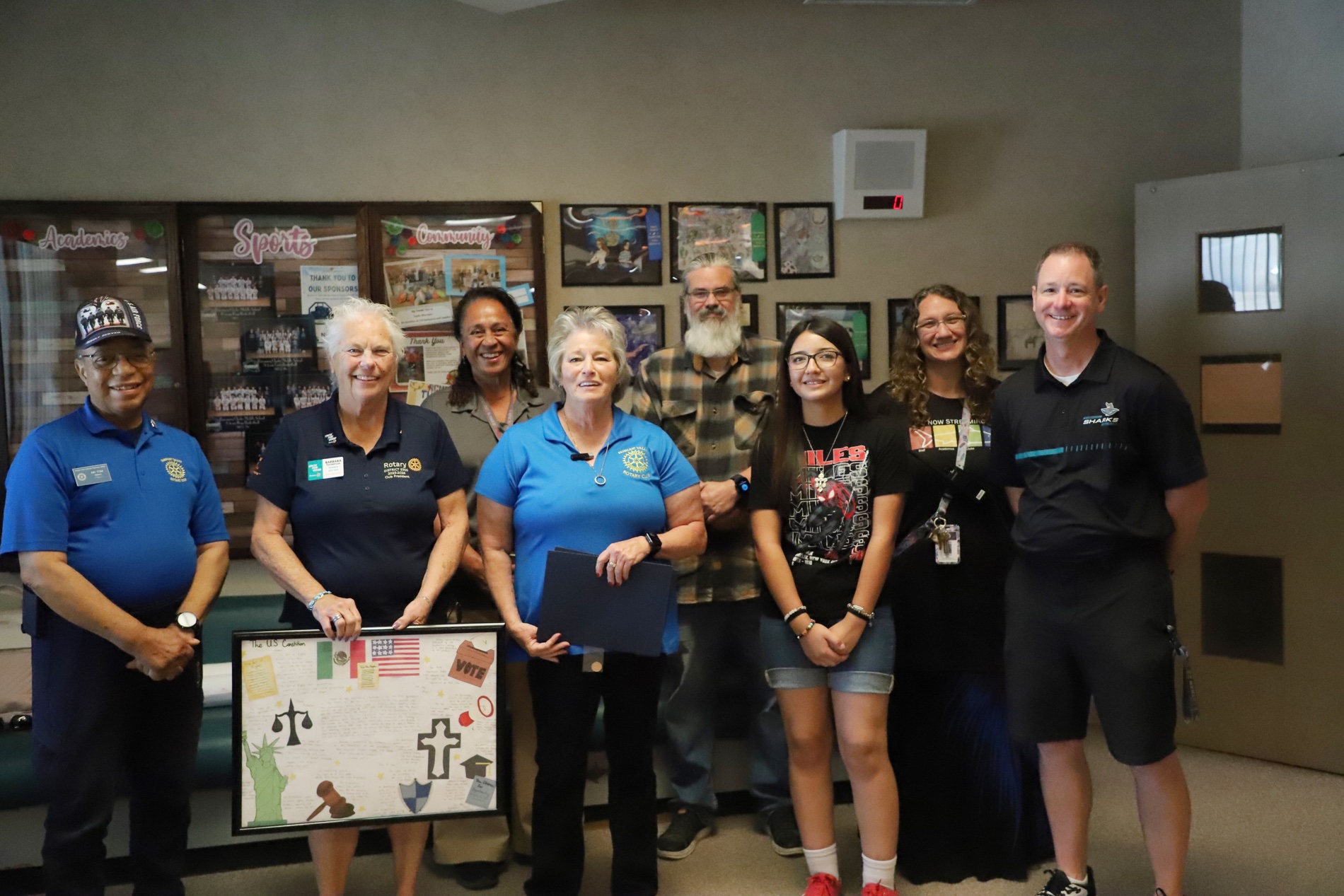

At Rosemary Clarke Middle School, a long-standing tradition once again highlighted both academic excellence and personal storytelling, as eighth grader Rosemary Robles Moreno was named this year’s winner of the annual Constitution essay contest, hosted in partnership with the Pahrump Valley Rotary.
The contest, which has been a collaborative effort between Rotary and eighth grade U.S. History classes for years, challenges students to explore the meaning of the United States Constitution and connect it to their own lives. According to Rotary representative Sheree Stringer, who has been involved with the project for the past five years, this year’s format added a creative twist.
Rather than submitting traditional essays alone, students created posters that incorporated their written reflections directly into their designs. The result, she said, was a powerful visual and personal interpretation of constitutional principles.
Among the many submissions, Rosemary’s stood out in a way that resonated deeply with the selection committee.
“She was phenomenal,” Stringer explained. “It touched everybody’s hearts.”
Rosemary’s project centered on her family’s immigration journey and her experience as a first-generation American. Through her poster and essay, she reflected on the sacrifices made by her parents and grandparents, while also exploring what it means to be a U.S. citizen and the rights and privileges that come with it.
“I was inspired by the journey my parents and grandparents and everyone before them had to go through,” Rosemary shared. “I was inspired by all their hard work, and I wanted to honor them.”
Her message not only demonstrated a strong understanding of the Constitution, but also brought a deeply personal perspective that set her work apart.
The judging process, led by members of Pahrump Valley Rotary, is designed to be thoughtful and collaborative. Each year, a different group of volunteers comes together to evaluate submissions. This year, posters were displayed throughout Stringer’s office, allowing judges to walk through, review each entry, and score them individually before determining a winner.
Despite a smaller number of entries compared to essay-only years—due to the added challenge of creating posters—the quality of work remained high.
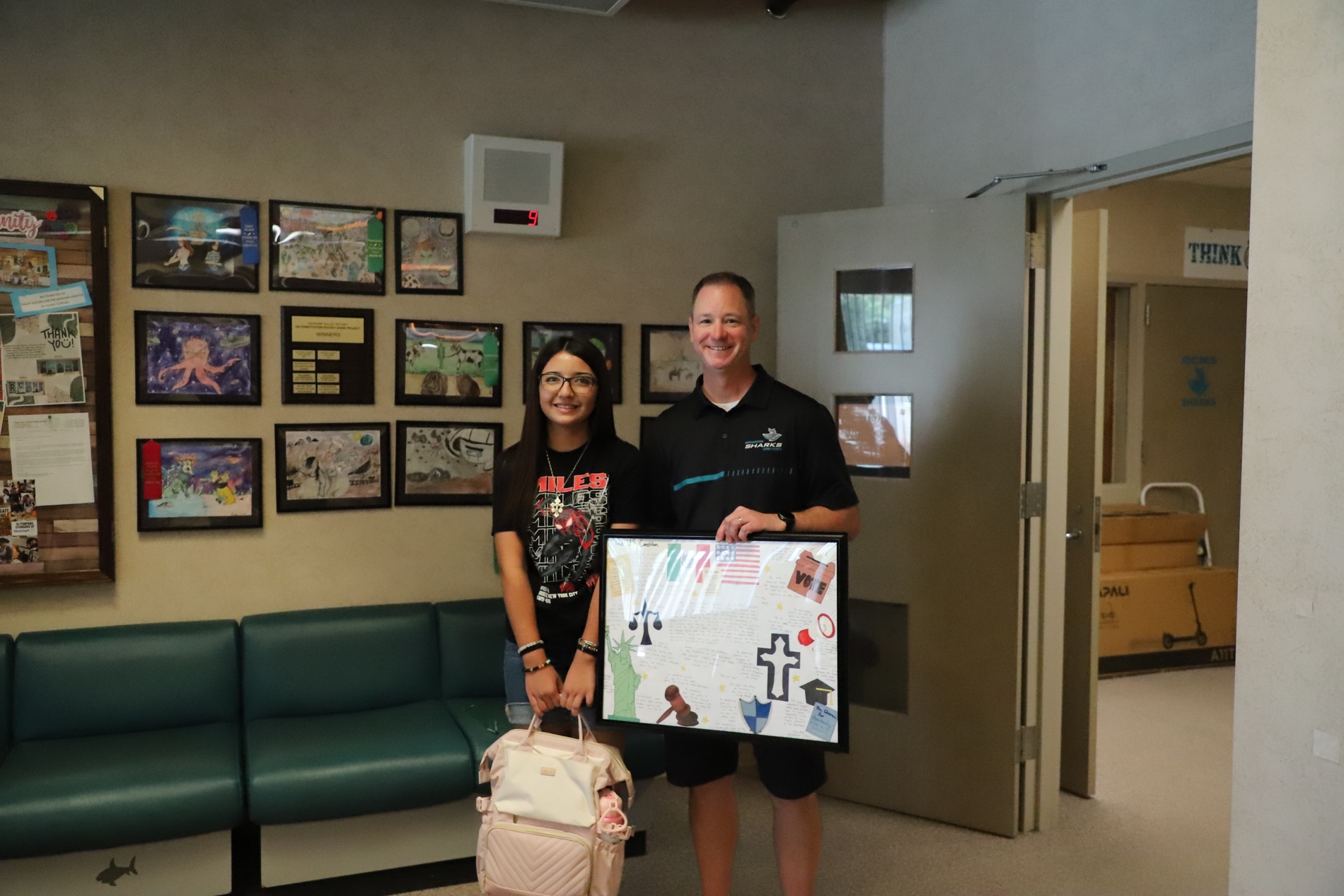
To commemorate Rosemary’s achievement, Stringer went the extra step of framing her poster, recognizing the significance of her story and ensuring it could be preserved as a lasting keepsake.
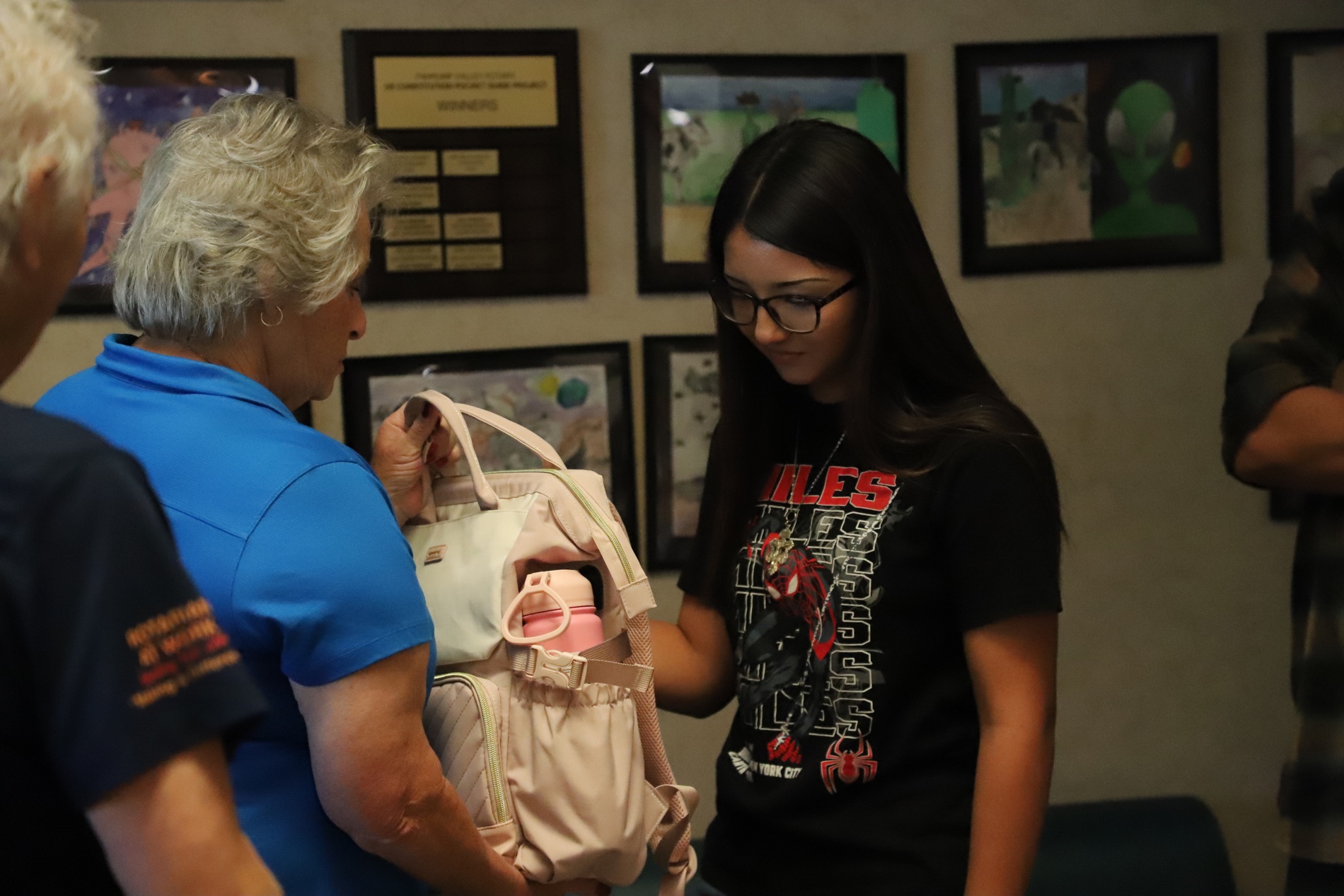
During a special presentation at the school, Rosemary was awarded a Kindle Fire along with a protective cover, as well as a backpack filled with school supplies, including notebooks, journals, and poster materials. Teachers who participated in the program, including Erik Odegard, also received classroom supplies to support continued learning.
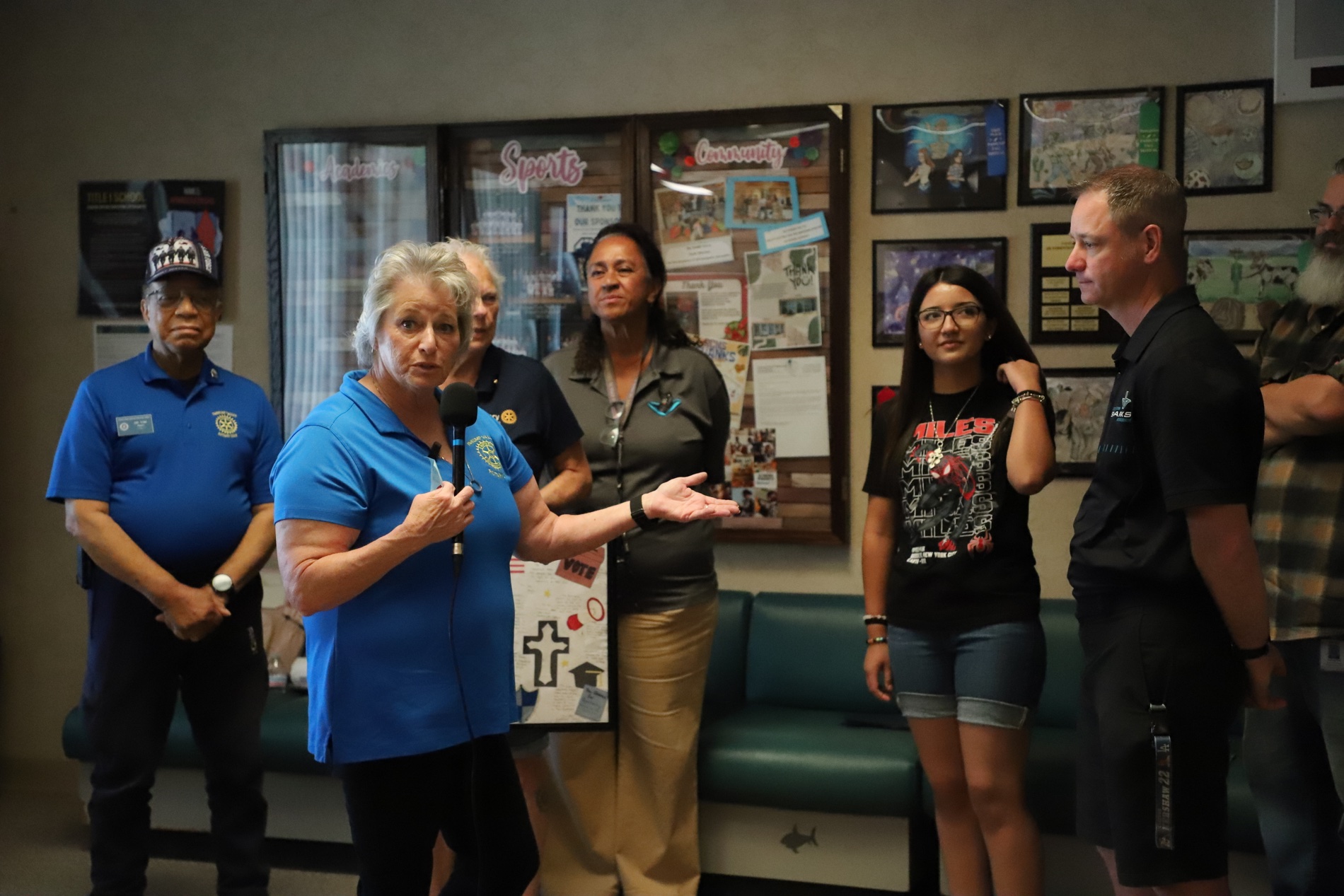
Stringer emphasized that the goal of the program goes far beyond prizes.
“What we teach with the U.S. Constitution is what it means to be an American,” she said during the presentation. “The rights and privileges that we have to live here in the United States. It is a privilege to be able to do this and honor young people in their accomplishments and what they feel America means to them.”
In the classroom, Odegard has helped shape the project into a meaningful culmination of students’ studies. The assignment is required for honors students and offered as an optional, extra credit opportunity for others. By the time students begin the project, they have already spent significant time studying the Constitution, allowing them to reflect more deeply on its relevance.
“We really want them to dive a little bit deeper into the Constitution and tell us how it relates to them,” Odegard explained.
With more than 60 students across honors classes and additional participants beyond that group, the project represents a significant undertaking each year, encouraging students to think critically while also expressing their individuality.
For Odegard, Rosemary’s win came as no surprise.
“Rosemary is one of the honors students here, and she does a phenomenal job in class,” he said. “She’s always working hard, trying to put forth her best effort, and this is a prime example of the work that she presents every day.”
Rosemary herself approached the project with confidence, believing her story might stand out, and completed her poster in about a week. While she admitted she expected it might resonate, the recognition still marked a meaningful moment.
Though she described herself as “a woman of few words” during the presentation, her work spoke volumes—capturing not only her family’s journey, but also the broader significance of opportunity, perseverance, and the freedoms protected by the Constitution.
Through programs like this, Pahrump Valley Rotary and educators at Rosemary Clarke Middle School continue to ensure that students don’t just learn about history—they connect with it, reflect on it, and understand how it shapes their own stories.

