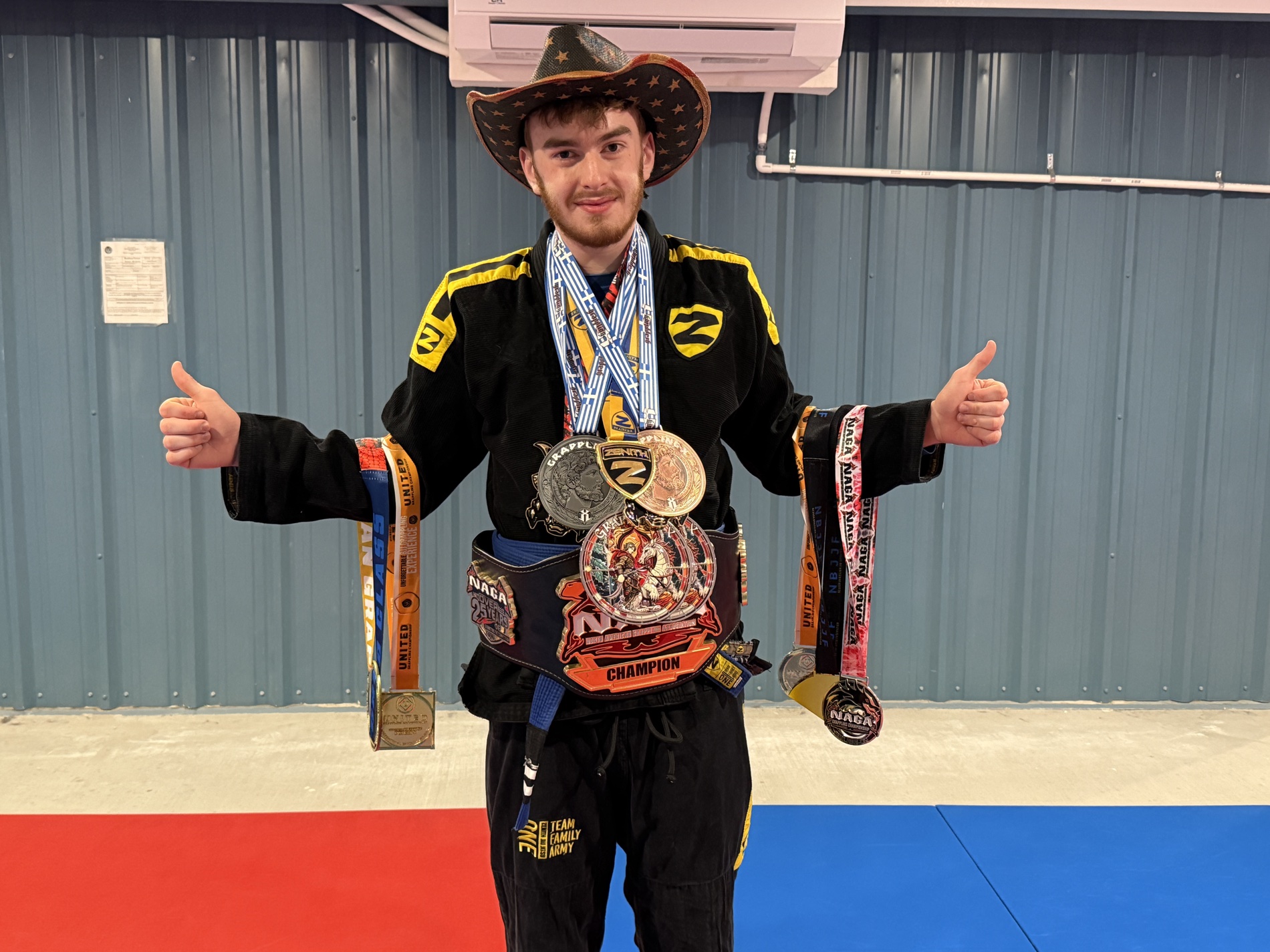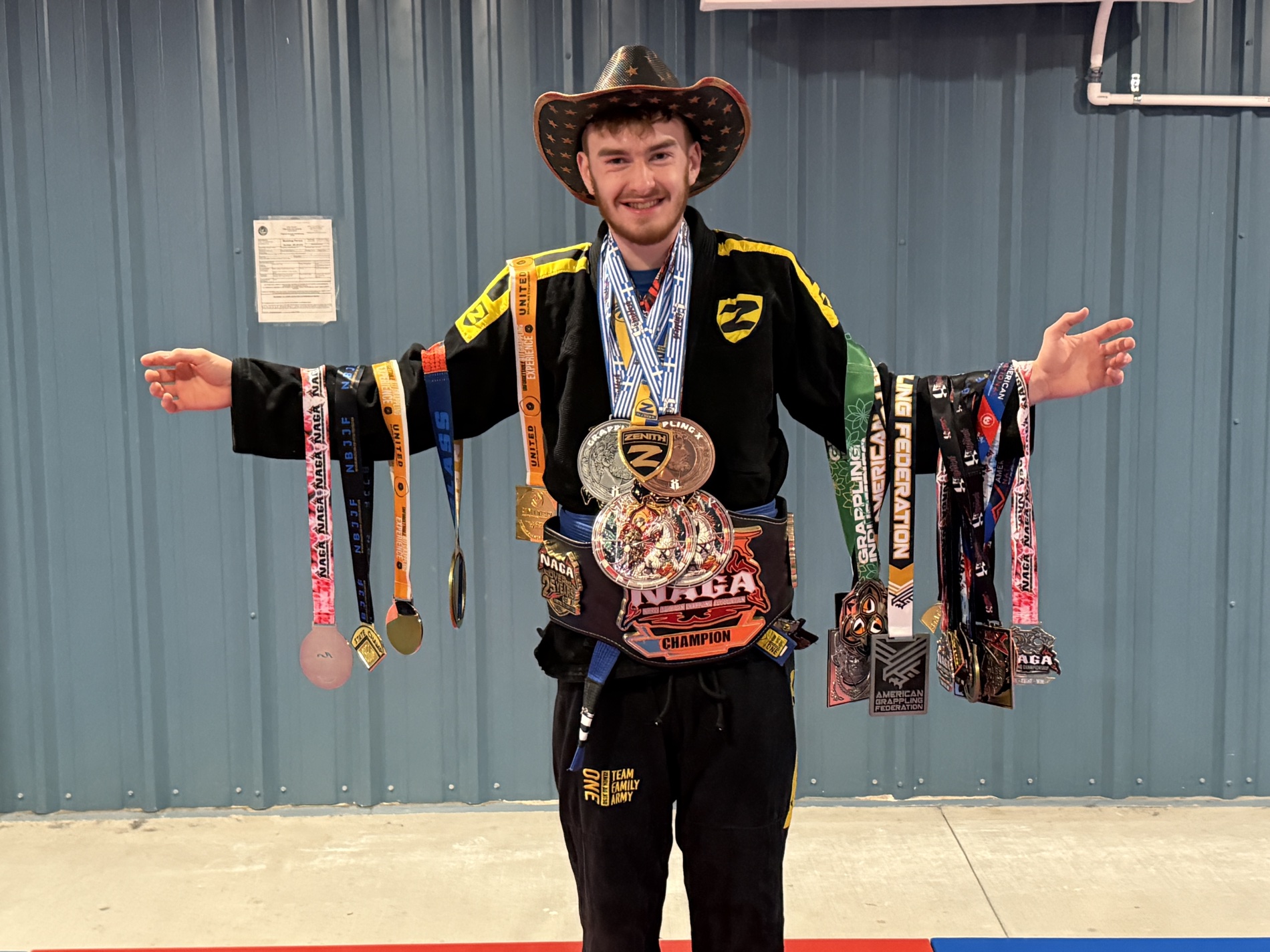

Inside a blue metal building on East Mickey Street, tucked just off Pahrump Valley Boulevard, something special is happening on the mats several nights a week. At Mix It Up Academy, Brazilian jiu-jitsu is taught as both a discipline and a journey—one defined not by shortcuts or hype, but by consistency, humility, and hard-earned progress. At the center of that journey are owner and head instructor Robert Wilson, his wife Kimberly Wilson, and their son, 18-year-old competitor Zackery James Wilson, whose breakout year in 2025 put both the athlete and the academy firmly on the competitive map.
Robert Wilson’s relationship with jiu-jitsu stretches back more than two decades. He began training in 2003 and came up during a time when the sport was still finding its footing in the United States. His own path was anything but linear. Alongside jiu-jitsu, he immersed himself in Muay Thai, kickboxing, MMA, and wrestling, taking the long road to mastery. That wide base of experience shaped his teaching philosophy and ultimately led him to open Mix It Up Academy in 2010 after first teaching once a week at a local fitness center in 2009. The academy operated through 2016 before taking a pause, then reopened in July of 2021 at Calvary Chapel in Pahrump, located at 1051 East Mickey Street.
Today, Wilson is a third-degree Brazilian jiu-jitsu black belt under renowned coach Robert Drysdale and an affiliate of the Zenith team. Through that affiliation, Mix It Up Academy competitors step onto major stages under the same banner, including events sanctioned by the International Brazilian Jiu-Jitsu Federation. Those tournaments, often streamed on FloGrappling, are among the most prestigious in the sport, drawing elite athletes from across the country and beyond.
While competition is a visible part of the academy’s identity, Wilson is quick to point out that it is not the only path. Classes at Mix It Up Academy are designed for everyone, from four-year-olds stepping on the mat for the first time to adults seeking fitness, self-defense skills, or a sense of community. The kids’ program serves students roughly ages four to 13, with careful attention paid to focus and maturity—especially for the youngest participants. The adult program begins around age 13, depending on size and readiness, and extends to all ages. Classes are held Mondays, Tuesdays, and Thursdays, with kids training from 4:30 to 5:15 p.m., followed by adult classes from 5:30 to 6:30 p.m. and 6:30 to 7:30 p.m. The kids’ program is nearing capacity, a testament to growing interest in the sport locally, while the academy continues to welcome new adult and teen students.
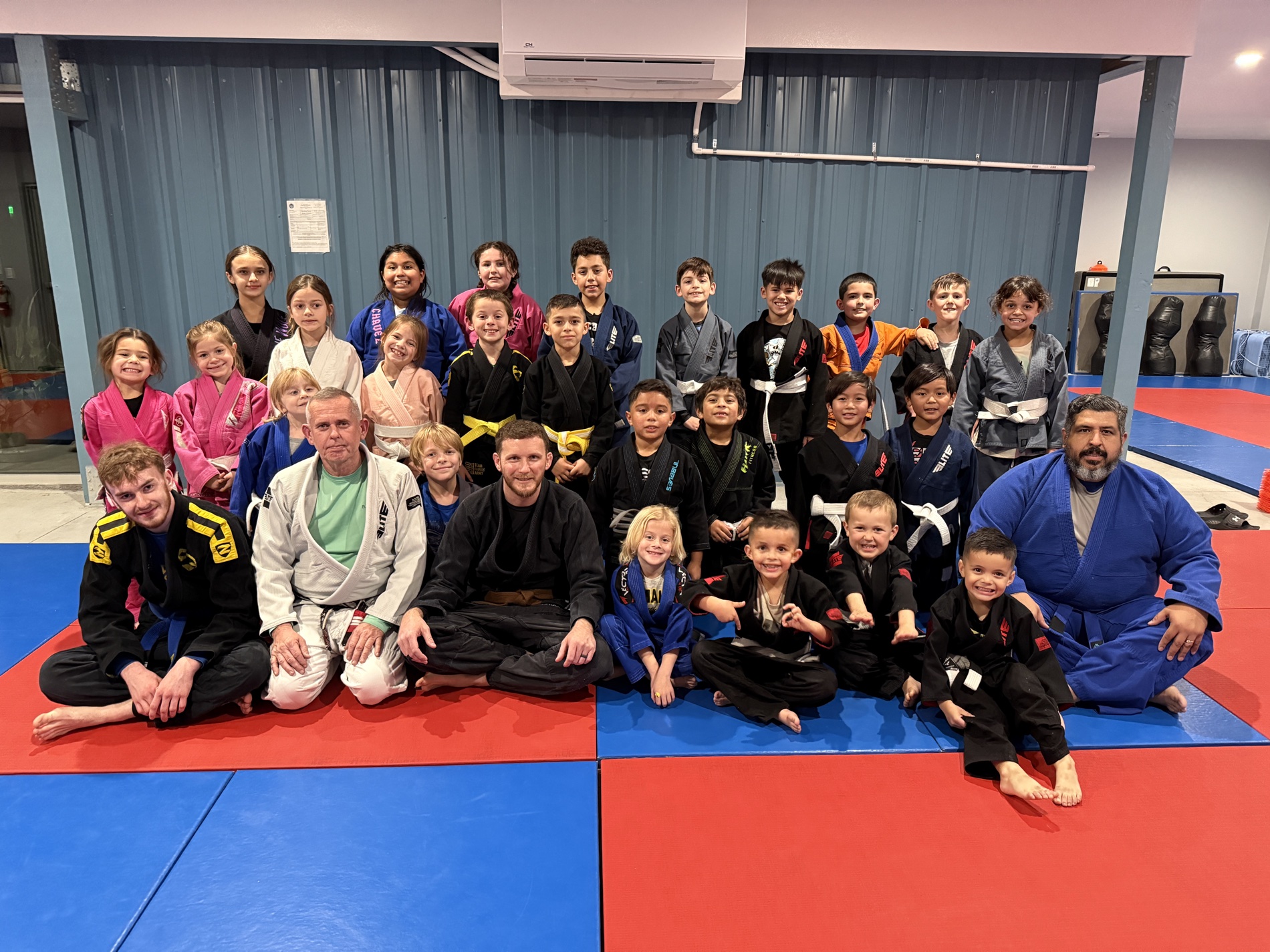

Wilson describes jiu-jitsu in simple, accessible terms for newcomers. At its core, it is a ground-based martial art focused on control rather than striking. Practitioners learn to manipulate joints, apply chokes, and use leverage to neutralize an opponent. In pure jiu-jitsu, there are no punches or kicks. Instead, students “wrestle with submissions,” learning how to stay calm under pressure and solve physical problems with technique. That same foundation translates to self-defense, MMA, and even everyday confidence.
Jiu-jitsu is deeply woven into the Wilson family. Robert Wilson and his wife, Kimberly Wilson, are both Brazilian jiu-jitsu black belts under Robert Drysdale, making the academy a true family-run operation. Their oldest son, Alec Wilson, is also a Brazilian jiu-jitsu black belt under his father, while their middle son, Nicholas Wilson, holds a blue belt. Their daughter, Esteffana Wilson, is a blue belt as well and donates her time to Mix It Up Academy by helping coordinate student sign-ups and managing social media. Robert said having his family involved in different roles reinforces the values he teaches on the mat, emphasizing shared responsibility, discipline, and service to others.
Within that environment, jiu-jitsu eventually became a focus for their youngest son, Zackery James Wilson—but not right away. Despite growing up around the sport, his parents intentionally emphasized academics first. Zackery trained only minimally as a child and explored other activities, including kickboxing, before fully committing to jiu-jitsu in July of 2021 at the age of 13, when he began taking adult classes at Mix It Up Academy.
From the start, there were no shortcuts. Because of his size and maturity, Zackery was placed directly into adult training, where he learned quickly that progress would come through repetition and resilience. He is homeschooled through Heritage Christian Academy and maintains straight A’s, often completing schoolwork in the car on Wi-Fi while traveling to and from training in Las Vegas. His weekly schedule is demanding by any standard. Six days a week, he trains in Las Vegas, primarily at Zenith under Robert Drysdale. On Thursdays, his routine includes an MMA class at Xtreme Couture with former UFC fighter Mike Pyle, followed by jiu-jitsu training before heading home. Evenings are spent back on the mats in Pahrump, where Zackery helps with kids’ classes and completes every adult class his father teaches. In total, he averages about 12 classes per week—four times the schedule of a typical hobbyist.
Zackery’s competitive journey began modestly. His first tournament was NAGA Las Vegas on February 11, 2023, where he competed as a white belt and earned silver. That initial experience was eye-opening. He quickly learned how jiu-jitsu tournaments are scored, with points awarded for positional control and sweeps, but ultimate victory coming through submission—a forced tap-out that ends the match regardless of the score. Like wrestling pins, submissions instantly decide the outcome.
After that first medal, the wins did not come easily. Zackery lost matches, made mistakes, and absorbed lessons the hard way. His father recalls that period as critical. Rather than focusing on disappointment, they focused on identifying gaps, correcting technique, and moving forward. Wilson was careful not to pile on criticism, knowing his son already held himself to a high standard. Losses became fuel rather than roadblocks.
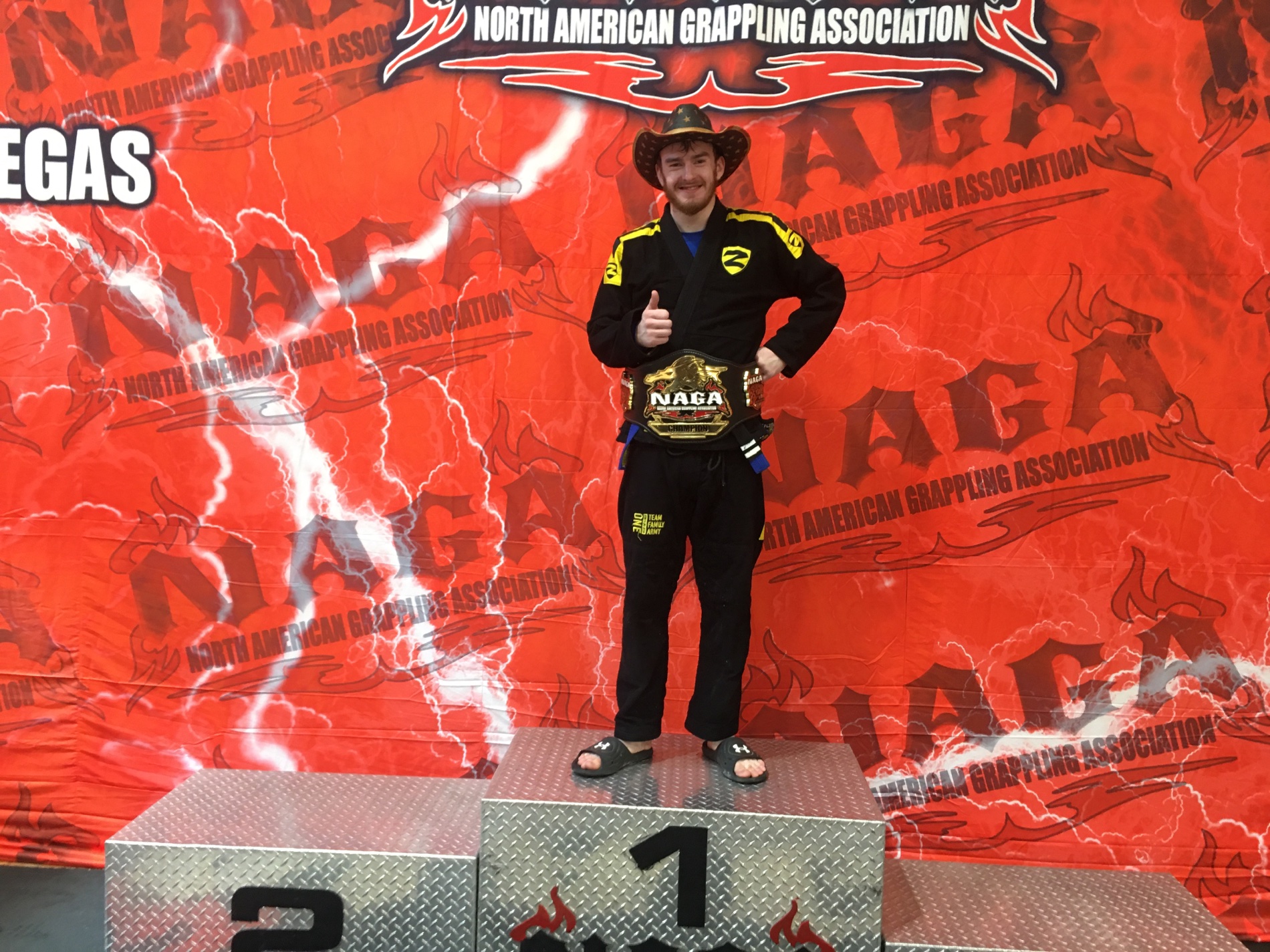
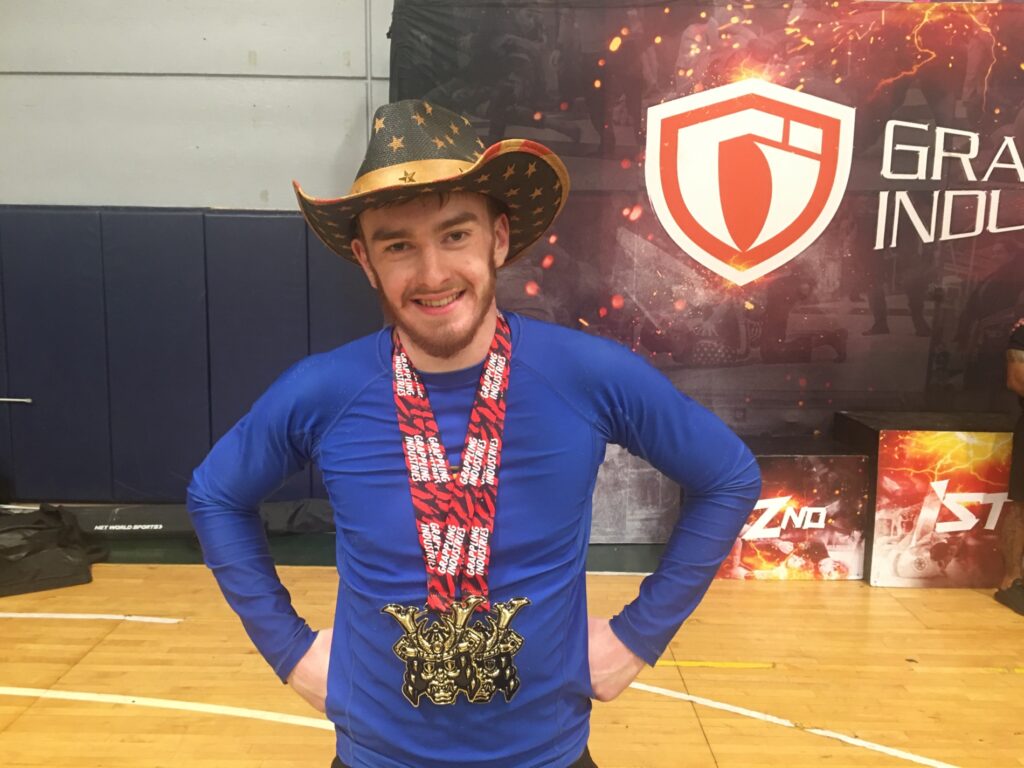
That mindset paid off in dramatic fashion in 2025, a year that would define Zackery’s rise. Competing as a blue belt in teen and adult divisions, he entered 15 tournaments and walked away with 15 medals—nine gold, five silver, and one bronze. Highlights included a gold medal at the NBJJF Las Vegas event in January, podium finishes at NAGA and Grappling X, a gold medal at the American Grappling Federation Tri-Cities event in Washington, and a championship belt at NAGA Las Vegas in August in the teens gi expert division. At Grappling Industries in August, he earned double gold, showcasing his ability to adapt across divisions and rule sets.
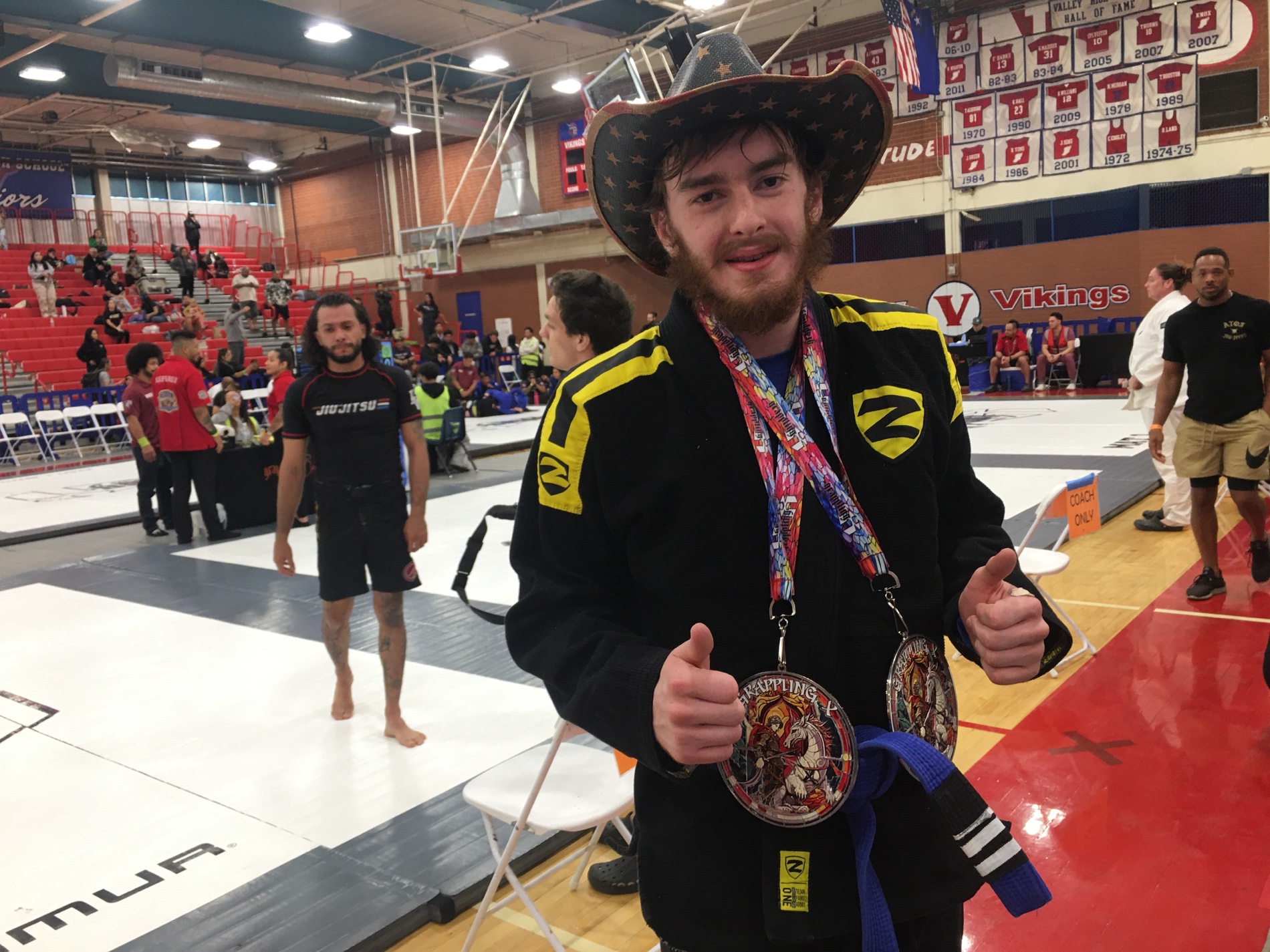
One of the most telling moments came at Grappling X, where Zackery faced a competitor who had dominated him a year earlier. In no-gi competition, the match went to a best-of-three format, with Zackery losing two matches to one but earning a win that visibly surprised his opponent. When they met again in the gi division, Zackery flipped the script, winning two matches straight. He then stepped into the adult division—after already competing multiple times that day—and secured a bronze medal. For Robert Wilson, it was a snapshot of growth: physical endurance matched by mental toughness.
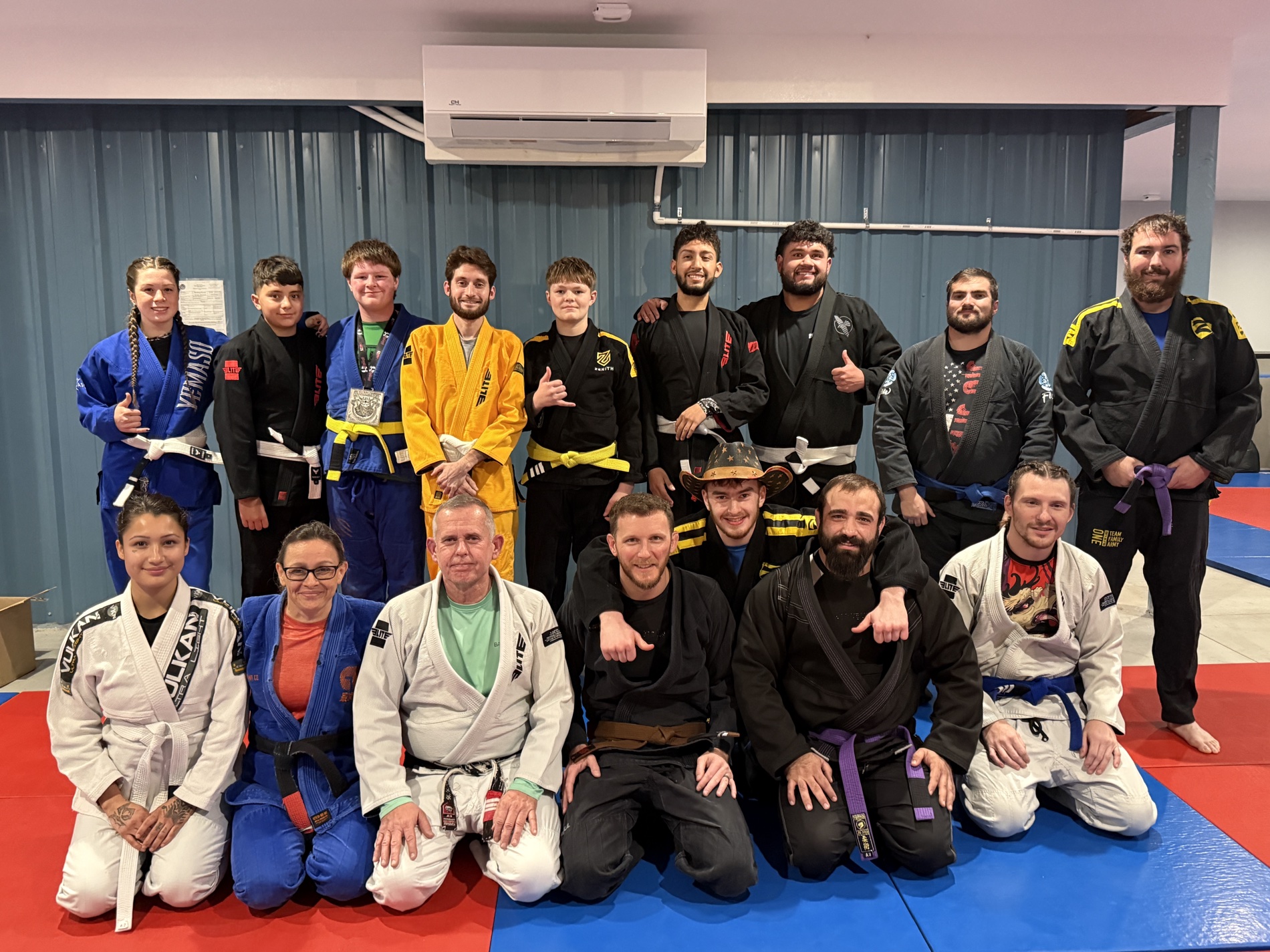
Zackery approaches competition with a calm, grounded mindset. Preparation includes intense training, conditioning, and mental rehearsal, but he understands that no plan survives first contact. Visualization plays a role, but so does improvisation. As he puts it, success comes from blending preparation with the ability to adapt in the moment. Surrounding him is a deep bench of training partners at both Mix It Up Academy and Zenith, including purple, brown, and black belts who push him daily and show up in force to support him at tournaments.
Despite his success, Zackery remains a blue belt—a decision made deliberately. Promoted from white belt on April 16, 2024, he meets all minimum time requirements to advance. However, his father has chosen to slow the timeline, allowing Zackery to fully develop at each level. In Brazilian jiu-jitsu, belts are not awarded on a fixed schedule. The IBJJF outlines minimum times, but promotions ultimately rest with the coach and depend on consistency, skill, and readiness. Wilson often reminds his students not to chase belts, but to let the belt chase them.
That philosophy extends to the differences between gi and no-gi competition. Gi jiu-jitsu, practiced in the traditional uniform, emphasizes control and technical precision, using grips on the fabric to slow movement and set up submissions. No-gi, performed in shorts and a rash guard, is faster and more fluid, with less control and more scrambling. While many competitors specialize in one or the other, Mix It Up Academy emphasizes both equally. Zackery competes in both formats whenever possible, appreciating the technical depth of the gi and the speed of no-gi, with a slight preference for the gi because of its expanded choking opportunities.
Looking ahead, 2026 will take Zackery to competitions across Nevada, California, Arizona, Oregon, and Washington. Plans are also in motion to introduce him to the superfight circuit—invite-only matches often held at casinos or resorts and streamed live. While opportunities have already arisen, his father is carefully pacing his exposure, focused not on quick success but on long-term excellence. The goal is to enter those stages fully prepared, with the foundation to compete confidently at the next level.
For Robert Wilson, the ultimate measure of success is not medals or belts, but balance. Zackery maintains strong academics, completes chores, and is regularly asked whether he wants to continue training at such a demanding pace. There is no pressure to push beyond his limits. Jiu-jitsu will always be there, and whether it becomes a lifelong career or a cornerstone alongside another profession, it will remain a meaningful part of his life.
That same mindset defines Mix It Up Academy itself. The gym is a place where competitors and non-competitors train side by side, where progress is measured personally, and where every student’s journey is respected. In Pahrump, the academy has become more than a training space—it is a community built on patience, discipline, and the belief that real growth happens one class at a time.