


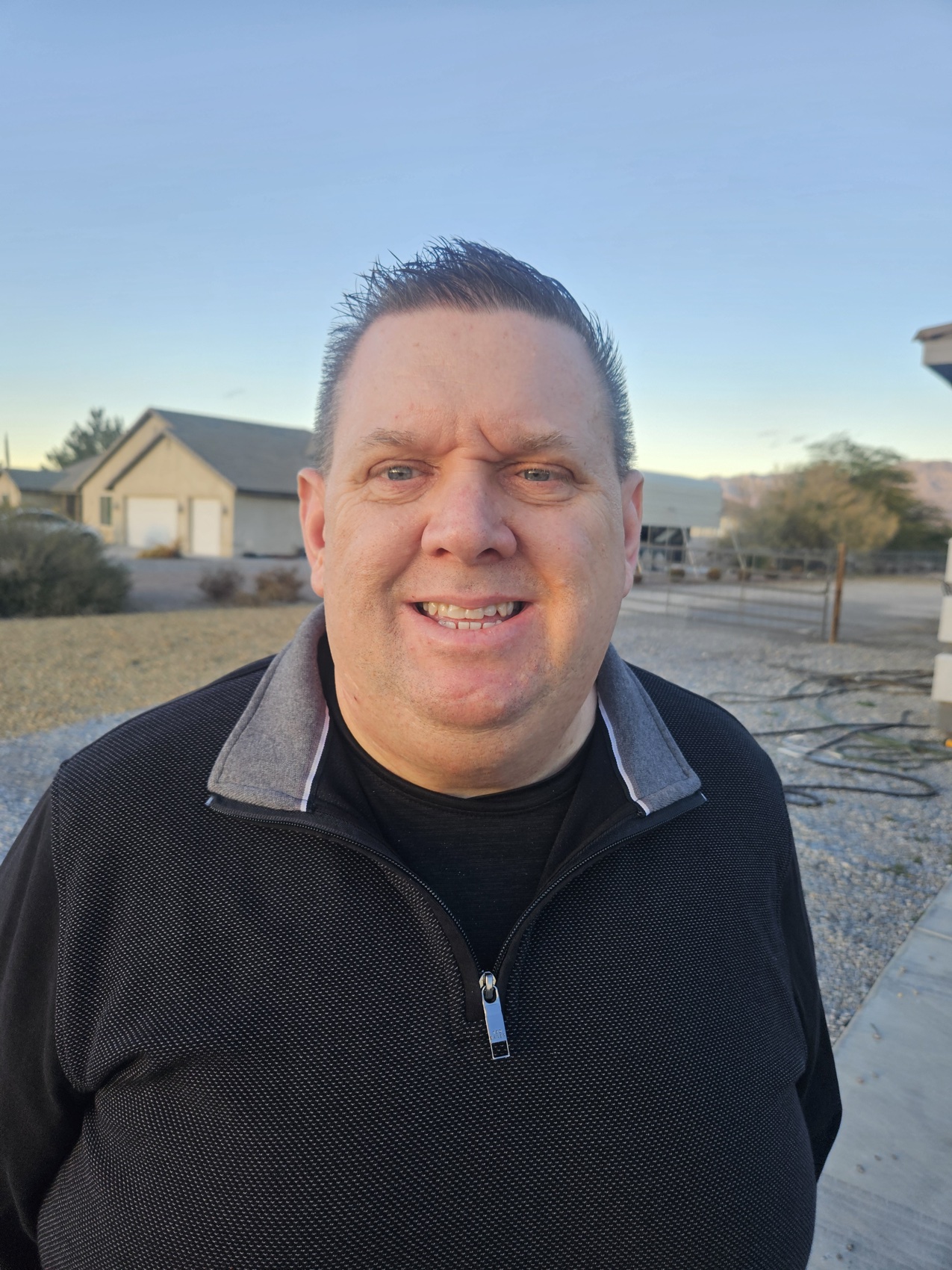
When clients walk through the doors of Oak Tree Counseling, they meet more than a therapist. They meet someone who has spent decades studying human behavior, walking alongside people at their darkest moments, sitting with families preparing for loss, helping clients recover from addiction, and standing in the gap when court-mandated counseling becomes someone’s last chance at change. For Licensed Marriage and Family Therapist, Clinical Alcohol and Drug Counselor, supervisor, and domestic violence treatment provider Scott Oakley, this work isn’t just a profession—it’s a calling shaped by personal experience, advanced training, and a deep belief in the value of honest human connection.
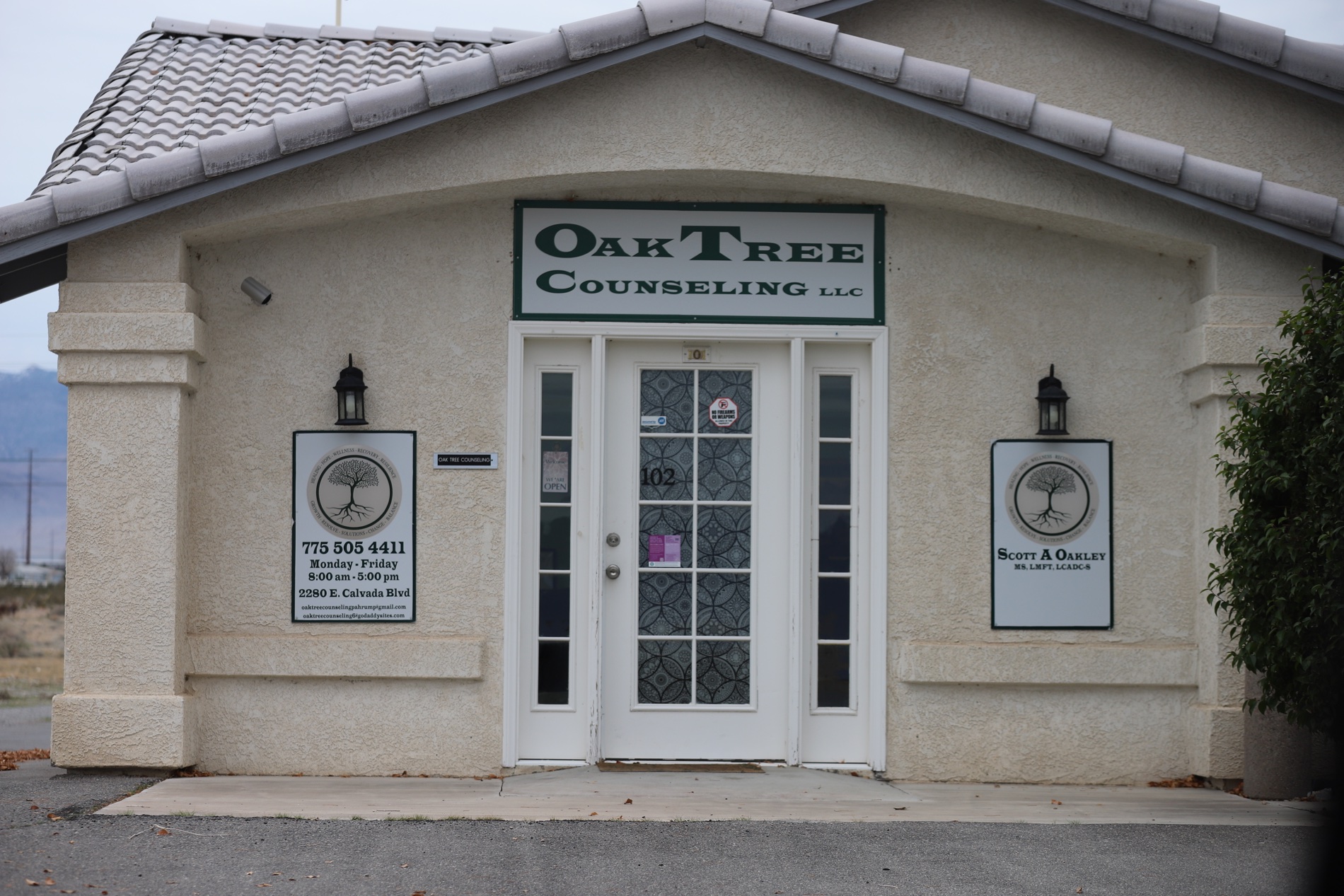
Oak Tree Counseling, located at 2280 E Calvada Blvd Suite 102, officially opened its doors on March 1, 2022. Before opening his private practice, Oakley spent almost nine years working behind the same building as a therapist and a clinical supervisor at Serenity, a local behavioral health and recovery facility. When the chance finally came to establish his own space, he started with one small office—just him, a handful of clients, and a vision for creating a center built around quality over quantity. By the end of 2022, that small start had expanded significantly. Additional space opened next door, his licenses allowed him to broaden services, and word of mouth spread quickly as former clients sought him out again. Some had been with him for as long as seven years, a testament to the trust he builds and the consistency he maintains.
Today, Oak Tree Counseling offers marriage and family counseling, individual therapy, grief counseling, substance use treatment, court-ordered classes, and a newly certified domestic violence offender program—not to be confused with victim services, which remain separate. The domestic violence certification is significant because Pahrump had no in-person provider offering state-approved, court-mandated domestic violence classes. Oakley and his intern, Vicky, spent months working with the Nevada justice and district courts to become certified. Participants are required to attend between 26 and 52 classes, depending on the court’s recommendation. While many programs statewide have shifted to online instruction since COVID, Oakley believes strongly that face-to-face treatment is not only more ethical but more effective. He is actively working with local courts to help shift offenders back into in-person settings where accountability, observation, and real interaction are possible.
Holding three state licenses—Licensed Marriage and Family Therapist (LMFT), Clinical Alcohol and Drug Counselor (LCADC), and state-certified Domestic Violence Treatment Provider—Oakley approaches his practice with a wide-angle lens. His training dates back to 2014 for marriage and family therapy, and his alcohol and drug counselor license was earned even earlier. For the past six years, he has also been a supervisor for interns pursuing licensure in clinical alcohol and drug counseling. Recently, he obtained secondary supervisor status for marriage and family therapy interns as well. He can supervise as many as six interns at a time but prefers to keep his operation small, allowing him to provide intensive oversight and maintain the quality of care he feels each client deserves.
Oakley’s services reach nearly every corner of mental and emotional wellness. Mental health clients meet with him individually for 30-, 45-, or 60-minute sessions. The scope of his work ranges from mild anxiety and depression to complex and severe conditions such as schizophrenia, schizoaffective disorder, dissociative identity disorder (DID), disruptive mood disorders, and trauma-related conditions. Every client begins with a detailed assessment covering their presenting symptoms, personal history, medical background, previous treatments, family structure, and current challenges. Based on that information, he creates a treatment plan—a roadmap outlining focus areas, goals, and the therapeutic approaches best suited for each individual.
His work also includes identifying symptoms that require higher-level evaluation. While he is the “2025-era shrink”—the provider who spends the longest, most meaningful time with clients—he cannot prescribe medications or conduct intelligence testing. Those tasks belong to psychiatrists and psychologists. When necessary, he refers clients to medication-management providers he trusts, maintaining an ongoing dialogue to ensure continuity of care.
In addition to traditional therapy models, Oakley draws from an extensive toolbox of therapeutic theories. Cognitive Behavioral Therapy (CBT), Dialectical Behavioral Therapy (DBT), Acceptance and Commitment Therapy (ACT), and various solution-focused approaches shape his practice. He has long studied the Milan System, a brief therapy model emphasizing 10-session interventions that give clients simple, focused opportunities to change patterns. He also draws deeply from the work of Canadian physician Gabor Maté, particularly his belief that recovery means rediscovering oneself. That philosophy resonates throughout Oakley’s approach: he helps clients uncover root causes rather than chasing quick fixes. “There is no ‘fixing’ in mental health,” he explains. “There is only balance.” For him, balance is an age-old concept—one rooted in physical health, emotional and psychological health, spirituality, personal growth, work, and relationships. A disruption in any one area can cascade into the others. His job is to guide clients back toward equilibrium.
Much of Oakley’s passion is fueled by his experiences outside the therapy room. Before becoming a licensed clinician, he worked as a mental health technician at Seven Hills Hospital in Las Vegas. That period shaped him profoundly—especially the memory of a woman he tried to help during a suicidal crisis. She had told him she was “fine,” a word he now considers a red flag. Years later, he ran into her again in a church hallway. She repeated the same word—“fine”—and not long after, she died by suicide. The experience changed him forever. Today, safety is his first priority with every client. He watches for signs of suicidal ideation or risk of harm to others. He knows many people hide their struggles behind smiles. He has vowed never to overlook them again.
Grief counseling has become one of Oakley’s deepest specialties. His own personal experience losing his father left him without guidance, and he resolved that no one else in his care would face that kind of loss alone. As a hospice chaplain and pediatric chaplain between 2016 and 2018, he sat with children in their final days and with families preparing for the death of loved ones. He has counseled clients facing miscarriage, stillbirth, or abortion—experiences some had never spoken aloud until they felt safe enough to tell him. The impact of unprocessed grief, he says, can be devastating: it can strain marriages, erode emotional health, and shape identity in silent, harmful ways. Helping clients navigate those losses—children, parents, partners—is, in his words, “my baby…my lifelong work.”
The range of stories he encounters is staggering. He has worked with families navigating divorce, individuals dealing with personality disorders, clients rebuilding after addiction, and couples trying to heal years of emotional injury. He has seen every age group—from elementary-school children to centenarians. Some sessions resemble heartbreaking dramas; others echo sitcom absurdity, like the time a man arrived with five homeless girlfriends and wanted to know why his relationships weren’t working. “You never know what’s going to walk through the door,” he says, laughing. But he means it. His job is to expect the unexpected and meet each person exactly where they are.
He also understands the profound responsibility of navigating transference and countertransference—the psychological phenomenon in which clients project past relationships onto their therapist, or therapists are reminded of their own personal experiences by a client. He has had to decline treating clients when his presence triggered traumatic memories for them, such as one woman who associated his appearance with a past perpetrator. He is equally vigilant in managing his own emotional boundaries, knowing how important it is to prevent his personal life from spilling into therapy or vice versa.
Another major pillar of Oakley’s work is substance use treatment. Oak Tree Counseling offers intensive outpatient and outpatient programming for drug court, where clients often enter with deep resistance, denial, or legal pressure. He witnesses first-hand how addiction progression, recidivism, fear, hope, shame, and recovery stories unfold. He works with clients cycling in and out of the Nye County Detention Center, conducting assessments and providing pathways to change. He knows the challenges facing rural Nevada—limited treatment options, lack of long-term psychiatric facilities, and a high rate of substance-related legal charges. He also knows what sustained recovery looks like. Former clients have approached him years later—sometimes in airports—telling him they have been clean for nine, ten, even thirteen years. He calls those moments “gems,” the tiny reminders that seeds he planted once grew into life-changing transformations.
Oakley accepts Medicaid, Medicare, private insurance such as Aetna, UnitedHealthcare, and Blue Cross Blue Shield, and also offers cash-pay options. He avoids relying solely on Medicaid because of shifting government policies and upcoming changes in 2026 that will introduce new managed care organizations (CareSource and SilverSummit) to Nevada’s rural regions. By keeping his practice adaptable and insurance-inclusive, he ensures clients have options—especially in a community where providers are limited and resources scarce.
Oak Tree Counseling remains intentionally small. Oakley works Monday through Thursday, typically ending around 6 p.m., and prefers to focus on quality rather than quantity. Oakley sees clients of all ages but has recently narrowed his practice to middle-schooler age and older due to the unique challenges and energy required for younger children. For many parents, teachers, and families in town, he offers one of the few consistent mental health resources for children navigating complex emotions, trauma, or behavioral struggles.
Above all else, Oakley values honesty, openness, and willingness—the three qualities he believes people need to change their lives. He repeats those words often to clients. Some arrive overwhelmed by their past, hoping to fix what cannot be undone. He gently redirects them toward the future. “You can’t change what already happened,” he often says. “What are you doing today to move forward?”
It is this mindset—forward-focused, compassionate, deeply human—that defines Oak Tree Counseling. Whether he is helping someone through grief, supporting couples rebuilding trust, guiding individuals out of addiction, or teaching offenders to break patterns of violence, Scott Oakley believes in one thing above all: people can find balance again. They can find themselves again. And with patience, honesty, and the right support, they can start writing a different chapter than the one they walked in with.
For appointments, Oakley welcomes calls directly from clients—no referral needed. He evaluates insurance, explains options, and ensures that everyone is connected to the right provider, even if it isn’t him. What matters most, he says, is that people get the help they need.
“I love my clients,” he reflects. “I know them. I care about them. And I get to walk with them while they find themselves again. That’s the privilege of this work.”

