

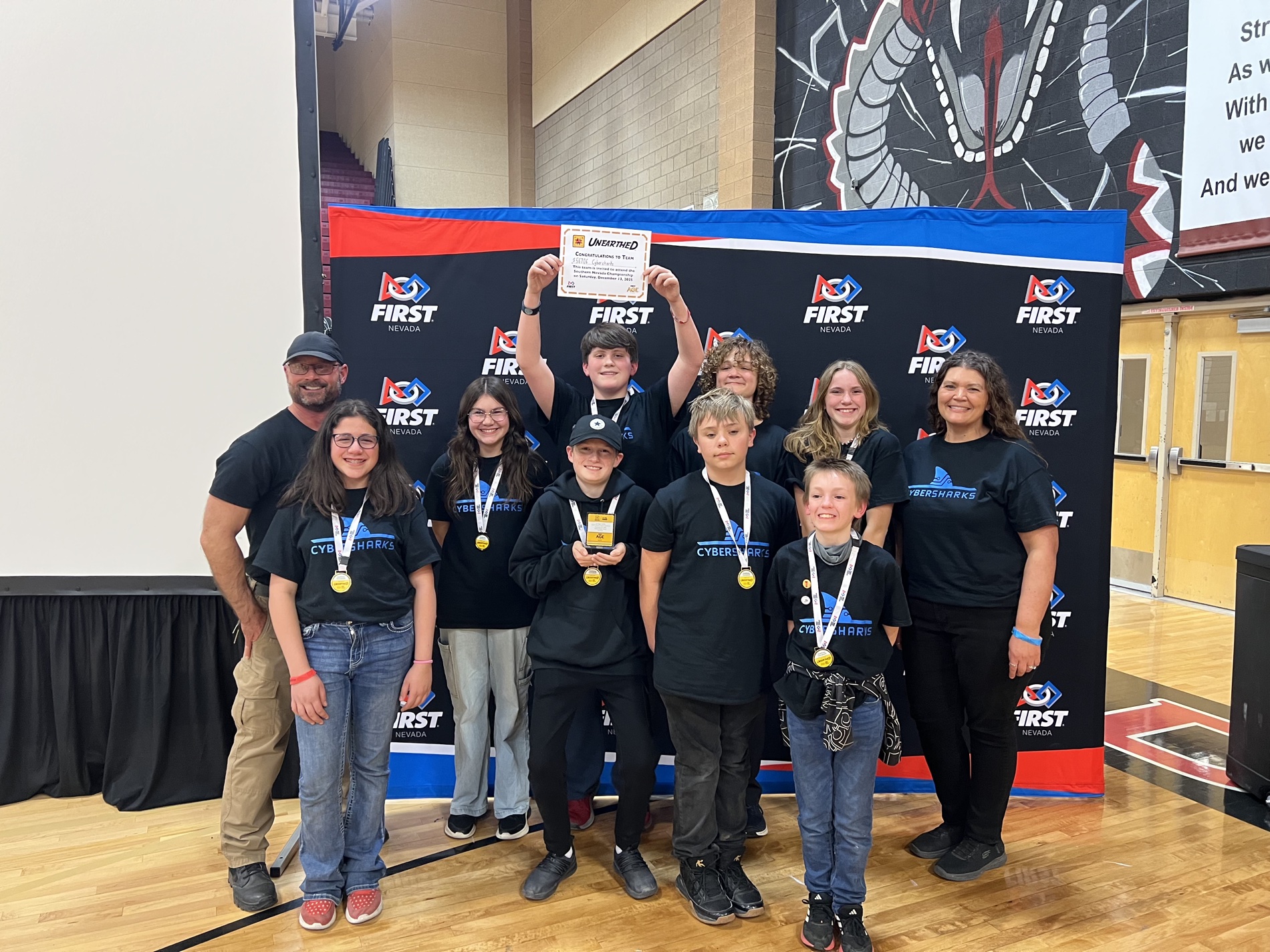

When Rosemary Clarke Middle School eighth grader Ethen Bolling talks about LEGO Robotics, his enthusiasm comes alive in a way that makes the complex world of coding, engineering, and competition suddenly feel accessible—even for those whose last experience with LEGO involved brightly colored bricks scattered across a living room floor.
Ethen, enjoying a well-earned school break after a busy competition weekend, explained that the RCMS LEGO Robotics group is, at its core, a club of problem-solvers. The team meets every Wednesday to prepare for a series of highly structured competitions hosted through the international organization FIRST LEGO League, where students design, build, and code robots using LEGO STEM kits to complete missions on a competition table. Each season is centered around a theme, and this year’s challenge—Unearthed—draws from archaeology, requiring teams to build robots that perform tasks inspired by real-world discovery, exploration, and historical preservation.
To understand the competition, Ethen encourages people to imagine it like a high-tech board game. The table is set up with 15 missions, each worth a specific number of points. “Some missions are 10 points, some are 30 points,” he said. “You have to build a robot with LEGO pieces that can perform these tasks, and then code it to run those missions during competition rounds.” The robot doesn’t just “roll around”—it interacts with models, pushes or pulls mini structures, and completes challenges that simulate real archaeological work, like uncovering artifacts or analyzing site features.
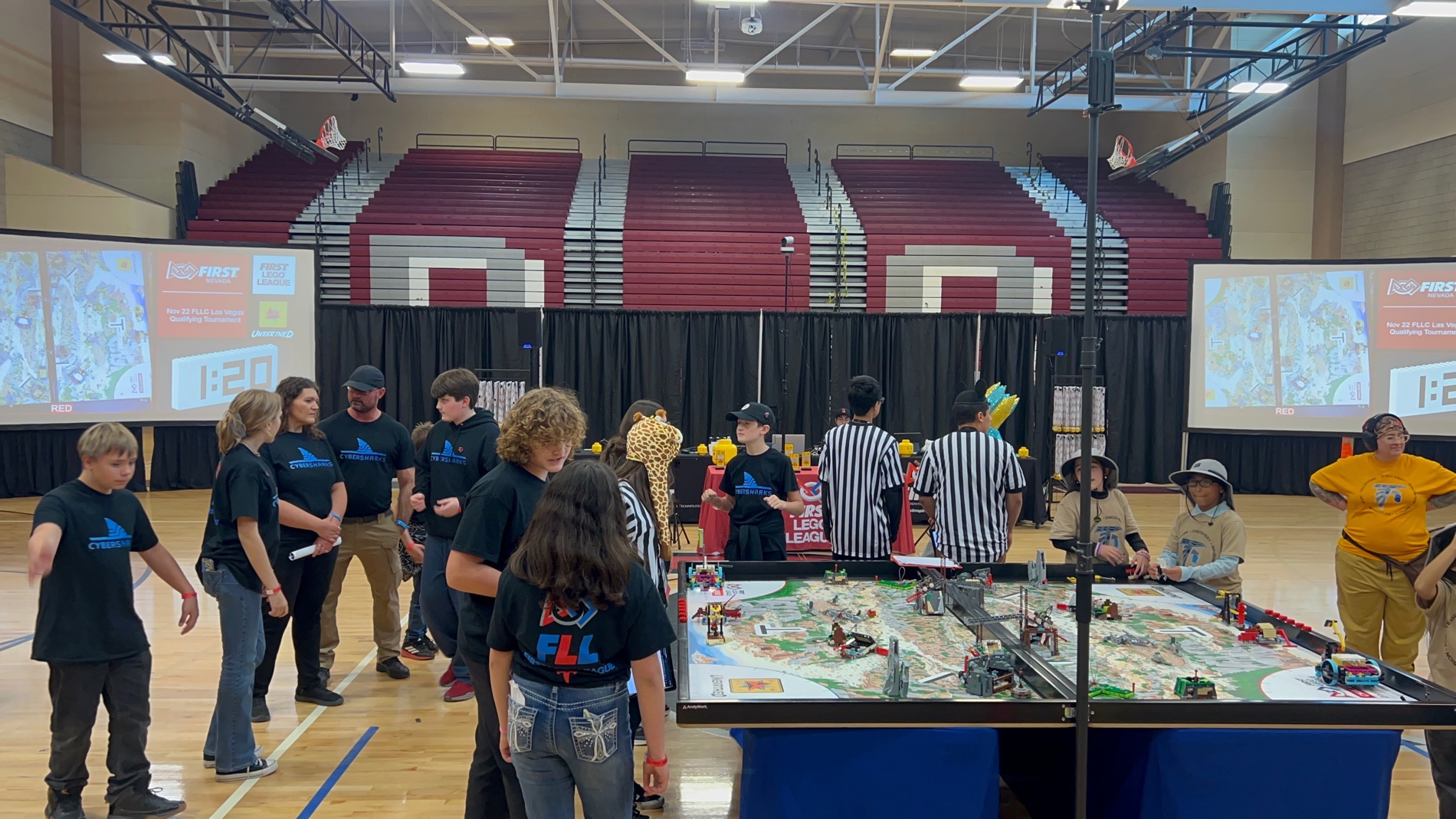
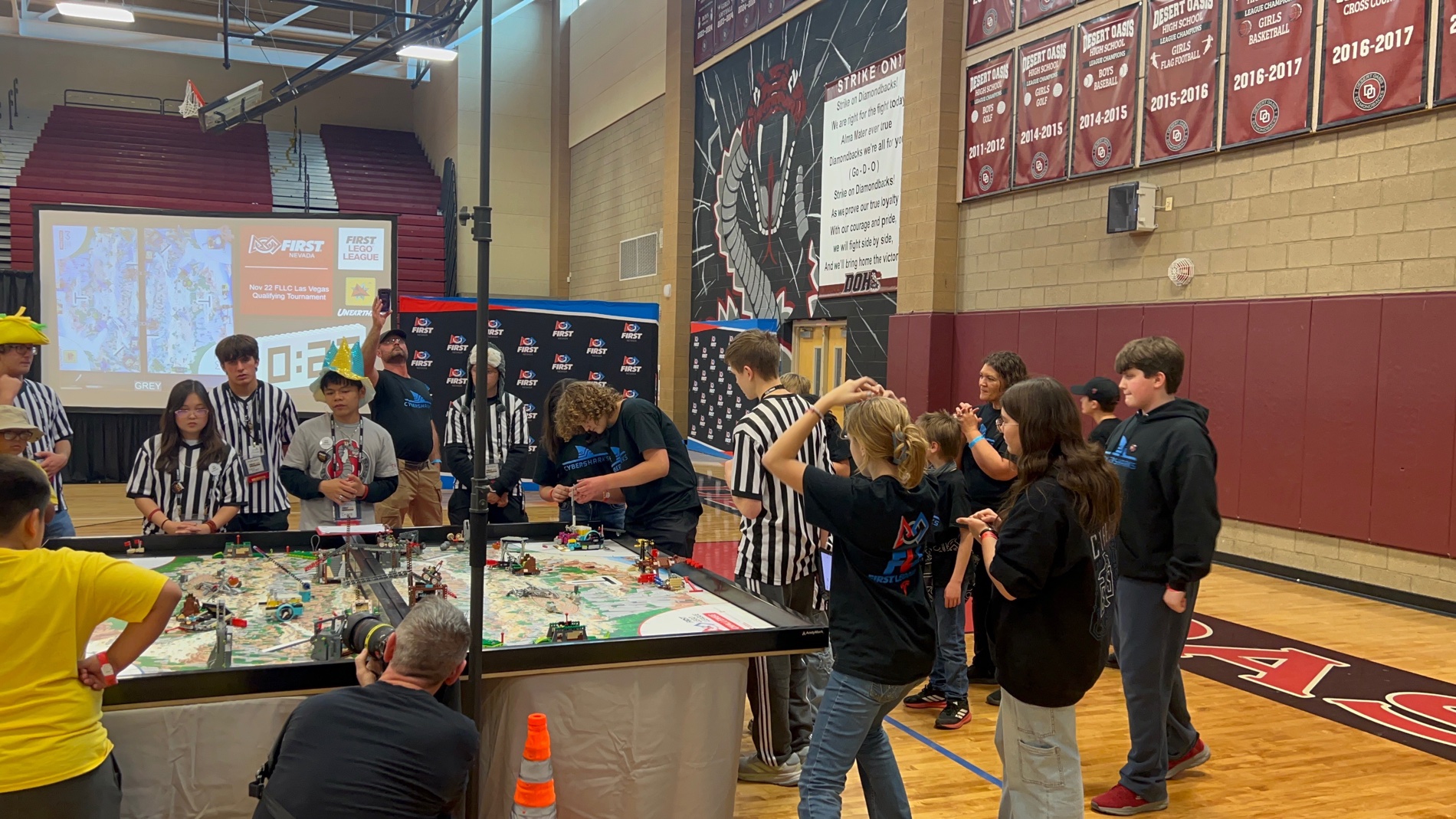
The work begins long before the competition floor. Students apply for a spot on the team and must watch an instructional video outlining every mission, what actions are required, and how much each is worth. Once accepted, team members divide responsibilities: some work on coding, others on robot construction, and a dedicated builder—this year, Zachary Moore—creates specialized attachments to help the robot perform specific tasks. “Sometimes just bumping into something won’t complete a mission,” Ethen explained. “So Zach builds attachments we can add or remove depending on what we need. Last year we had around seven attachments. This year we only needed three because so many missions were similar—pushing, pulling, sliding—so one attachment could do multiple things.”
Alongside the robot work, every FIRST LEGO League team completes an innovation project, a research challenge tied to the yearly theme. This season’s prompt focuses on preserving the future of archaeology as a profession, considering the declining number of trained archaeologists worldwide. Ethen and a teammate took the lead on this portion of the competition, creating a proposal centered on using high-tech drones and rovers to assist with locating and cataloging ancient artifacts. “Archaeology teaches us so much about human history,” Ethen said. “We know so much about ancient Egypt because of archaeology. If fewer people go into that field, we could lose chances to discover things we might never get back.”
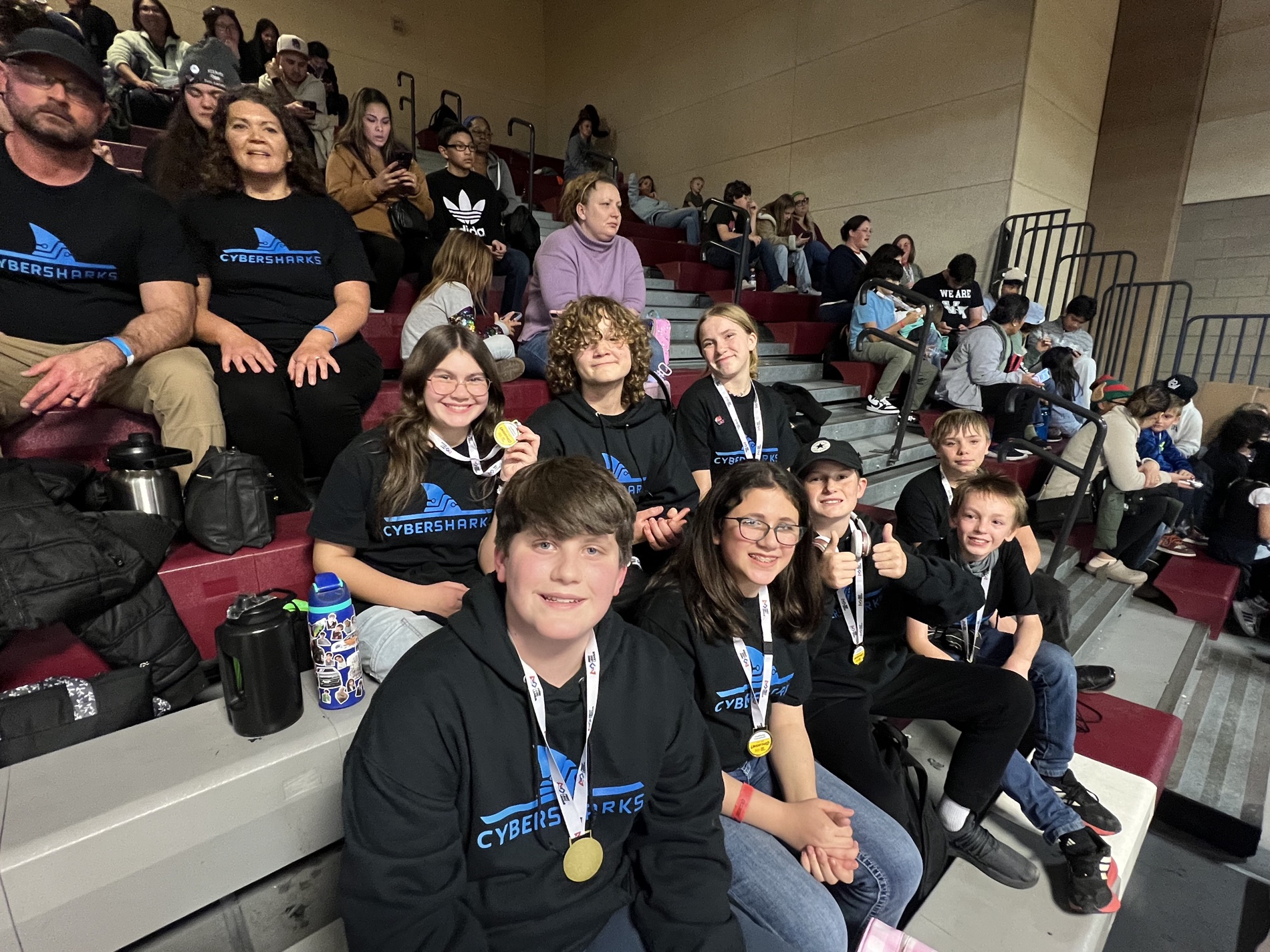
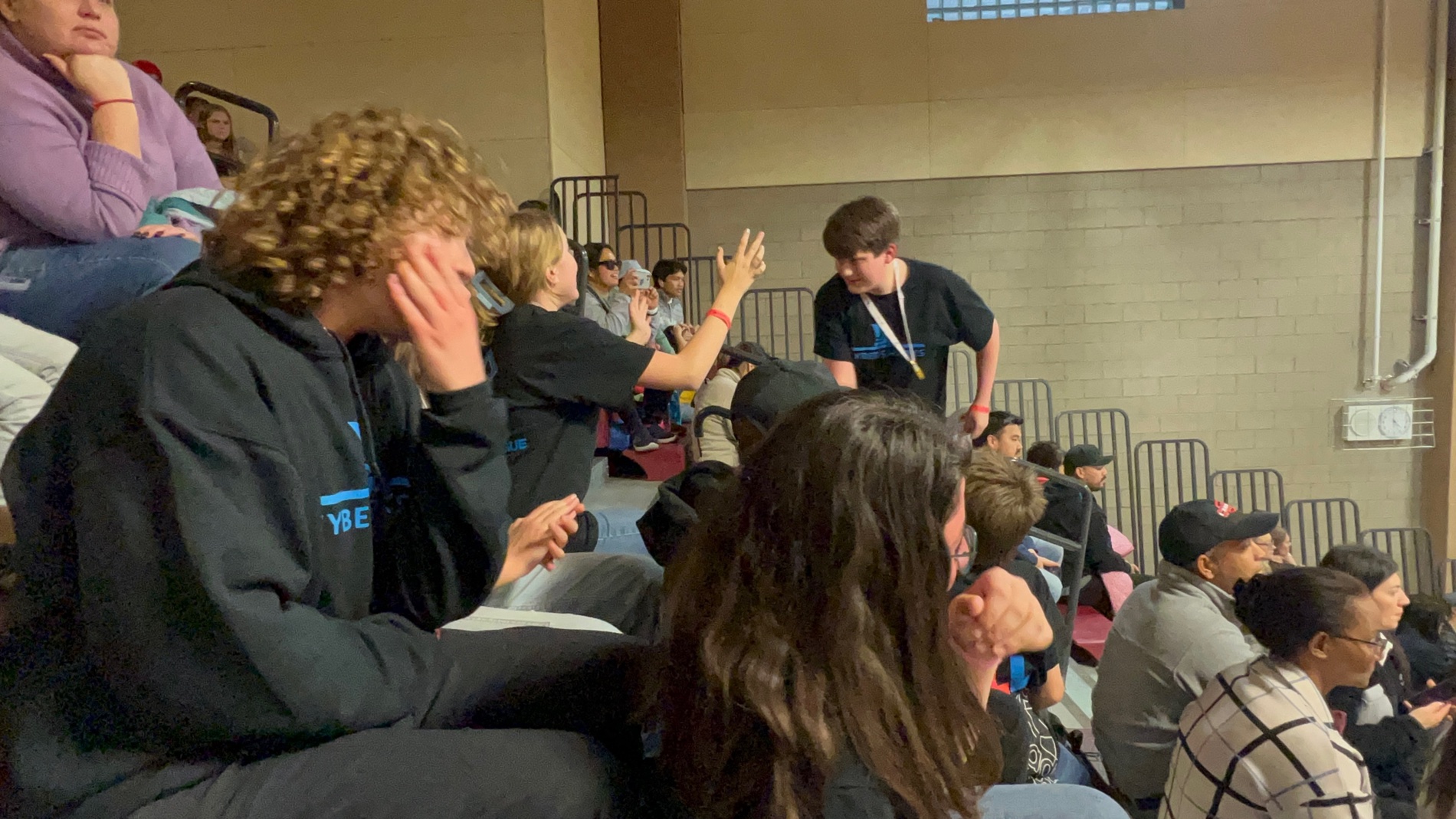
To prepare for competition, Ethen and his teammates built a detailed presentation, mounted it on project boards, and practiced answering potential questions from judges. On competition day, they delivered the project to a panel of three judges before heading into the robot rounds.
The Southern Nevada Qualifier, held Saturday, November 22, at Desert Oasis High School, began early. Teams checked into the pit area at 7 a.m., where they set up their stations, tested their robots on practice tables, and made last-minute coding adjustments. Coding changes are allowed between rounds, but not at the competition table itself. “We can tweak things at the practice tables,” Ethen said, “but at the table, no computers are allowed. We just have to run the code we have.”
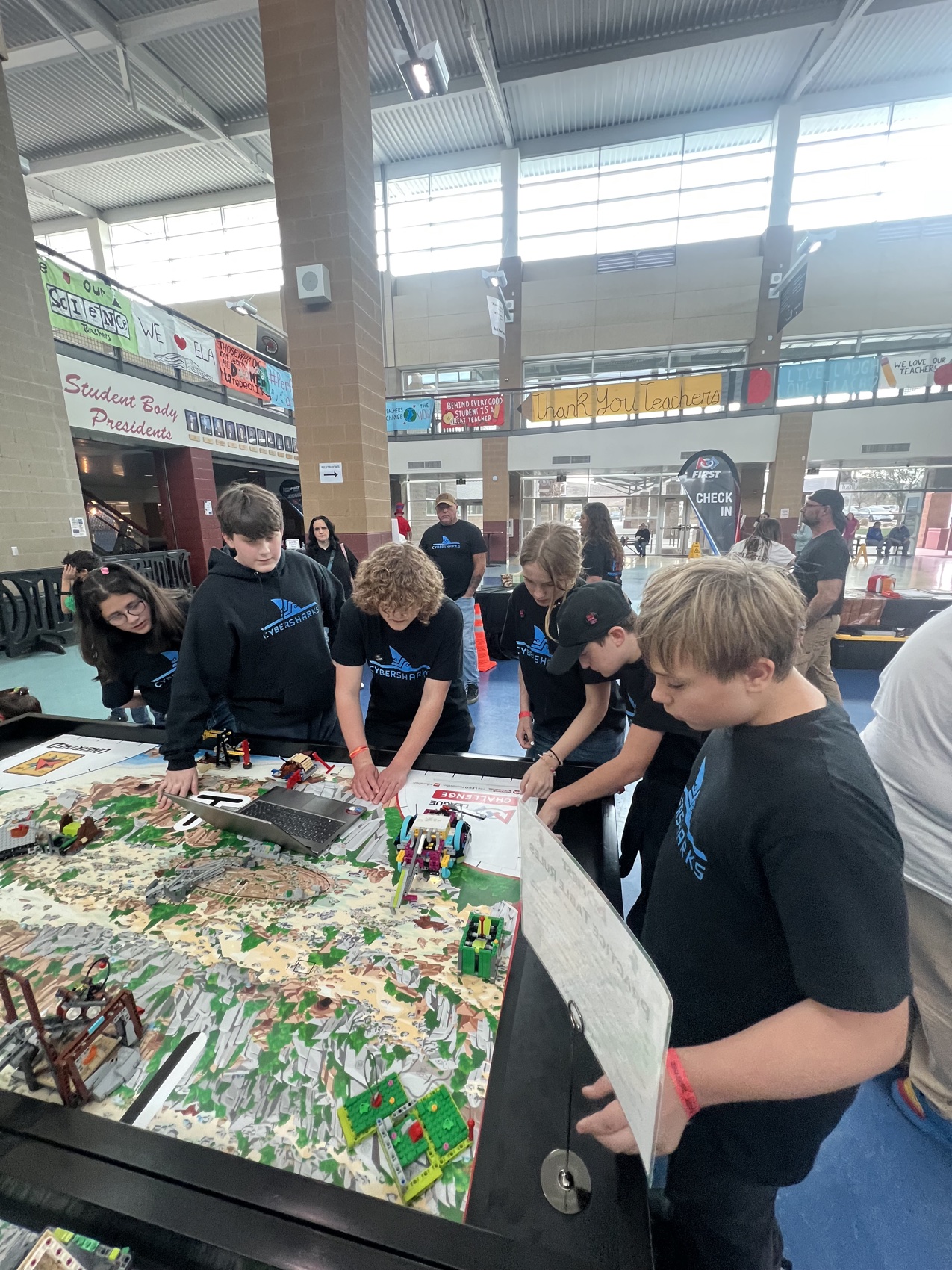
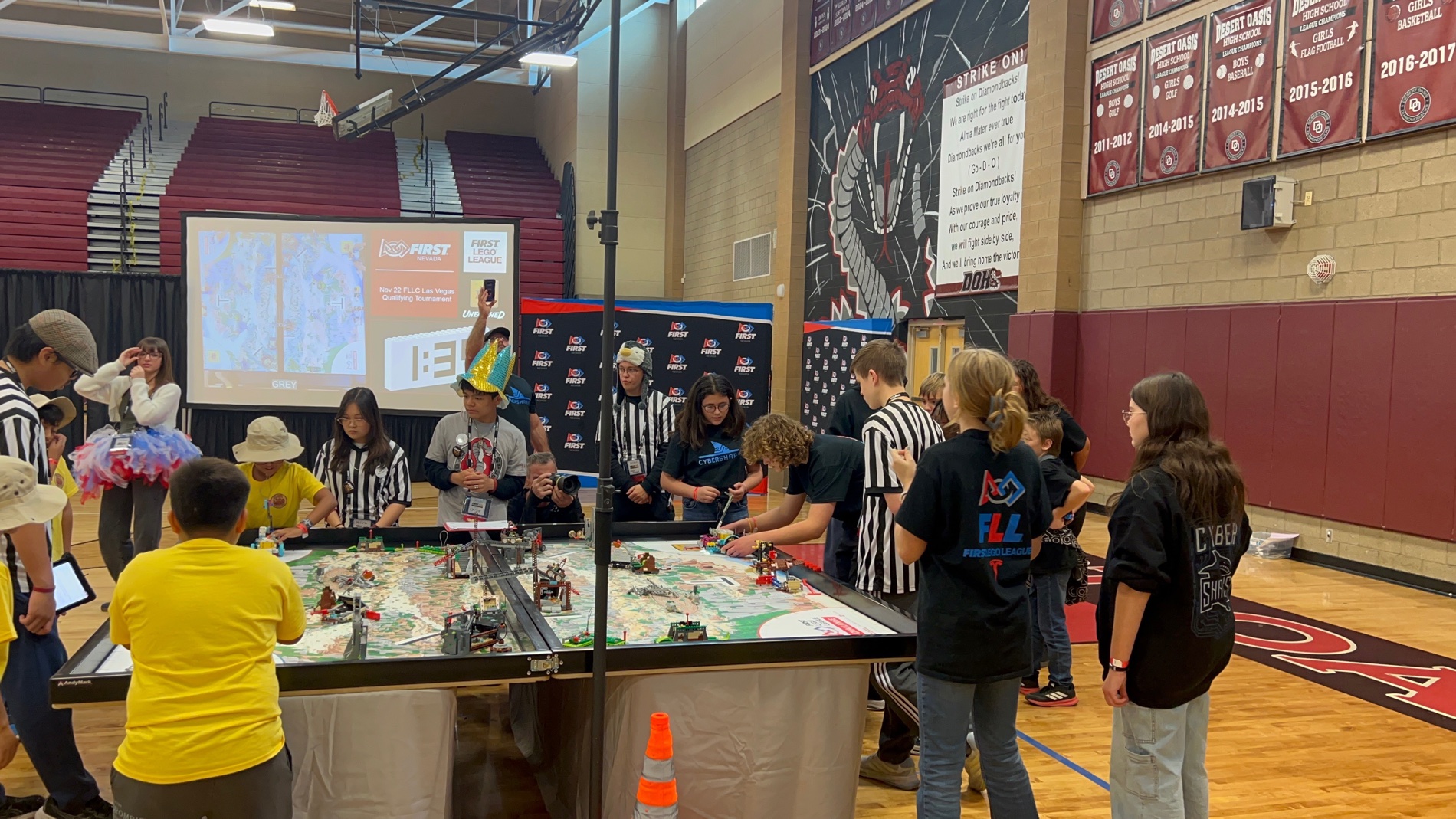
Each team completes three scored rounds, with four team members participating at the table in each one. The robot must start inside a designated “home base,” and students are only allowed to touch it when it’s inside that zone. Touching the robot outside of home base costs the team precision tokens—markers that track how cleanly and accurately the robot completed its missions. Losing too many precision tokens results in point deductions. “In our first round we only lost one,” Ethen said. “In the second we lost two, and in the third we lost three.” Every small misalignment, accidental nudge, or shifted LEGO piece can impact a robot’s performance, and even top-tier teams face unpredictable challenges.
The atmosphere at competitions is both collaborative and competitive. While teams strive to earn high scores, they are also evaluated on FIRST LEGO League Core Values, including teamwork, friendly sportsmanship, problem-solving, and community engagement. Judges roam the competition floor incognito, quietly watching how students interact—not just with their own teammates, but with other schools. Students exchange small themed trinkets, buttons, or tokens, designed to build community across teams and promote gracious professionalism.
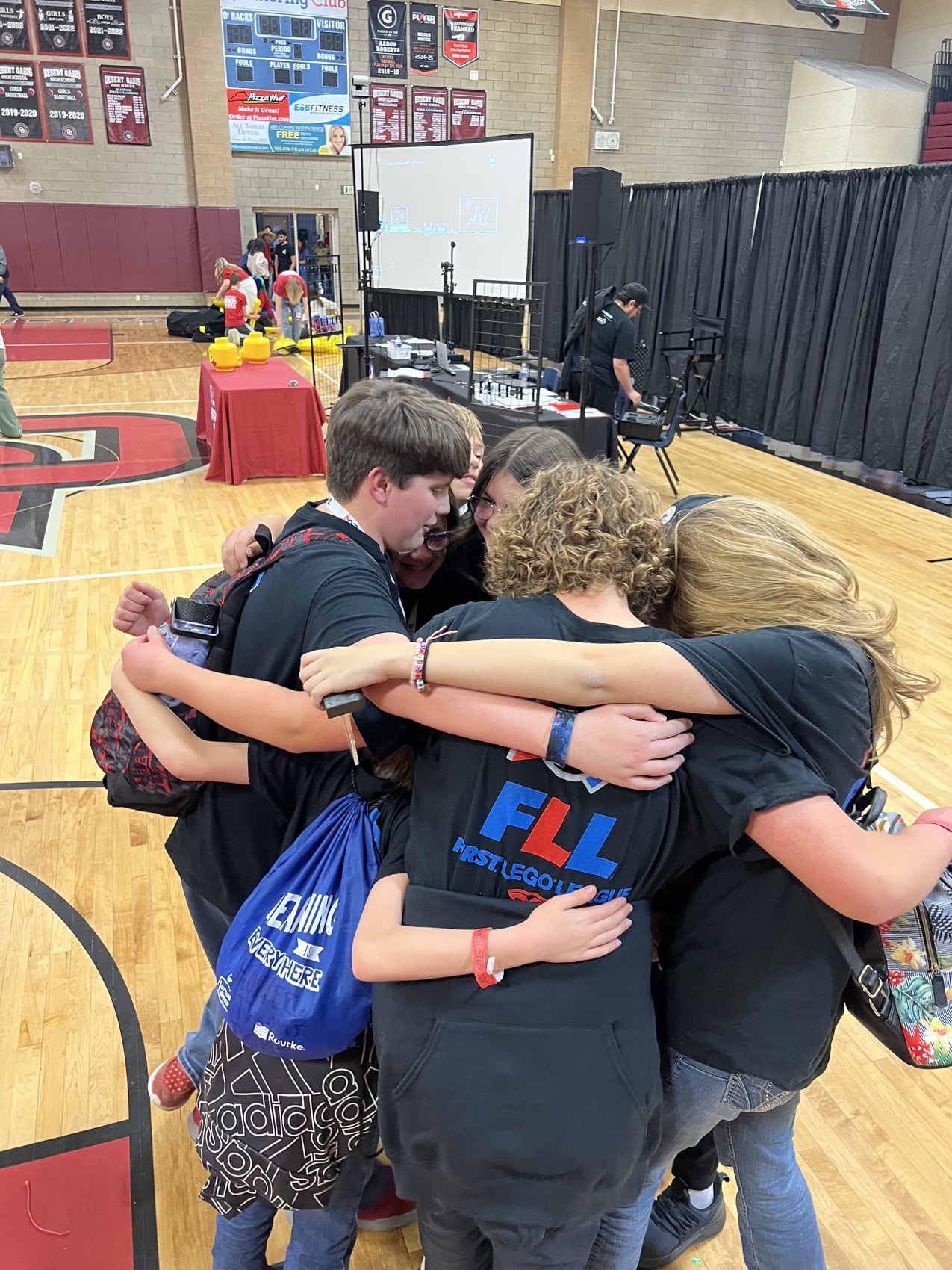
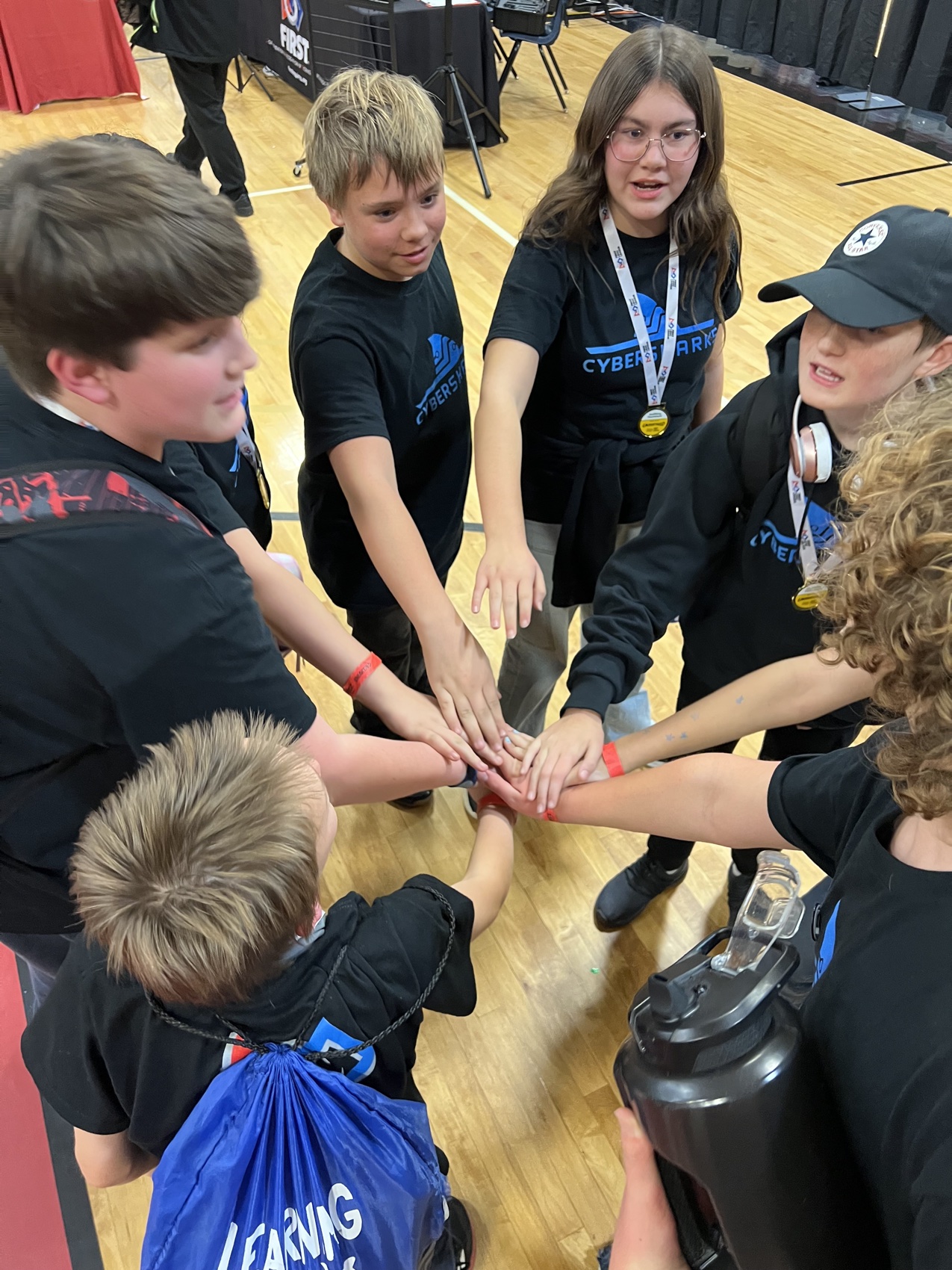
The RCMS team, which Ethen feels has grown significantly stronger in teamwork across his three years with the club, approached this season with confidence. “In sixth grade, I felt like we could’ve worked together better,” he admitted. “In seventh grade we got a little better, but this year—this team works really well together. I knew by our third meeting we were probably going to qualify.”
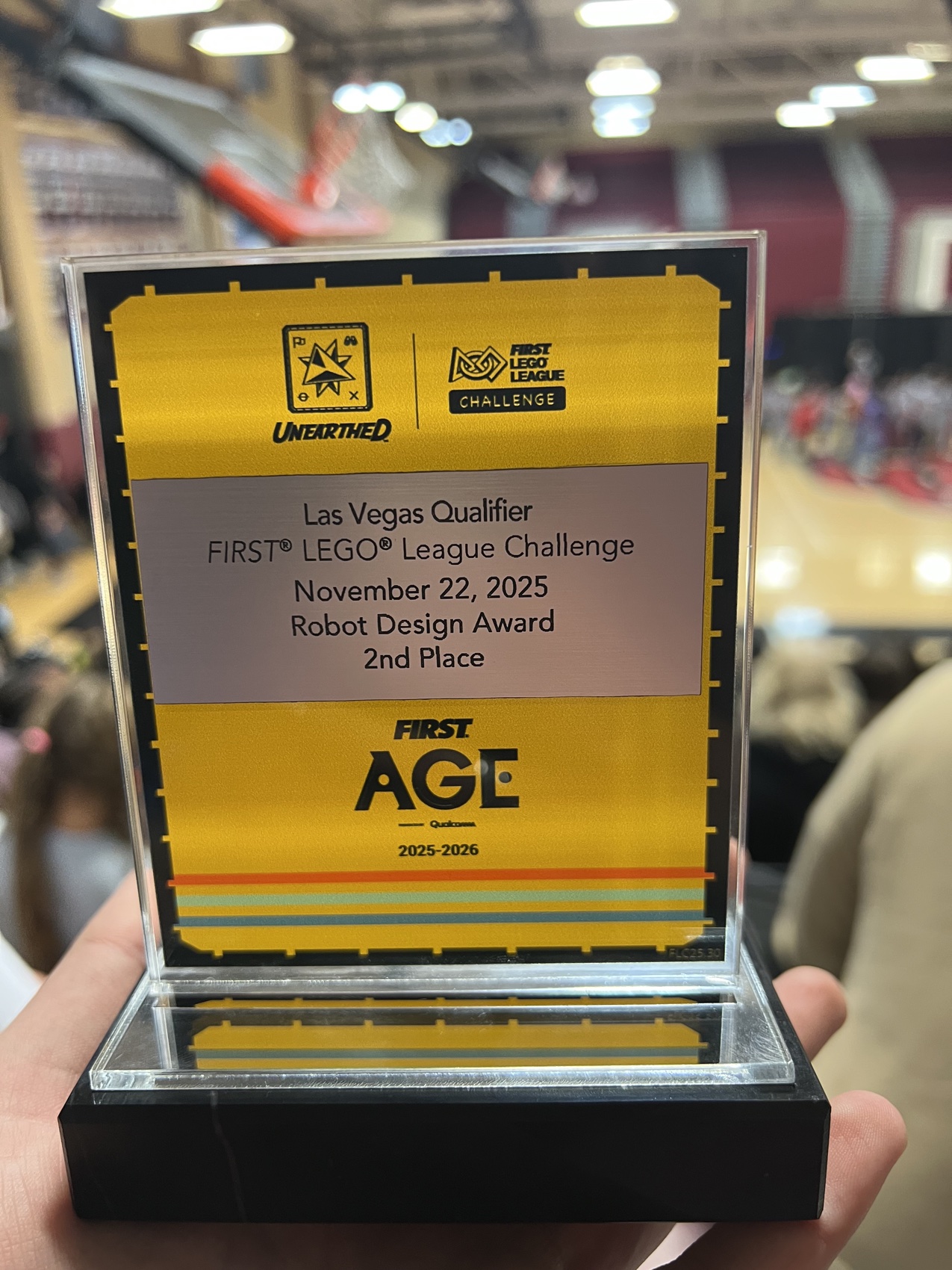
And they did. Although the event organizers did not display ranking screens this year, shifting the emphasis from leaderboard watching to enjoying the experience, the RCMS team finished strong. They earned second place in the Robot Design Award and were one of the teams selected to advance to the next round—the Southern Nevada Championships, which will be held December 13 at The Meadows School. The team’s full roster includes Avery Sampson, Breanna Derouin-Rayner, Emma Talent, Zachary Moore, Hunter Thomas, Thomas Dreyer, Ethan Marsh, and Ethen Bolling.
Leading them are coaches Mrs. Marsh, a sixth-grade science teacher at RCMS, and Mr. Marsh, a physical education teacher at PVHS. Mrs. Marsh hosts the meetings, supervises engineering work, and ensures the team stays on track, while Mr. Marsh brings what Ethen calls a firm—but supportive—approach. Importantly, the Marshes emphasize that the work must be student-driven. “Some teams have coaches doing the coding,” Ethen said. “But Mrs. Marsh always tells us this is the kids’ team. We do the work.”
For Ethen, this season is bittersweet—he is one of three students aging out of eligibility this year, along with teammates Avery Sampson and Ethan Marsh. FIRST LEGO League competitions cap participation at age 13, meaning older eighth graders and high school freshmen must move on. While the high school does have robotics opportunities, the competitions differ, and LEGO-based leagues are specifically designed for younger participants.
Still, Ethen’s excitement for the upcoming championship round is unmistakable. The team hopes to advance even further this year; last year, qualifying teams earned a trip to Miami for an upper-level competition. Whether or not RCMS reaches that stage, Ethen believes this season reflects the best teamwork the club has ever achieved—and one of the most rewarding experiences he’s had at RCMS.
“It’s really fun,” he said. “We work great together, we help each other, and we’re getting better all the time. I’m excited for what we can do next.”
As the RCMS LEGO Robotics team prepares for its December 13 competition, the community can be proud of the creativity, collaboration, and problem-solving these students bring to every build, every line of code, and every dazzling moment when their LEGO robot moves across the table exactly the way they engineered it to.

