

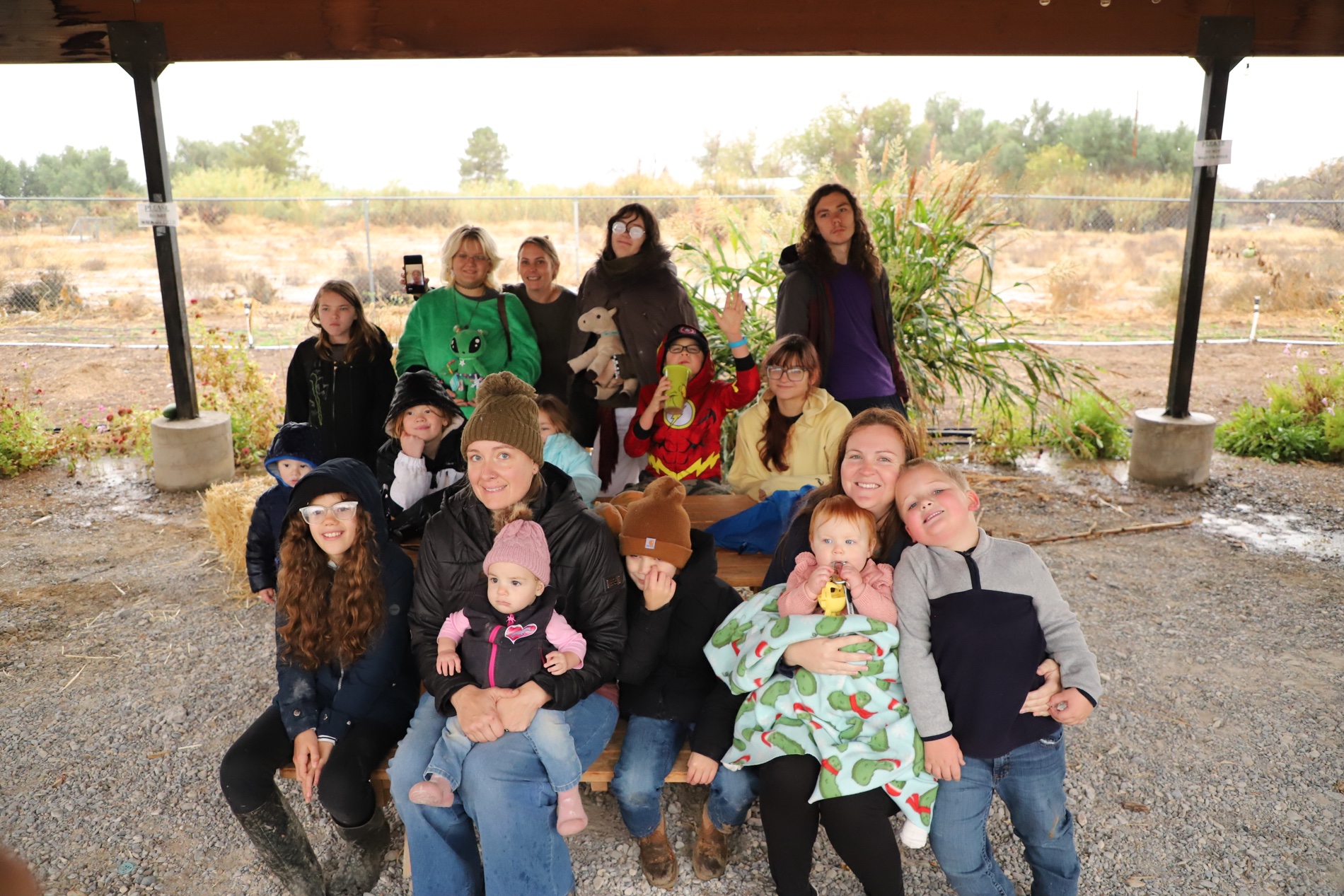

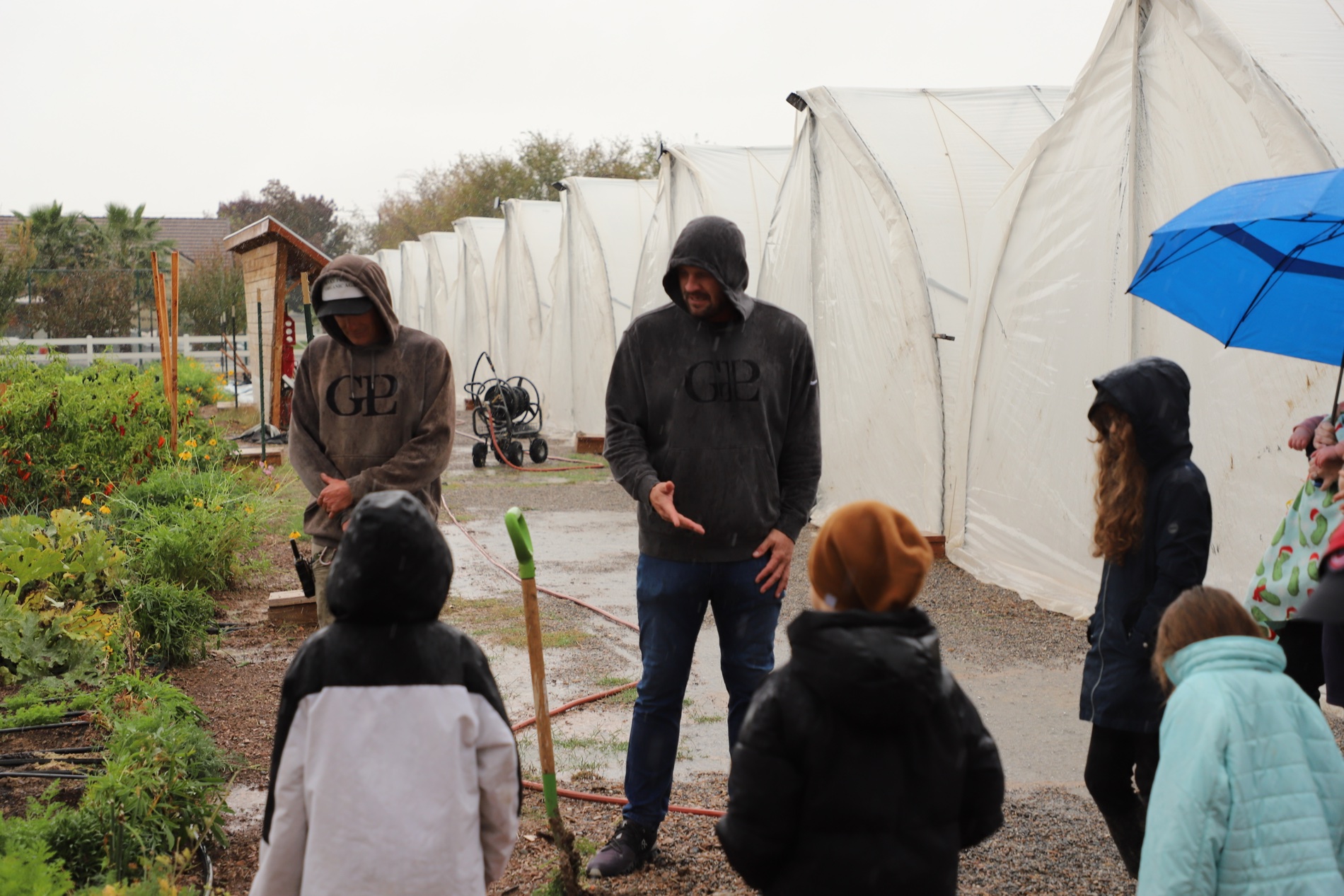
A steady rain fell over Pahrump on Tuesday morning, but it didn’t dampen the enthusiasm of the Pahrump Valley Christian Homeschoolers as they arrived at Green Life Produce’s farm for a field trip months in the making. For group organizer and parent volunteer Jamie Giammarino, the weather was barely a consideration. “They messaged me this morning asking if we were still coming,” she said with a smile. “I told them we’re coming rain or shine. These kids dress for the occasion.”
Rain boots, jackets, and eager faces filled the farm’s entrance as nineteen students, ranging from infants wrapped in carriers to seniors in high school, gathered with excitement. According to program founder Mkenzie Manuel, the group is unusually teen-heavy. “Half our students are teenagers,” she said. “They’re actually our largest group, which is really special. They love being hands-on, and they love helping the younger kids learn.”
This field trip was part of the group’s monthly structure: a themed lesson, followed by an in-person experience, and finally a student presentation to show what they learned. November’s topic was farming, and Jamie had reached out to Green Life Produce after noticing the incredible work being done by the regenerative agriculture team there. She organizes field trips for another group in town as well and knew this visit could be meaningful. “I wanted our kids to see what farming really looks like—how food grows, how soil works, why the earth is alive,” she said. “Green Life was the perfect place.”
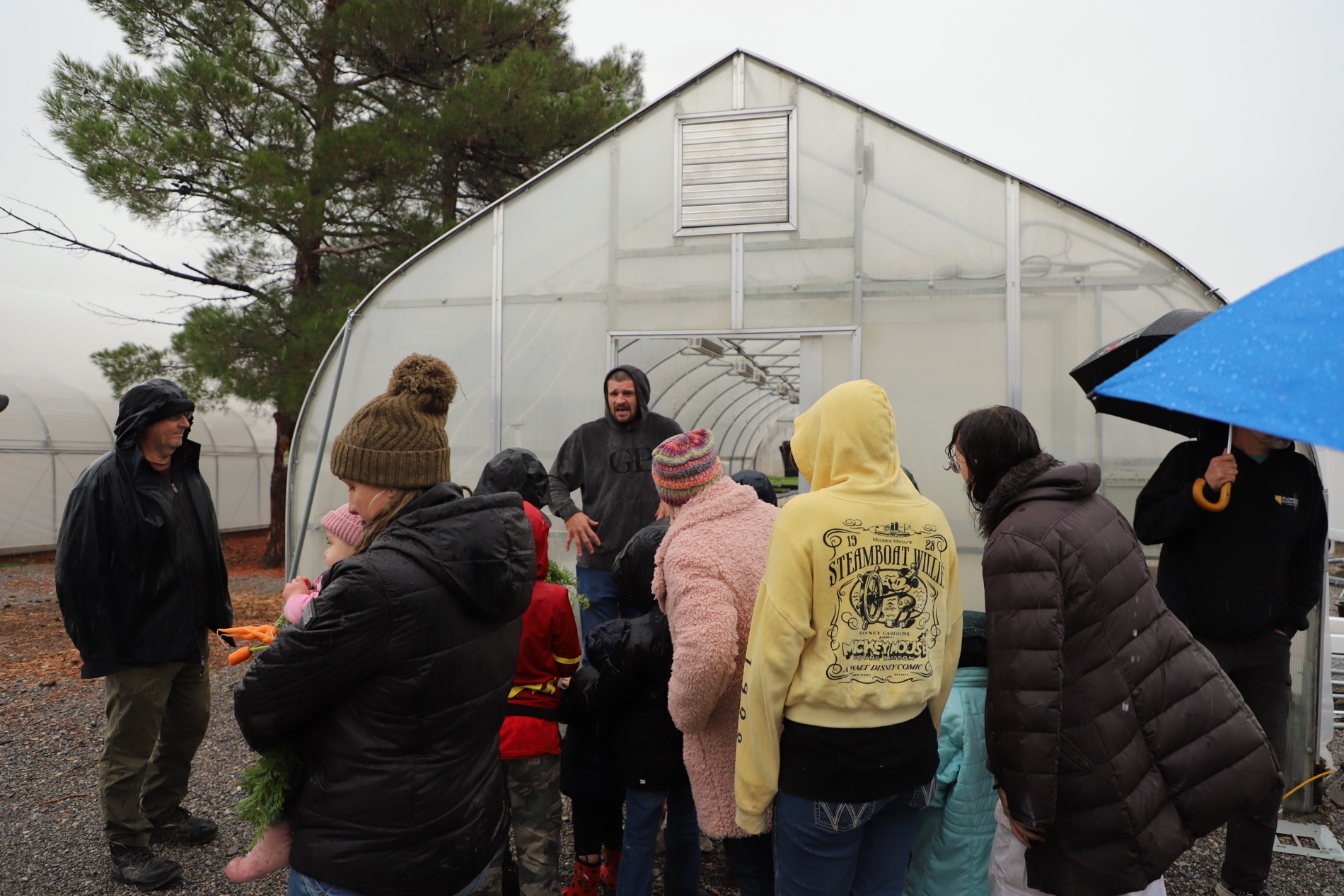
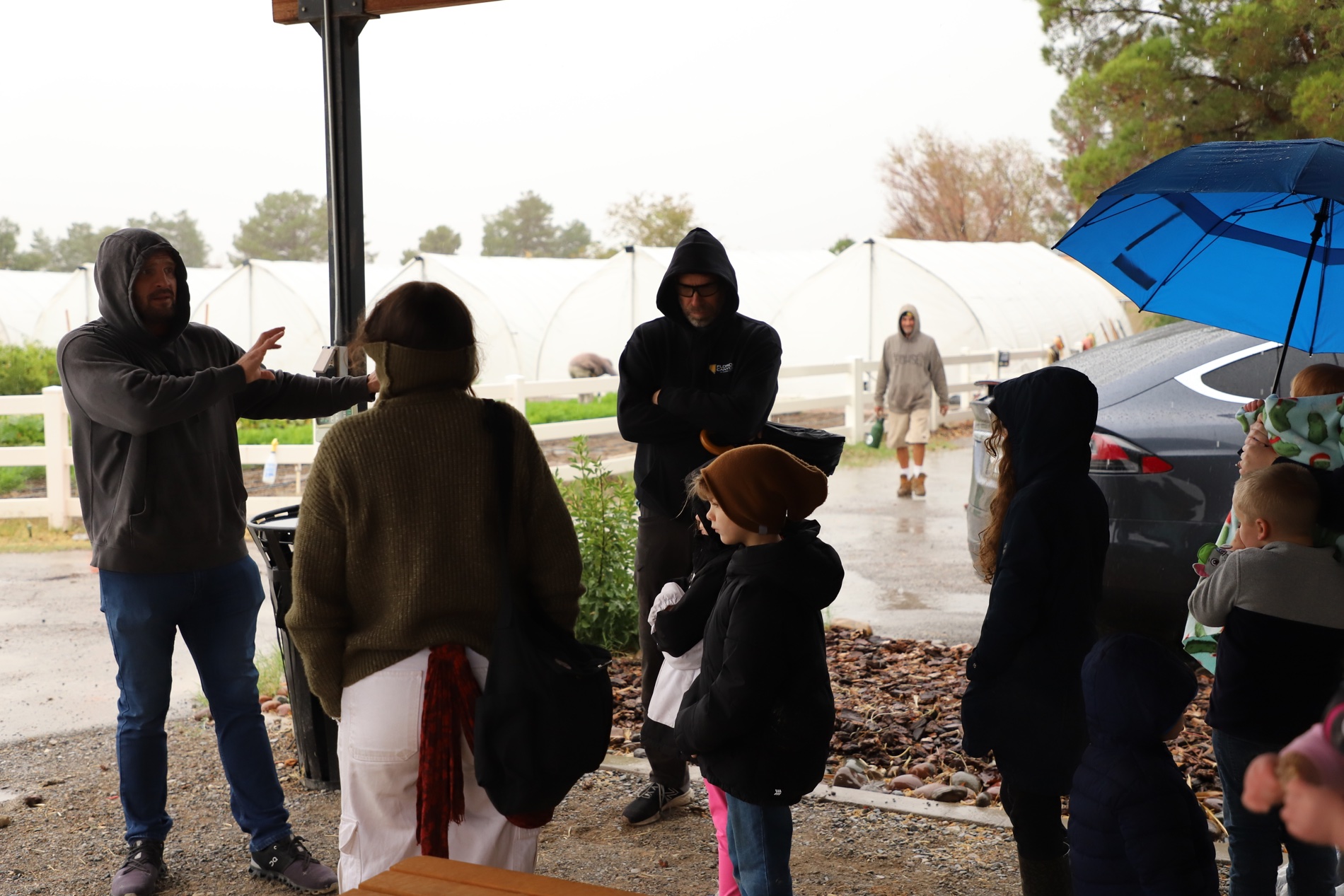
The group was welcomed by farm staff and quickly gathered under a protective canopy as one of the farm’s owners, Steve Cantwell, a soil expert, launched into a lesson that had every child listening intently. He explained that every pinch of soil contains millions of living organisms—bacteria, fungi, arthropods, earthworms—working together in a network known as the soil food web. He compared it to a supermarket system where plants trade sugars, described as “cakes and cookies,” with microbes in exchange for vital nutrients. Students laughed when he jokingly called the process “the poop loop,” but the point stuck. Even the youngest children watched the soil closely, imagining the microscopic life wriggling beneath their feet.
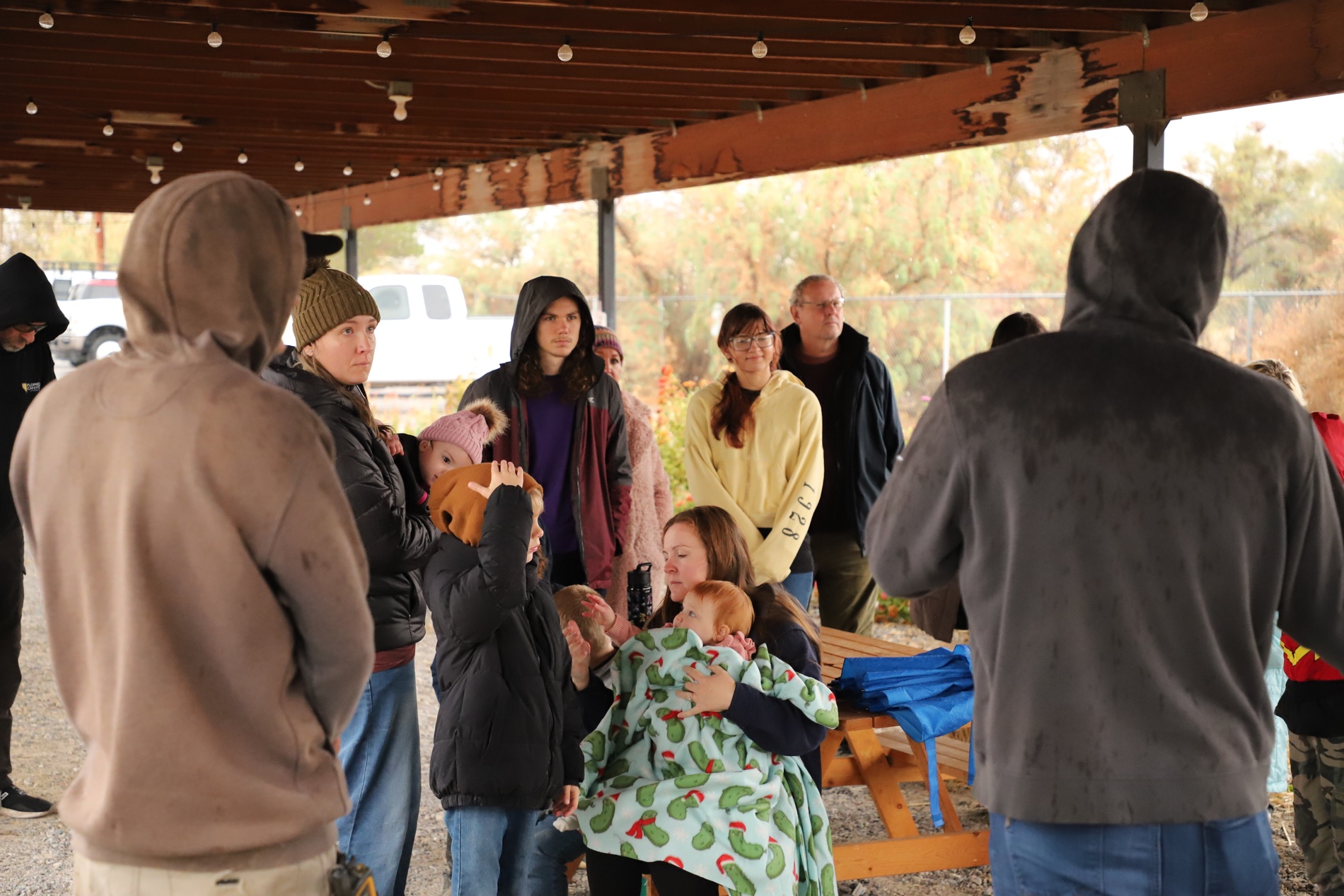
The lesson expanded into something much bigger—how modern farming often disrupts or destroys this natural balance by killing the very organisms that make soil healthy, and how that can even affect human health. “If we kill biology on our plants with harsh chemicals and then eat that food, it impacts the microbiome in our stomach,” he explained to the group. “Here at Green Life, we focus on keeping things alive. That’s our philosophy.”
Even with the steady rain, the group began walking the property. The guide pointed out bright flowers grown intentionally around the crops—not for looks, but for function. The blooms attract pollinators like bees and butterflies, but also beneficial predator insects such as ladybugs and lacewings. “They come for a snack,” he explained, “and then head to the crop plants to eat pests like aphids and thrips. It’s nature balancing itself.”
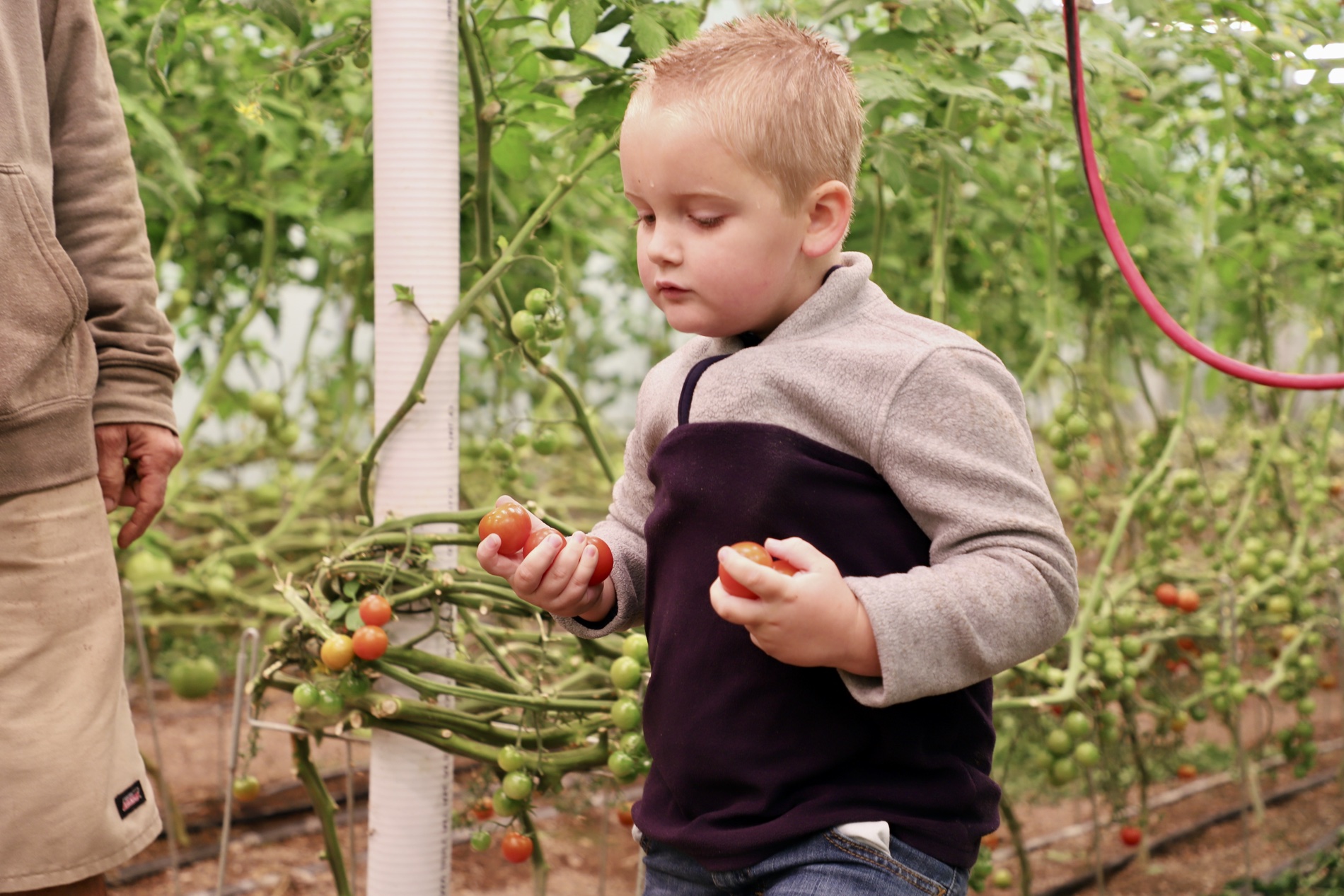
Even in the wet weather, the children were fascinated as they toured the farm’s three main growing areas: the open fields, the tunnels designed to protect crops from harsh weather, and the highly controlled greenhouses, which Steve jokingly referred to as “spaceships” due to their advanced technology. The greenhouses use lighting, heating, cooling, and ventilation systems that can be controlled from a smartphone, allowing year-round growth of tomatoes, cucumbers, and other high-demand produce.
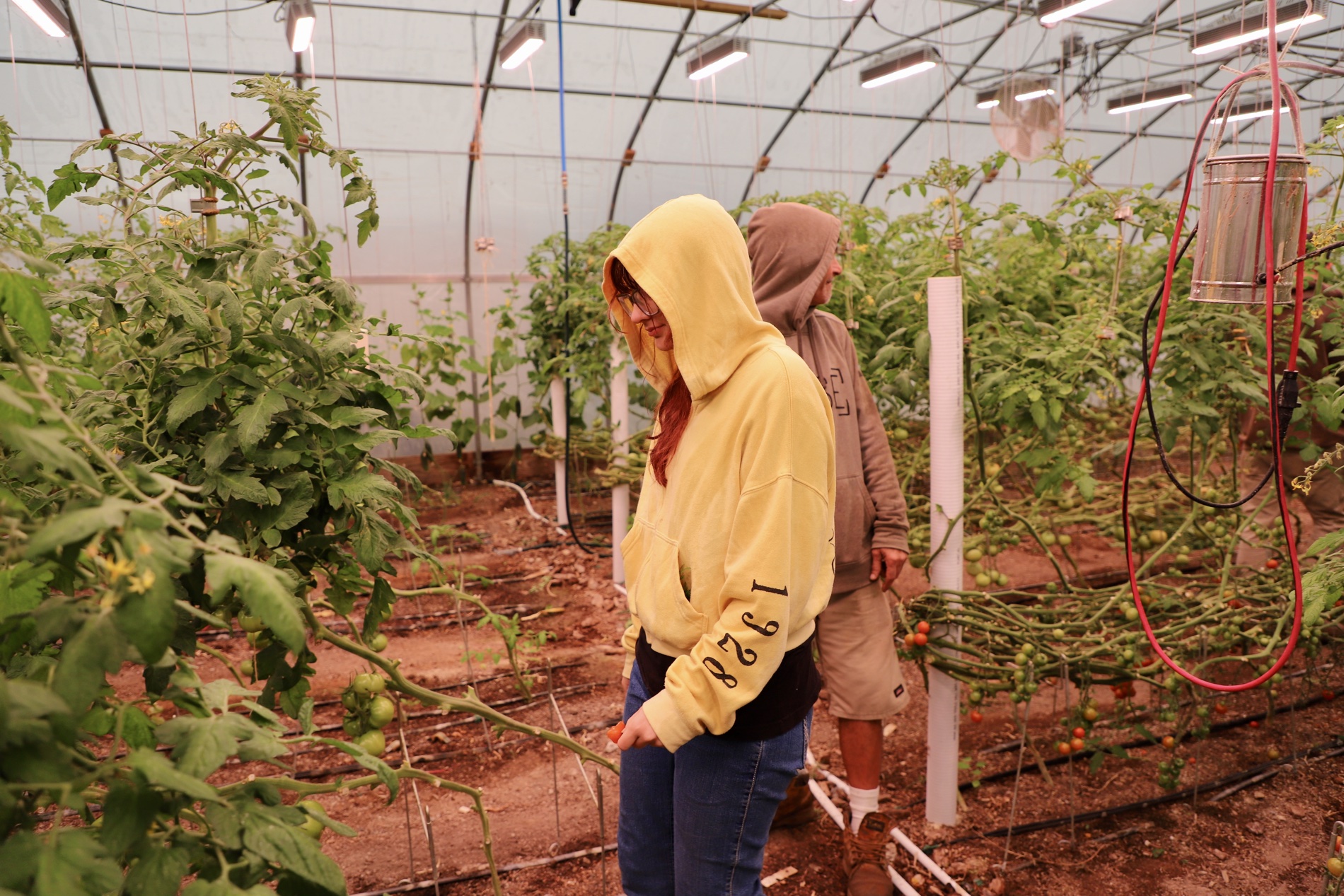
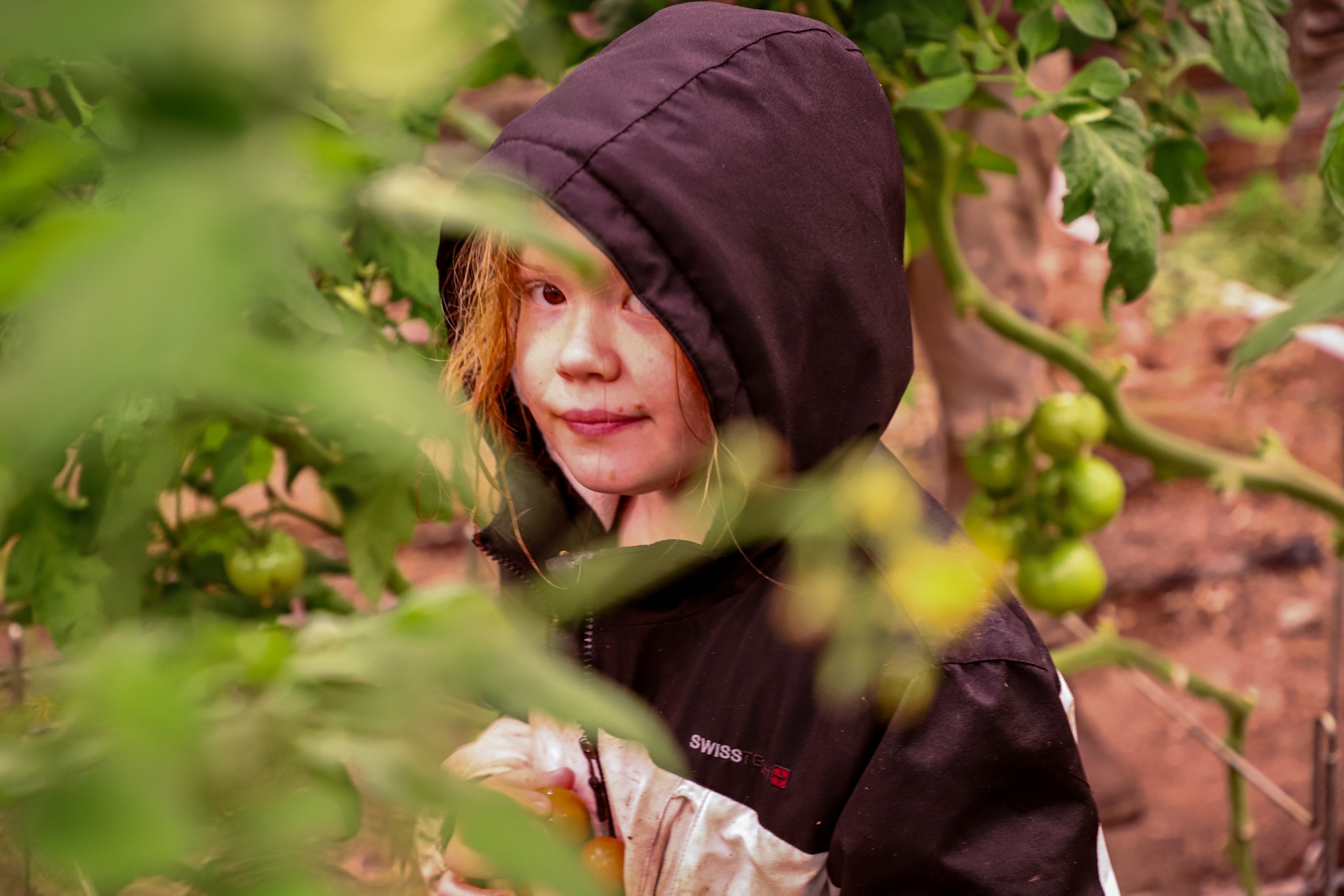
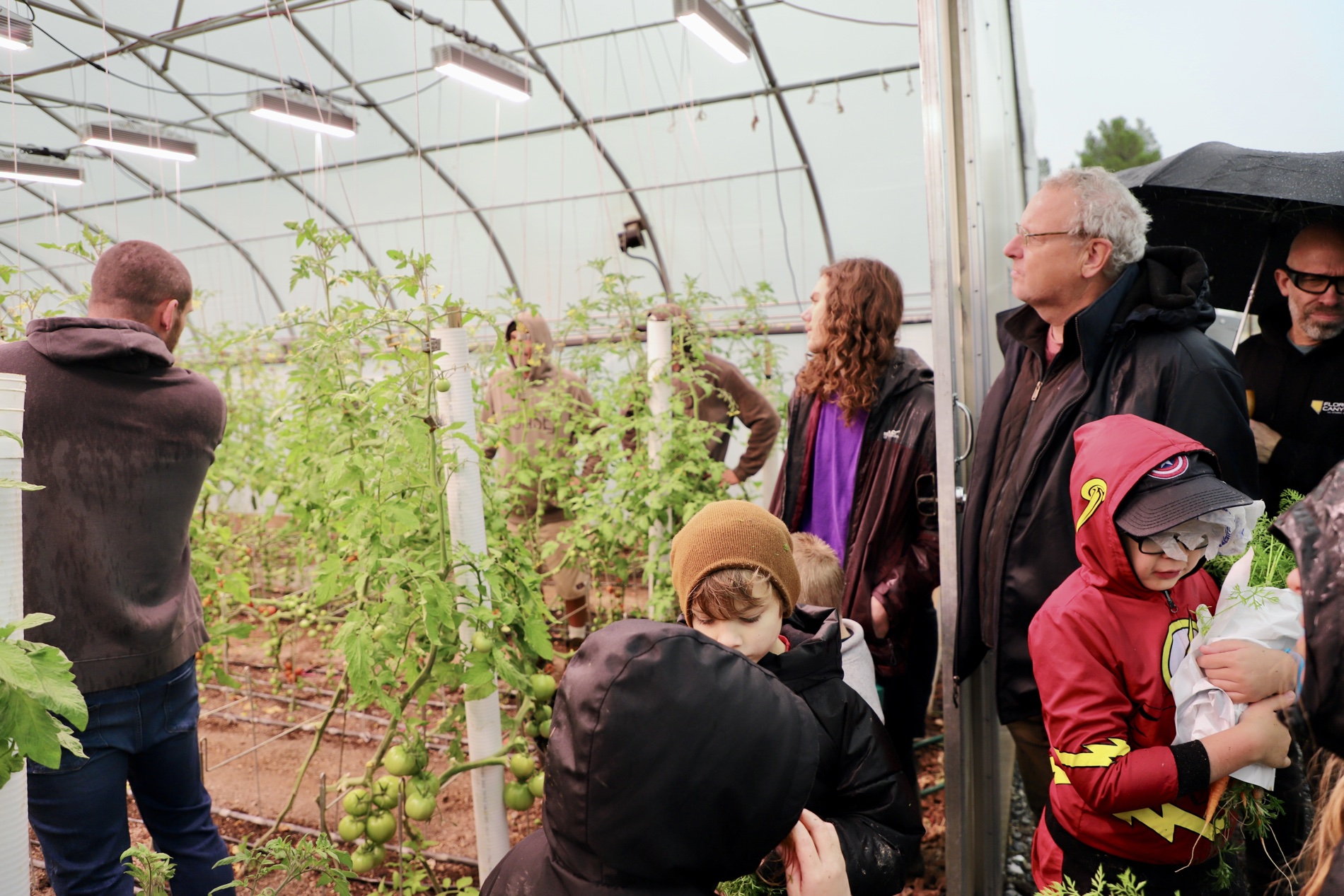
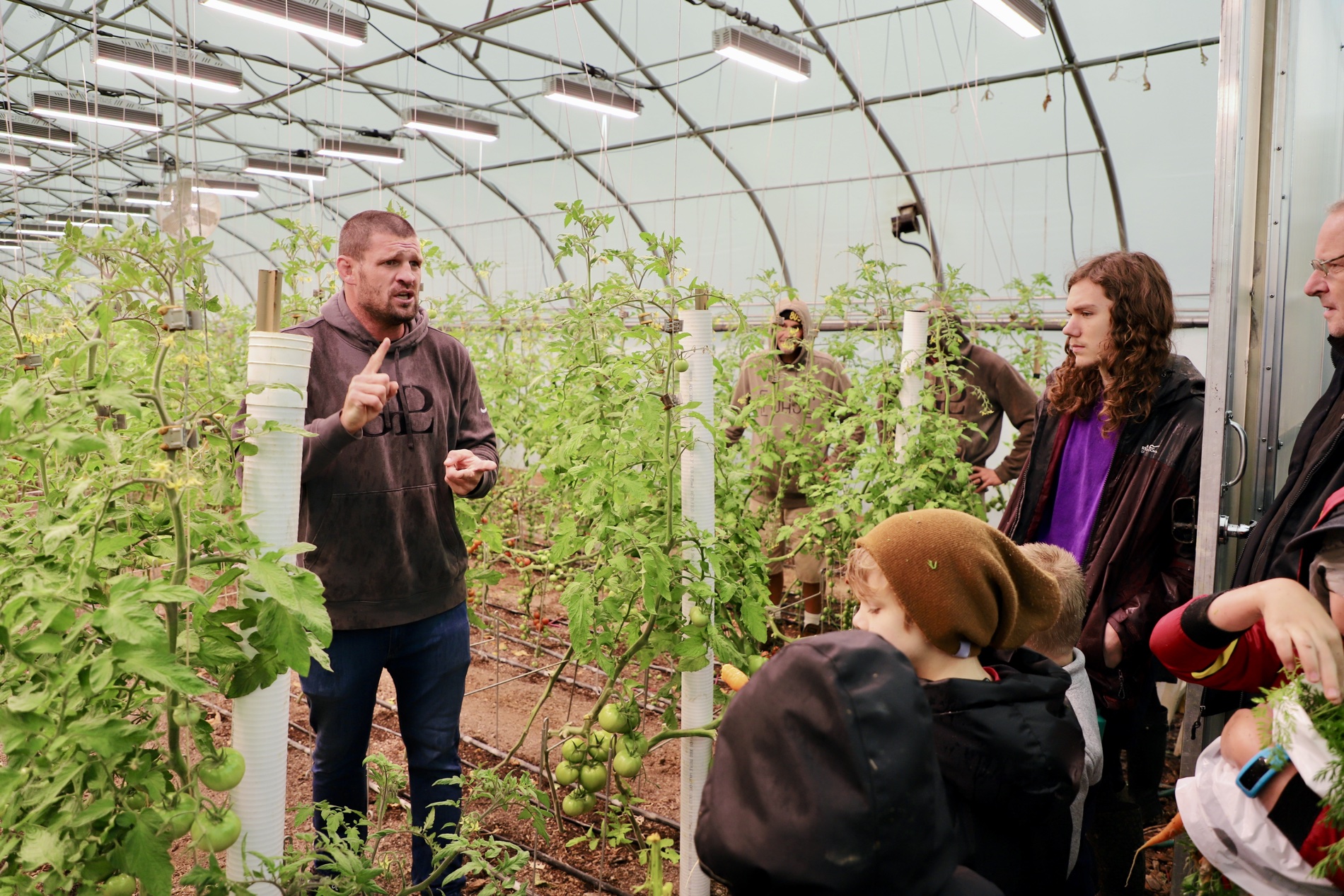
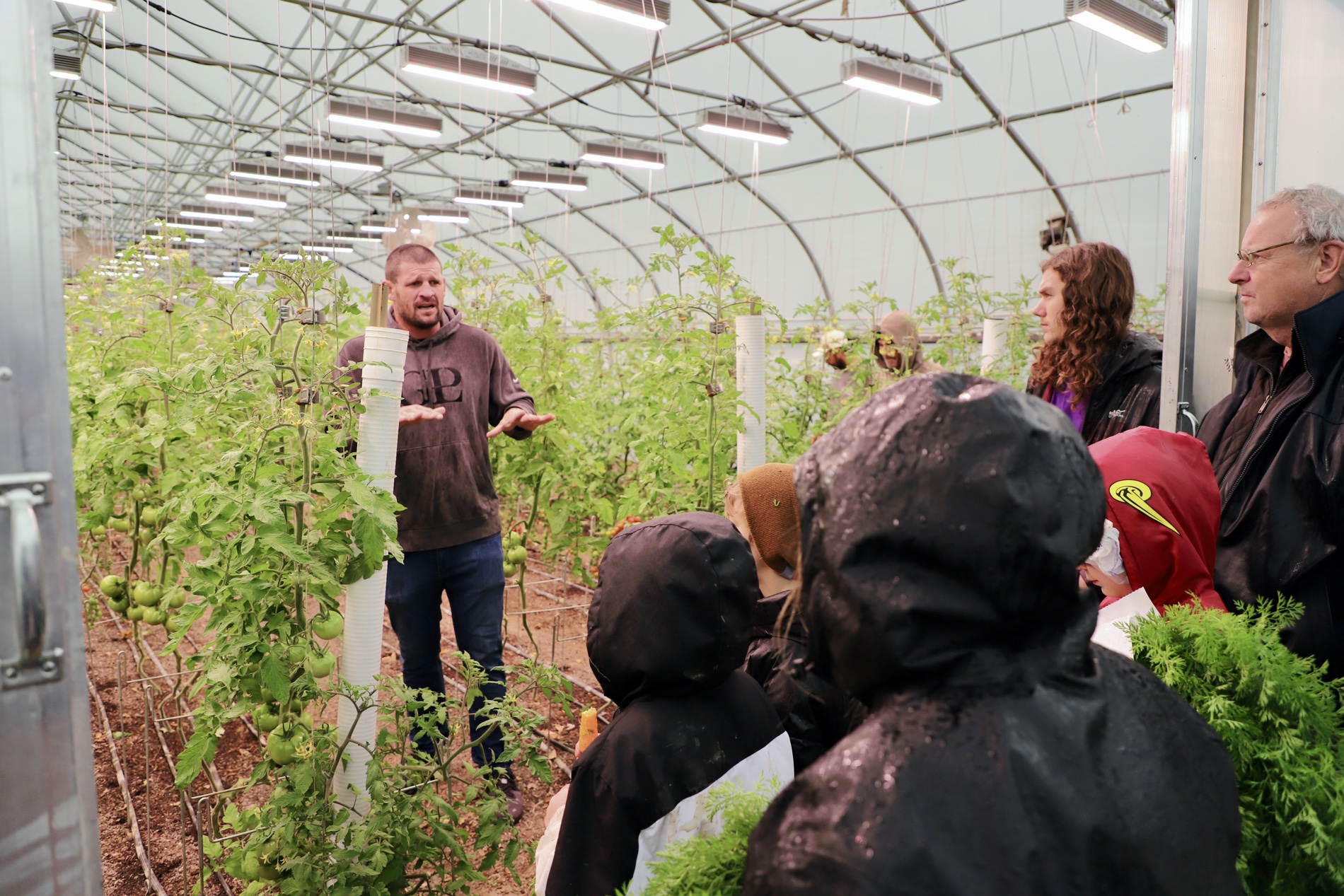
Along the way, Steve detailed how the fields came together over years of dedicated soil building. The land had once been a horse property—hard, compacted, and low in nutrients. The team tilled it once, added gypsum to break up the clay, used compost to introduce organic matter, and sent samples to Logan Labs to study the soil’s strengths and weaknesses. Since then, every decision has been data-driven. “We don’t improvise,” he explained. “We use the reports and slowly improve the soil with small, informed changes.”
The farm’s regenerative philosophy continued into discussions of fertilizing. When one student asked what they feed the plants, Steve emphasized that they don’t feed the plants—they feed the soil. He described using things like crushed alfalfa pellets, crustacean meal, and plant-based inputs that soil organisms break down naturally. “The plant eats what it wants, when it wants,” he said. “We don’t force-feed it with bottled nutrients. We let nature do the work.”
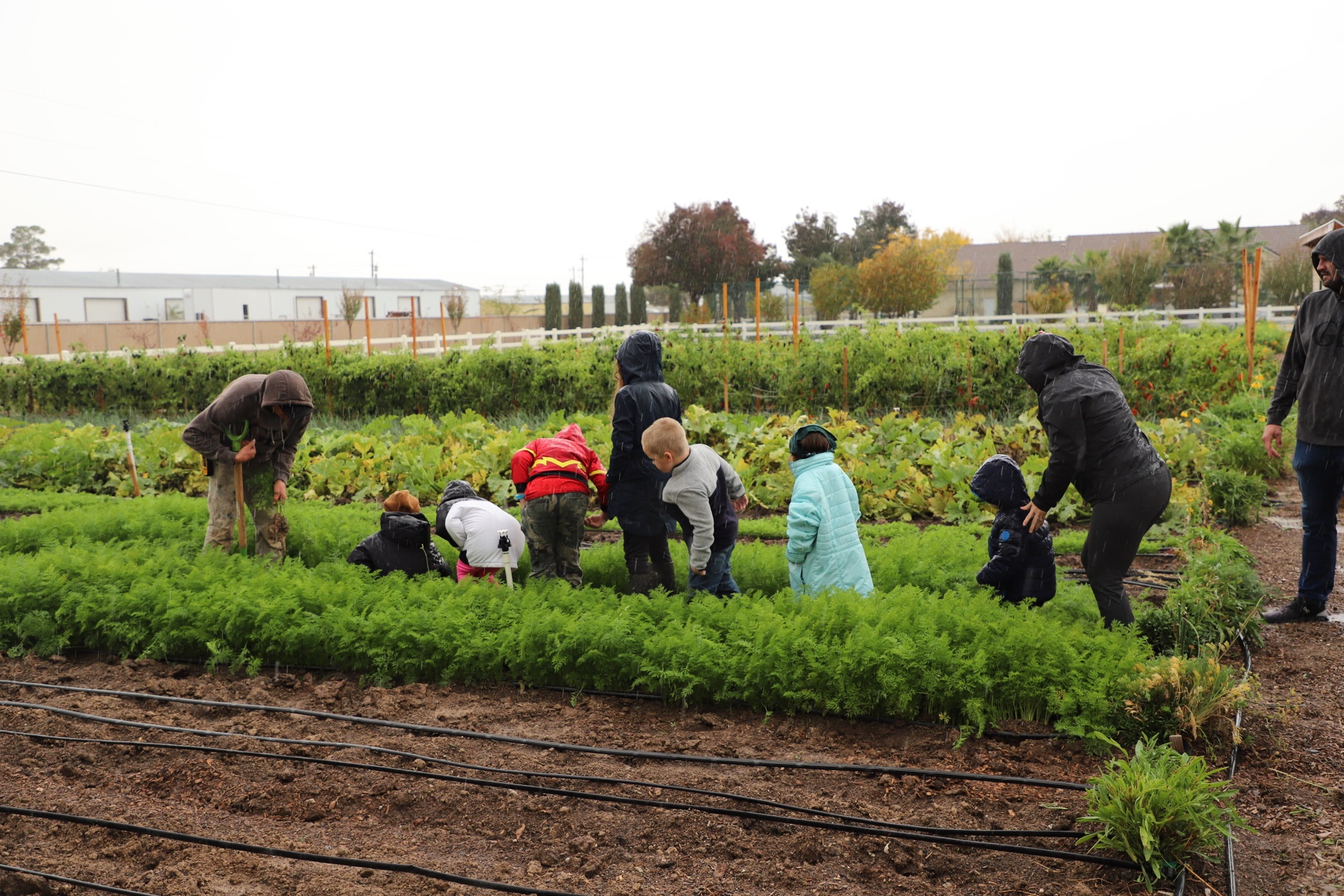
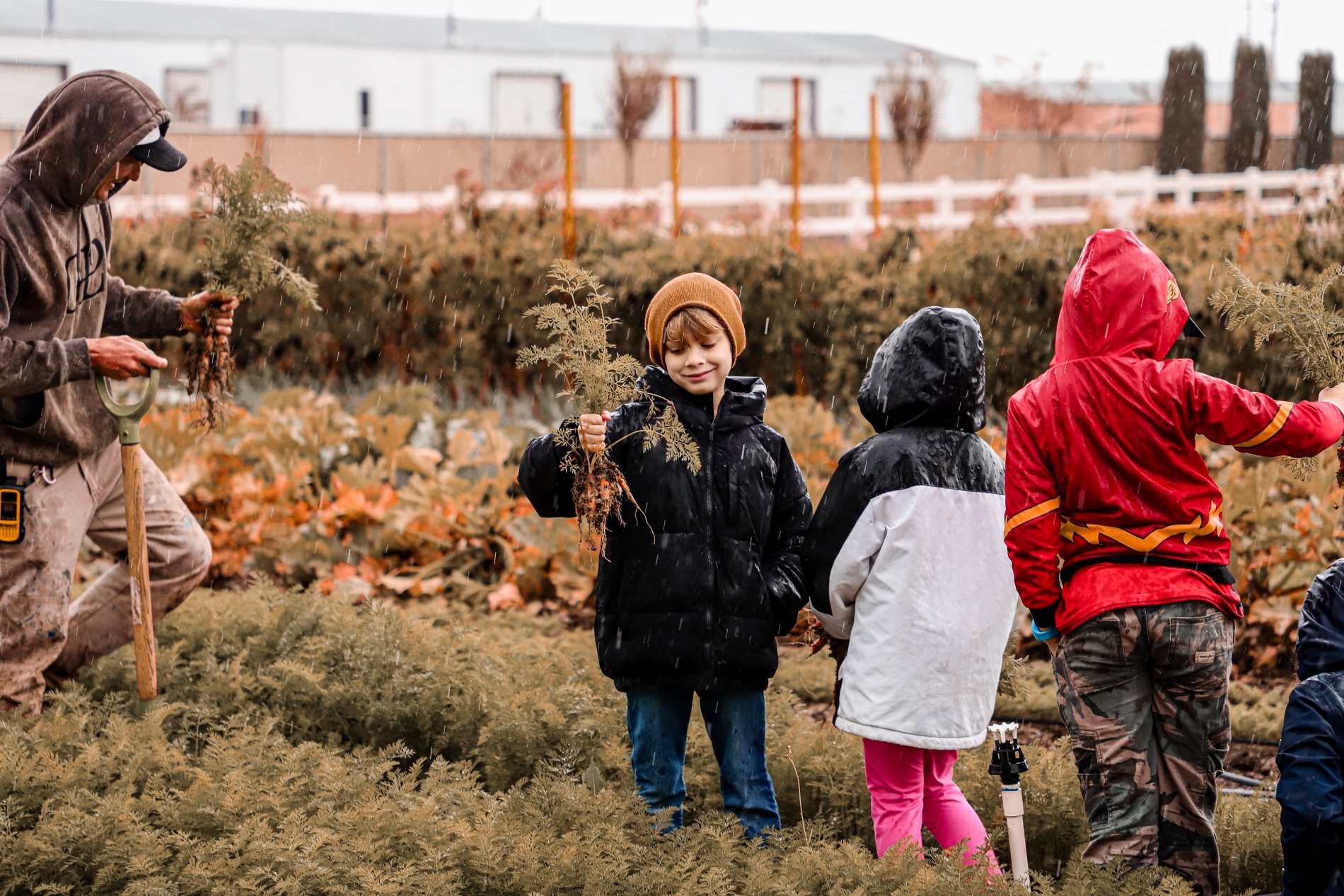
As the group rounded a row of carrot beds, Steve paused, grinned, and asked the students a question that made several of them cheer: “Do you want to pull some carrots?” Hands shot up immediately. Boots splashed through wet soil as children scattered across the rows, gripping leaves and pulling hard until bright orange carrots emerged from the ground, some thick, some skinny, all covered in mud. They rushed to the wash station, rinsing their carrots and marveling at the dirt that came off. When told they could take a bite—even with a bit of soil remaining—several brave kids did so proudly. “It’s good!” one shouted through a mouthful of crunchy carrot.
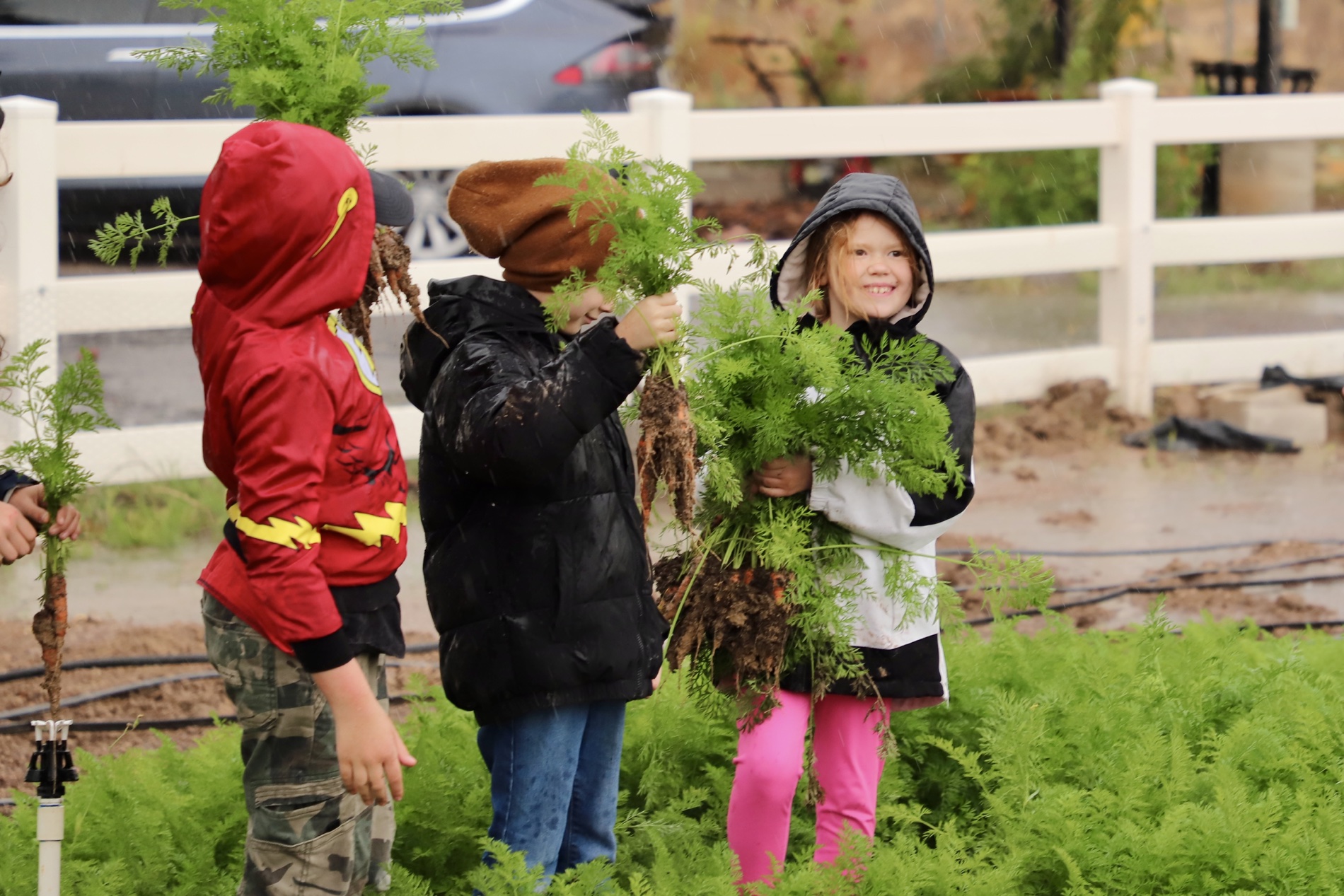
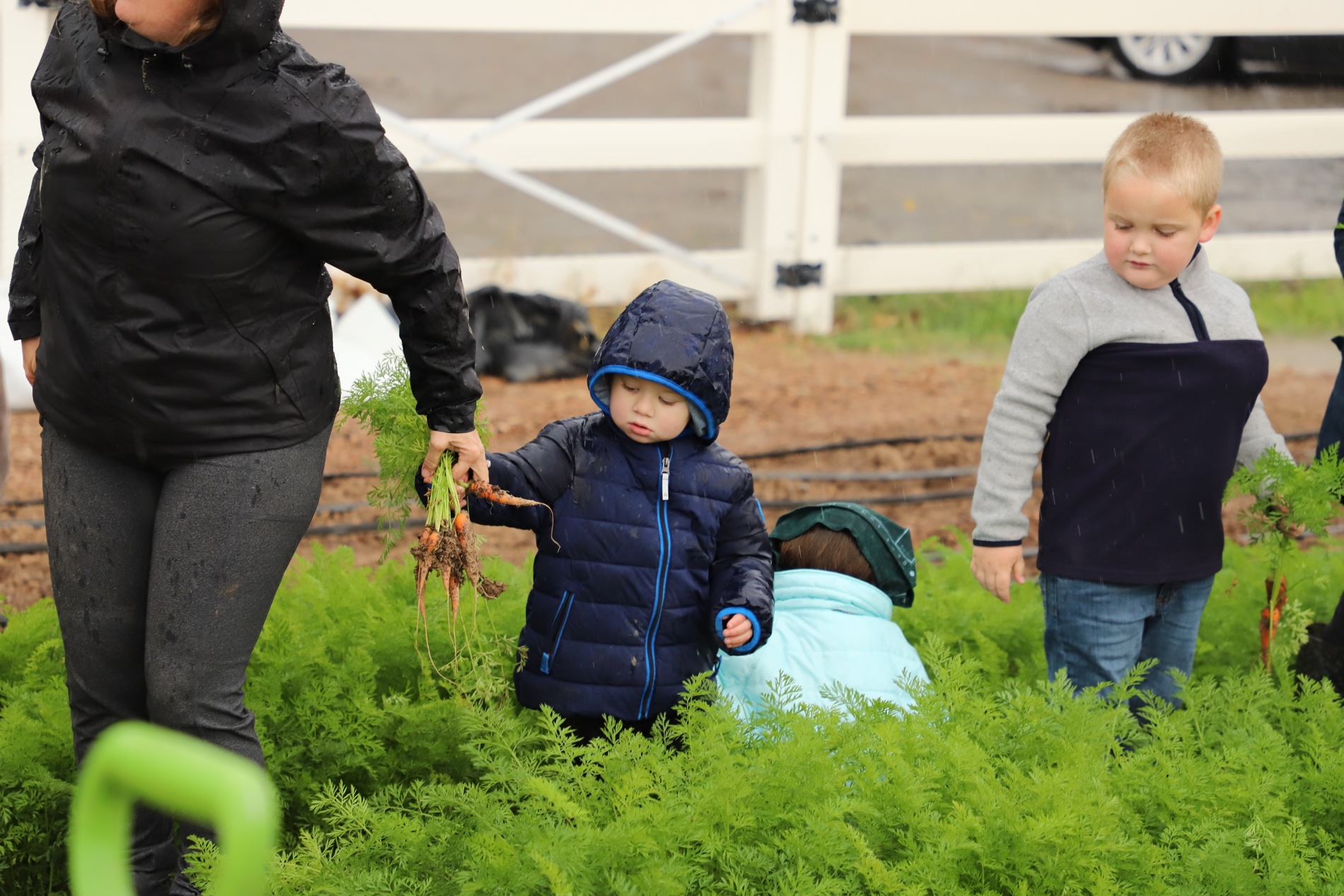
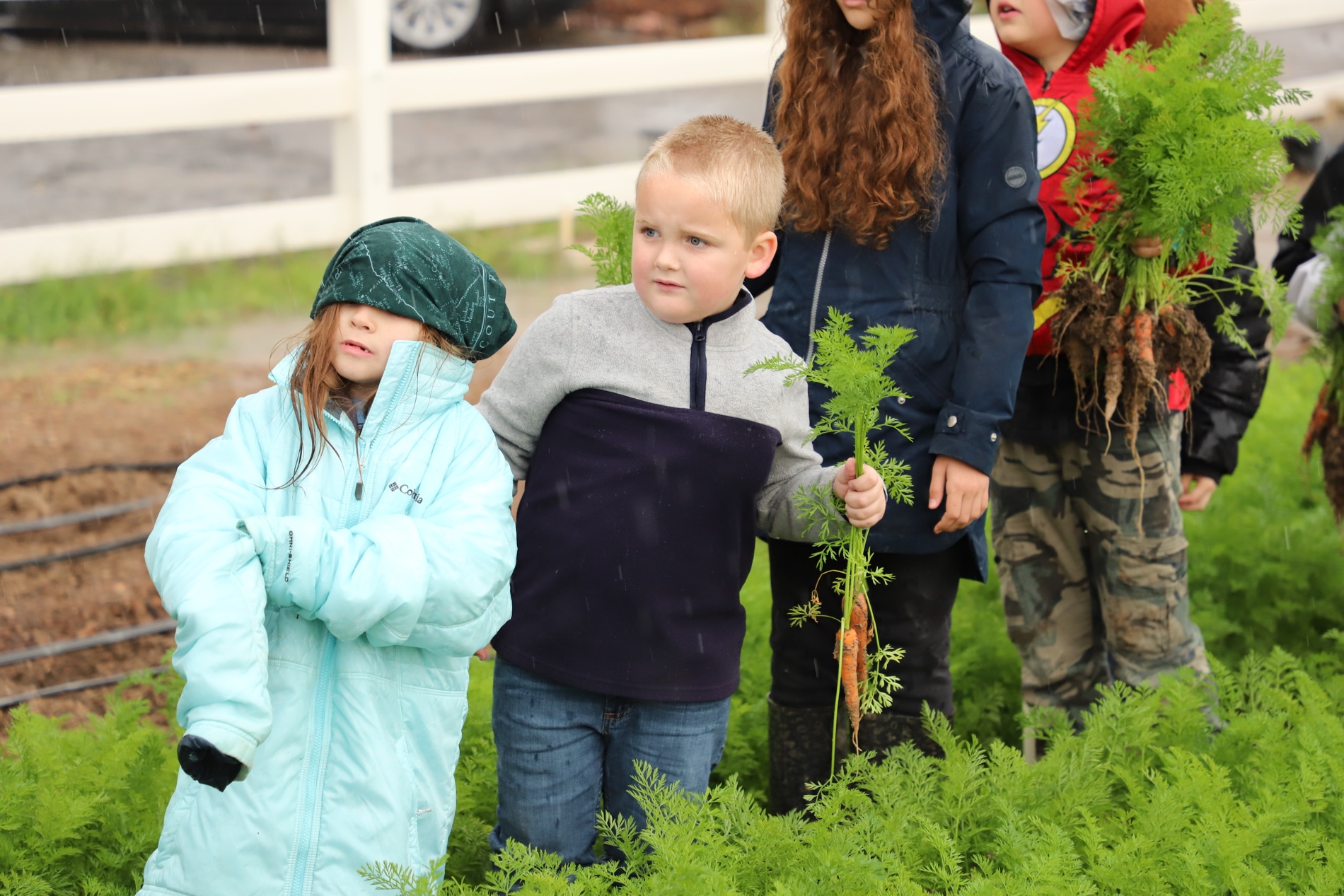
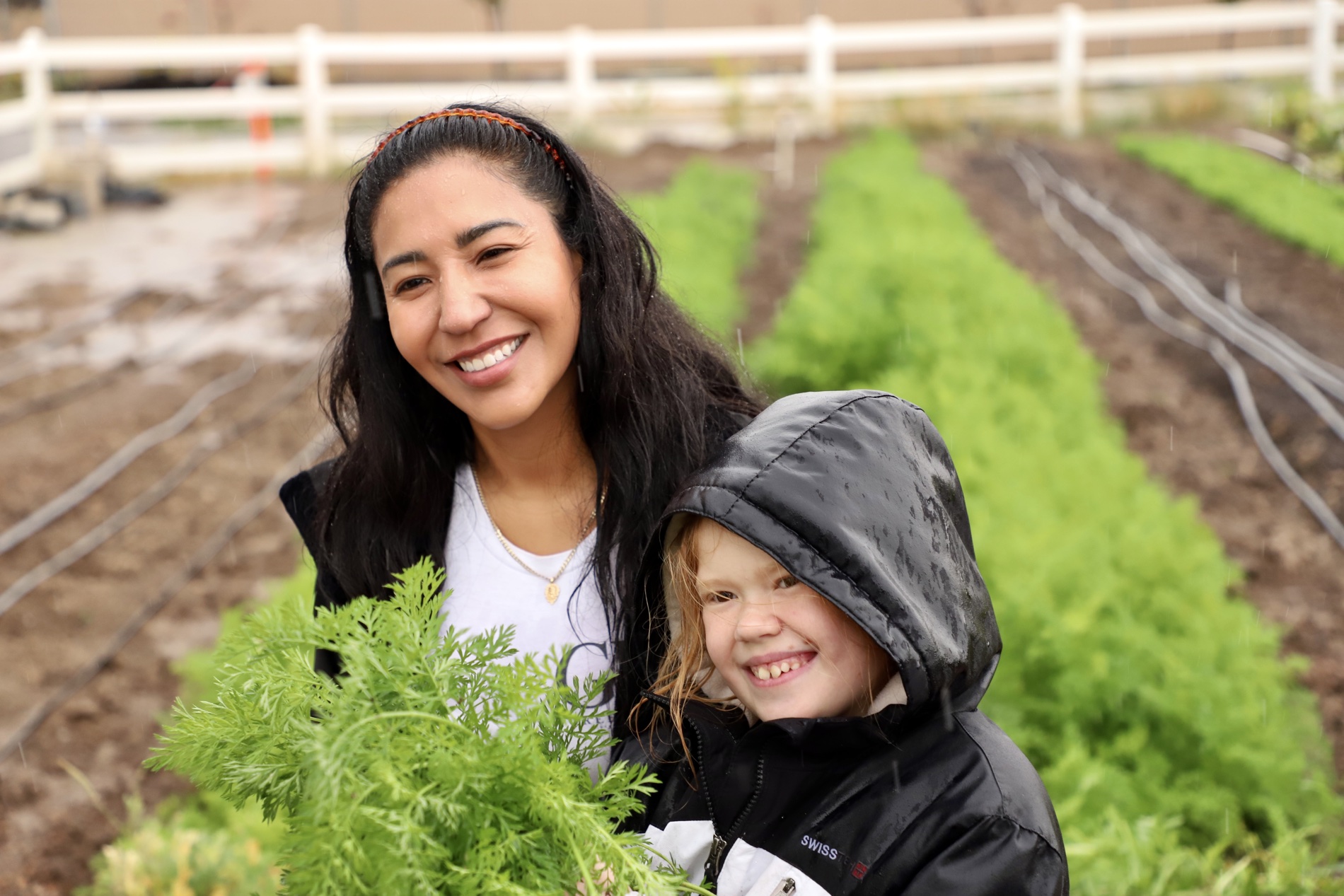
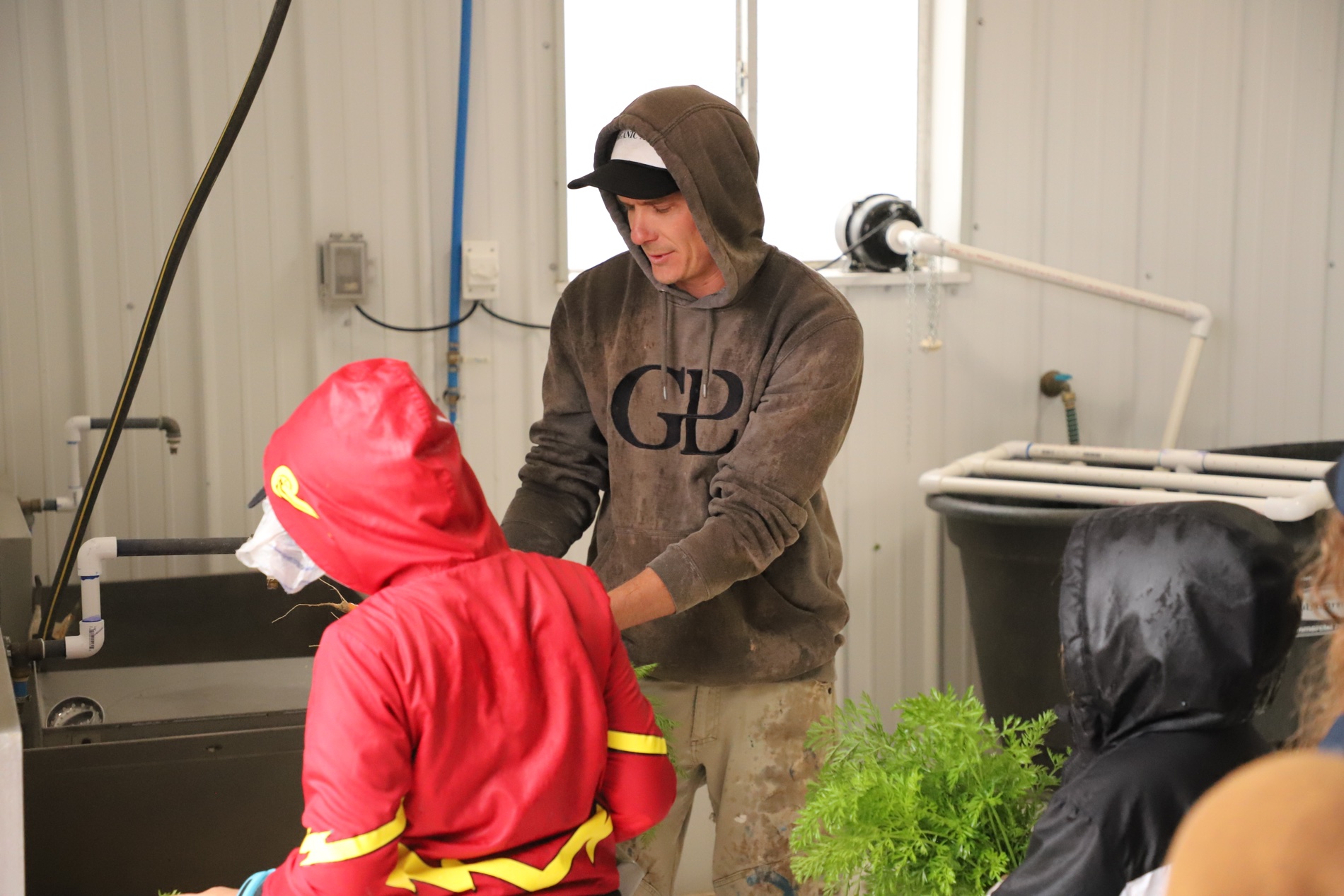
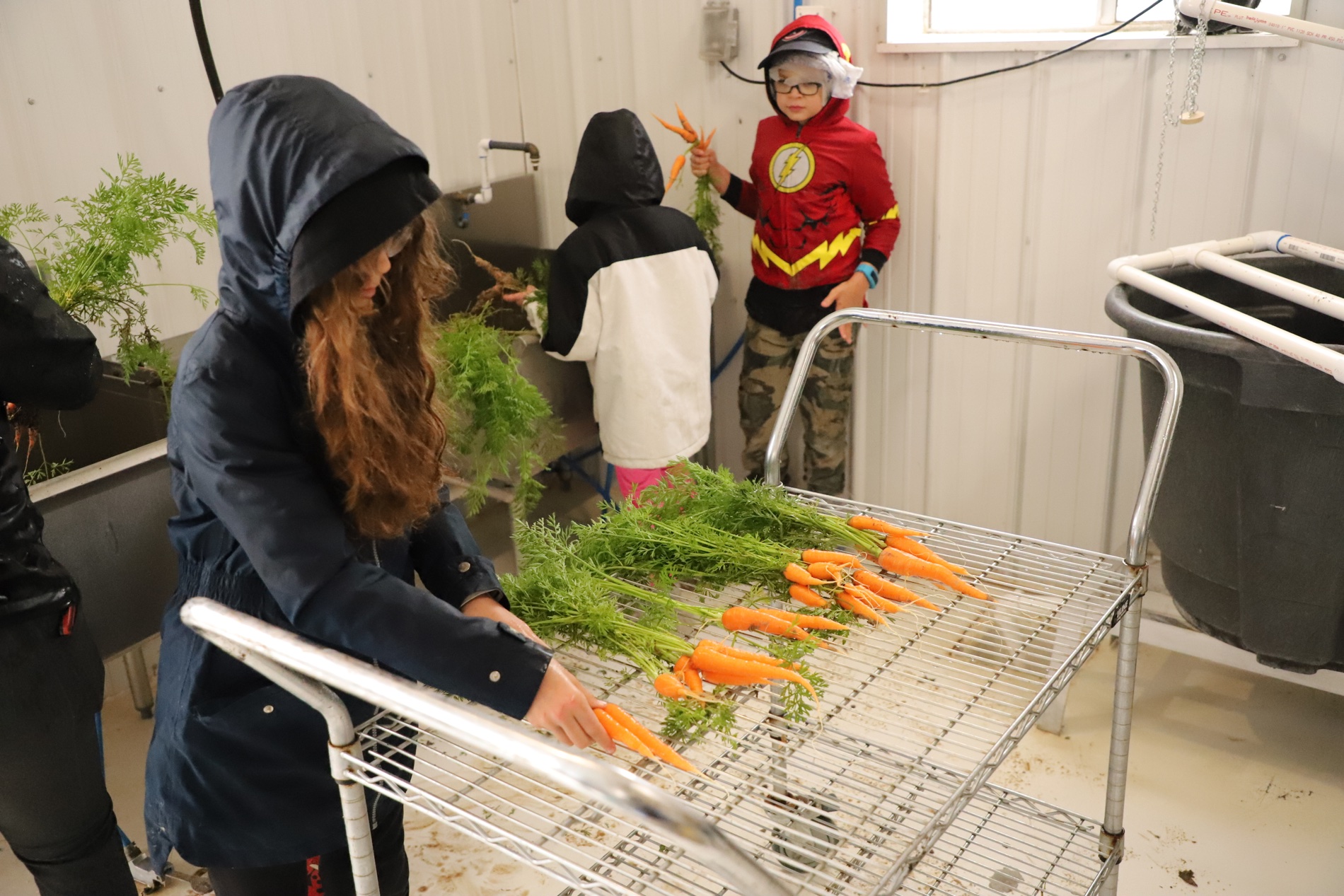
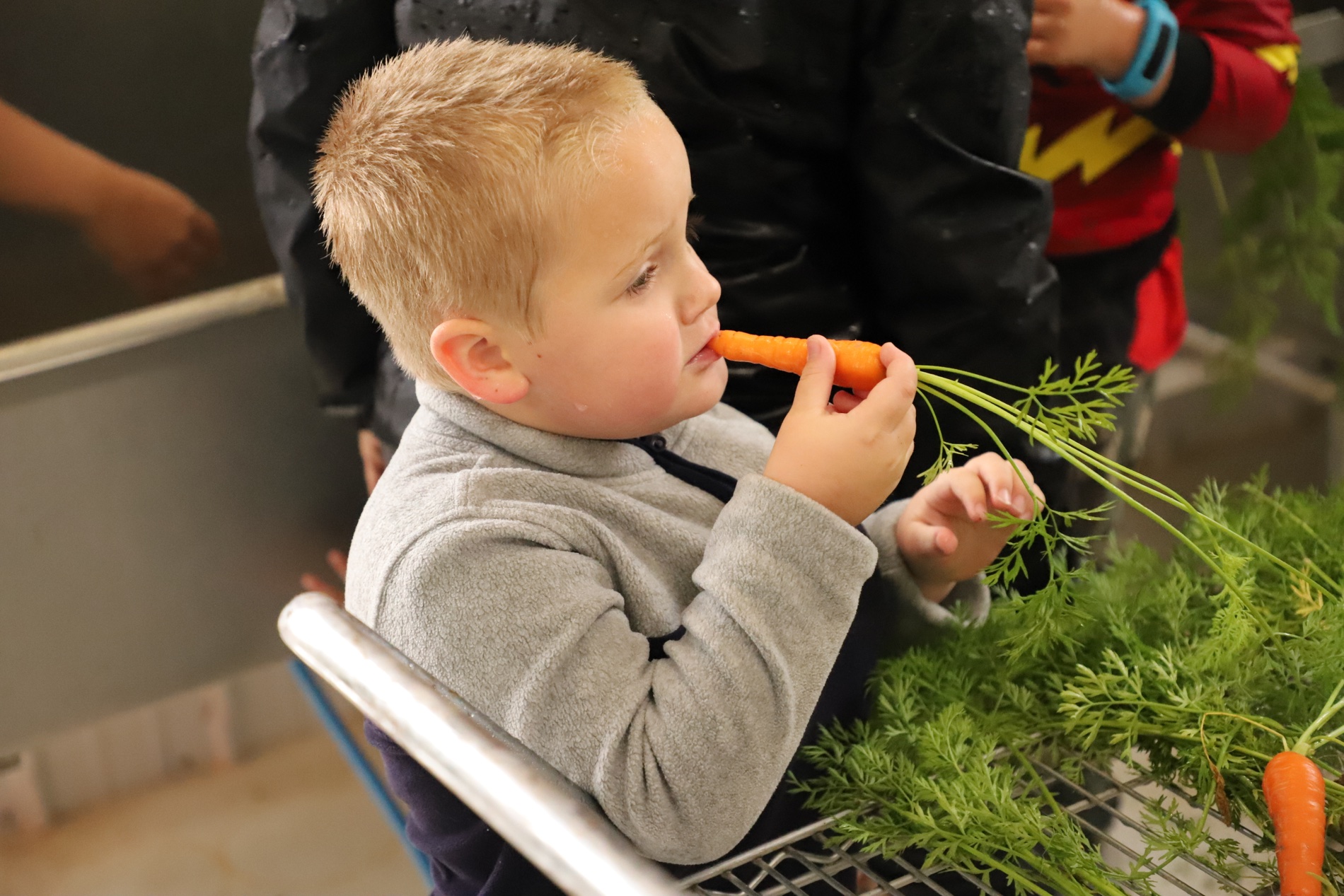
Parents helped little ones rinse vegetables, and students compared their harvests, proudly holding up carrots like trophies. Steve joked that the “master gardener sometimes has to clean up too,” reminding the kids that farming, while fun, is also physical work.
The tour moved to the greenhouse area next, where families could see the controlled environment that allows the farm to grow crops efficiently year-round. Students asked thoughtful questions about lighting, composting, and regenerative practices. When asked how they fertilize the greenhouse crops, the guide explained that even there, the philosophy remains the same: feed the soil, not the plant.
Throughout the tour, Jamie and Mkenzie watched their group with pride. “This is exactly what we wanted for them,” Mkenzie said. “Learning outside the textbook, seeing creation in action, and understanding how things grow. They’ll go home and write about this, and they’ll present to the group. It sticks with them so much more when they see it.”
Jamie agreed. “Homeschooling gives us the freedom to learn this way—boots on the ground, hands in the dirt, even in the rain. This is the kind of day they’ll remember.”
After nearly two hours on the farm, the students left carrying muddy boots, armfuls of carrots, and an entirely new understanding of the world beneath the soil. For Green Life Produce, the visit was a reminder of why local agriculture matters. For the Pahrump Valley Christian Homeschoolers, it was an unforgettable lesson in science, stewardship, and the miracle of living soil.
And as one student declared while holding up a freshly washed carrot: “This is the best field trip ever.”

