


A growing movement is taking shape in Pahrump—one built on collaboration, shared purpose and a deep commitment to those who have served. Spearheaded by American Legion Post 22 Commander Melinda Mills, local veterans organizations are coming together with a unified goal: to establish a dedicated Veterans Center in the community, a place that would provide resources, connection and support for veterans and their families.
For Mills, the idea didn’t begin overnight. The conversation has been years in the making, first sparked by discussions with leaders from organizations such as the Disabled American Veterans (DAV) and others who recognized a common need. While those early talks eventually paused, the concept never disappeared. Recently, it was reignited by members of the American Legion who expressed a simple but powerful desire—to have a place of their own.
Currently, many veteran groups in Pahrump operate independently, meeting in different locations across the valley. The American Legion meets at the Elks Lodge, while other organizations like the DAV and Marine Corps League have their own smaller spaces. Though these arrangements serve a purpose, Mills explained that they lack a sense of unity and shared identity.
Her vision is to bring those groups together under one roof.
“They all kind of said, ‘We’d like to have some place that we can say is for veterans,’” Mills shared, describing conversations with multiple organizations. “It is time for us to work together instead of being separate.”
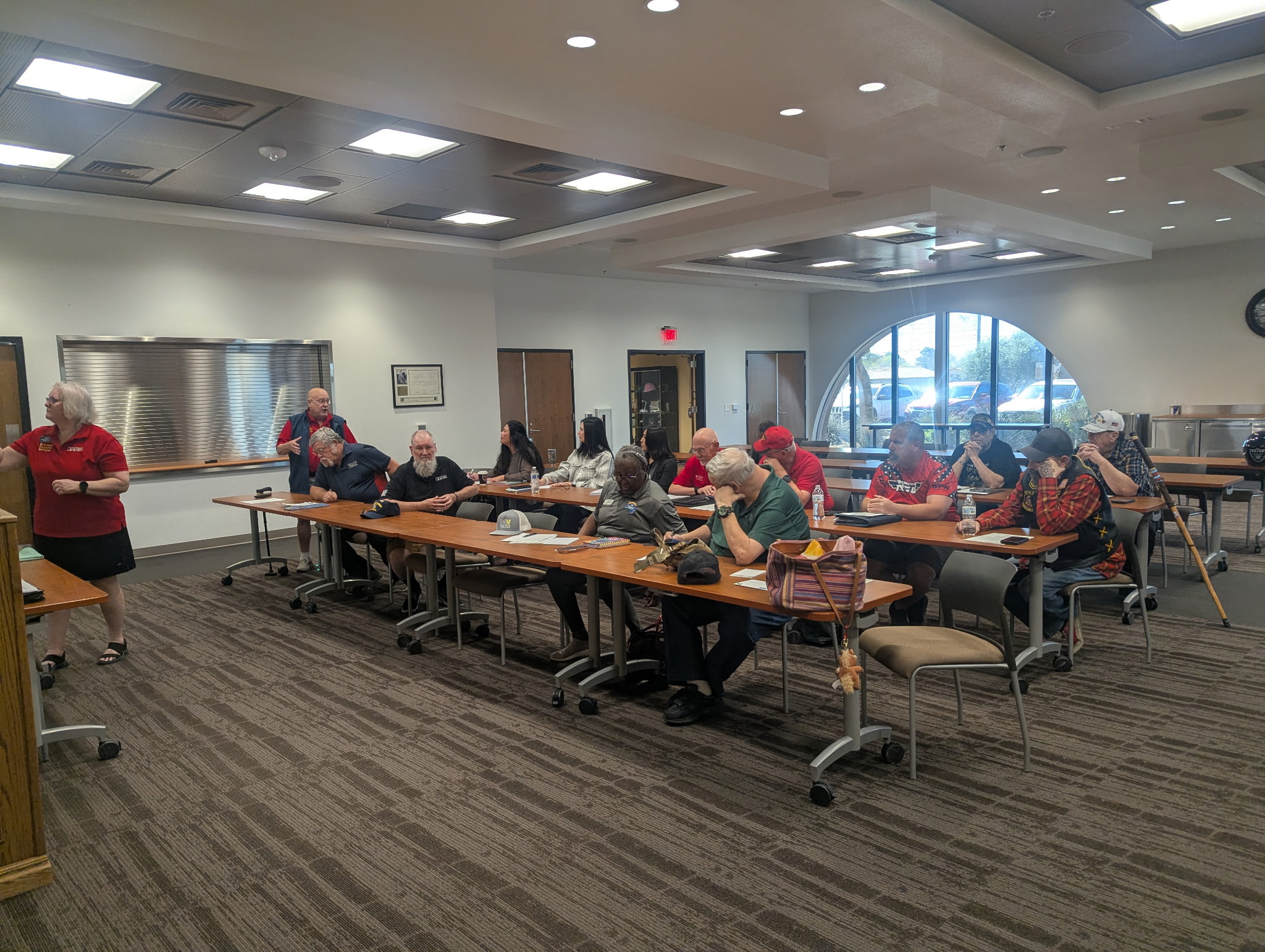
That idea led to a coordinated effort to begin formal discussions. Mills reached out to leaders from the DAV, Marine Corps League Detachment 1199, Veterans of Foreign Wars (VFW) and others, along with representatives from the Veterans Finance Committee. With their support, she organized an initial meeting at Valley Electric Association, held on March 13, intentionally choosing a neutral location where no single organization would feel ownership over the conversation.
Approximately 20 to 25 people attended that first meeting, including a representative from a Las Vegas-based Vet Center and a VA counselor who Mills described as “a wealth of information.” For two hours, attendees shared ideas, concerns and possibilities, all centered on one question: how can the community better serve its veterans?
Organizations represented in the effort include Disabled American Veterans Chapter 15, Marine Corps League Abbey Gate 13-1199, Marine Corps League Department of Nevada, Veterans of Foreign Wars Post 10054, VFW Auxiliary 10054, Sons of the American Legion Squadron 22, Nye Communities Coalition, Vet Center Las Vegas and VA Suicide Prevention, among others—highlighting the broad support and shared interest across multiple groups.
What emerged was a shared vision for a Veterans Center that would go far beyond simply providing a meeting space.
The proposed facility would serve as a centralized hub where veterans—whether newly arrived in Pahrump or longtime residents—could walk in and immediately access guidance and support. It could include administrative offices, meeting rooms, counseling spaces and a kitchen for meals and fundraising events. Organizers also discussed practical considerations, such as ensuring adequate parking for large gatherings and establishing clear house rules and operational guidelines.
Beyond logistics, the deeper purpose of the center is connection.
Mills emphasized the importance of improving communication between organizations and ensuring veterans know where to turn when they need help. The goal is to create a place where someone can walk through the door and simply say, “I need help,” and be guided to the right resources.
The discussions also highlighted several specific needs within the veteran community. One is the growing population of women veterans, prompting conversations about creating dedicated support groups. Another is the need for consistent monthly meetings and better use of communication tools, including social media and community outreach.
There was also a strong focus on supporting veterans experiencing homelessness. While the proposed center would not serve as housing, it could provide essential services to help individuals take steps forward—access to showers, laundry, and connections to resources designed to help them transition off the streets.
Mills and other attendees also shared information about crisis support options available to veterans, including the 988 hotline, which offers a direct connection to the Veterans Crisis Line, and a newer VA resource specifically for homeless veterans seeking assistance.
The concept, while ambitious, is still in its early stages.
Funding remains one of the biggest questions moving forward. Mills acknowledged that the project would likely rely on grants to get off the ground, along with ongoing fundraising efforts, donations and support from participating organizations. Conversations have already begun with individuals experienced in grant writing, but the path forward will depend heavily on community backing and potential support from local and state representatives.
“It would be a community effort,” Mills said. “The bottom line is how we can take care of our veterans today, the new people coming into town, along with our future.”
Despite the challenges, the response so far has been largely positive. While not every attendee supported the idea of constructing a new facility, the overwhelming majority expressed enthusiasm for continuing the conversation and exploring the possibilities.
Interest in the project is already extending beyond Pahrump. Mills noted that representatives from other American Legion posts, including some from outside the area, have expressed interest in attending future meetings and supporting the initiative. Even organizations like the Purple Heart Association have reached out, eager to be part of a unified space where all veterans groups can be represented.
The model they are looking toward isn’t unprecedented. Mills pointed to nearby Mesquite, where multiple veterans organizations successfully share a single building, each maintaining its identity while benefiting from shared resources and collaboration.
That same spirit of unity is at the heart of Pahrump’s effort.
“This is in its infancy,” Mills said. “But if we can pull our resources together, share information and work together, we can make something that really supports our veterans.”
The next opportunity for the community to get involved will be Thursday, April 10, at 10 a.m. at the Valley Electric conference room. The meeting is open to the public, and Mills encourages anyone interested—whether a veteran, family member or community supporter—to attend and be part of the conversation.
The upcoming meeting will begin with a meet and greet, followed by an opening discussion focused on the future Veterans Community Center. Hosted by American Legion Post 22 Pahrump and facilitated by Mills, the gathering is designed to bring together community members interested in improving the lives of veterans. Organizers hope to continue building momentum toward creating a central, one-stop information hub dedicated to serving current and future veterans and their families in Pahrump.
According to the meeting outline, attendees will have the opportunity to continue the conversation by sharing ideas and suggestions, discuss how a Veterans Community Center could benefit the community for generations to come, and work toward strengthening communication and support networks for veterans and their families. Additional meetings are already scheduled for June 12 and July 10, continuing the effort to turn the vision into reality.
As the effort continues to gain momentum, one thing is clear: this is more than just a proposal for a building. It is a community-driven initiative aimed at ensuring that every veteran in Pahrump feels seen, supported and connected.
And for Mills, that mission is worth every step forward.

