



For many high school students, the jump from the classroom to the workforce can feel intimidating. A first job comes with interviews, schedules, expectations, communication, professionalism and the reality of learning how a workplace functions. Through the Nye County School District’s Work-Based Learning program, local students are getting the chance to take that step with support behind them, and in doing so, they are building confidence, gaining practical skills and, in some cases, rethinking what their future could look like.
The program, being implemented in Nye County School District for the first time this school year, was made possible through funding championed by Nevada Senator Catherine Cortez Masto. At its core, the initiative is designed to place high school students in local businesses tied to their interests, whether they plan to attend a four-year college, trade school or enter the workforce directly after graduation.
Tom Sawyer, Work-Based Learning Grant Site Representative for Nye County School District, said the program is designed for a wide range of students and aims to connect them with real opportunities in the community. He explained that it “puts local students, high school students into local businesses of their interest,” and said it can benefit students headed toward college, trade school or straight into the workforce.
Students in the program are paid $13 an hour, while the grant also covers workers’ compensation, easing the burden for participating employers. Sawyer said that has helped make businesses more willing to get involved, while still ensuring appropriate safeguards are in place. The district requires participating businesses to complete an Federal Bureau of Investigation background check for student safety, and students themselves must demonstrate acceptable attendance and GPA before being placed.
At the time of Sawyer’s interview, 33 students had already been placed, with several more expected to start soon. Some employers have taken on multiple students, including Spring Mountain Motor Resort and Country Club, which agreed to host 10, and Valley Electric Association, which brought in four. Sawyer said the response from local businesses has been encouraging, adding, “All the businesses have been really excited about working with the students.”
What makes the program especially meaningful is that it goes far beyond job shadowing. Students are applying, interviewing, completing paperwork, following schedules and receiving evaluations. For many, it is their first real job, and Sawyer said that alone is a major learning experience. “Just that in and of itself is quite a learning experience,” he said, referring to learning what it is like to have a first job, go through the interview process and understand workplace expectations.
At Spring Mountain, the program has been embraced as a genuine investment in local youth. Human Resources Director Tim Wigchers said the resort’s relationship with the community helped make participation a natural fit. He noted that Spring Mountain had already supported local students in other ways, particularly through the automotive technology program at Pahrump Valley High School, and when the opportunity came to join the Work-Based Learning effort, the company was ready to help.
Spring Mountain ultimately brought in 10 students across seven departments, including retail, school support, maintenance, karting and track safety, accounting and kitchen operations. Wigchers said the company wanted to create opportunities where students could do meaningful work and gain authentic experience rather than simply observe from the sidelines.
He said one of the biggest takeaways for students is learning the basic expectations of employment. “How to be an employee,” he said. “How to stay off your phone. How to show up as scheduled. How to ask questions instead of, ‘What do I do now?’” For Wigchers, those lessons matter just as much as any technical skill.
That same philosophy extends to how Spring Mountain treats the students once they arrive. “We want this to be as close to the real work experience as possible,” he said. “It’s not a job shadow. I’m here to watch for two hours on what’s going on. It’s a multi-week job… until the end of the school year.” Students are expected to follow procedures, be accountable and meet workplace standards, just as any employee would.
Victor Resendiz, COO at Spring Mountain, said businesses considering joining a program like this should avoid lowering expectations simply because the participants are high school students. “Treat them as an adult,” he said. “As any employee walking through the door and asking for a job. Don’t change the processes, don’t treat them differently. I think that’s a disservice.”
He also sees the value extending well beyond one business. “You’re training future employees for yourself or possibly for another business in town,” he said. “Even if they learn one skill as to how to show up to work on time,” that lesson can stay with them.
Maintenance Director Tim Darling has seen that growth more directly. Working with students in Spring Mountain’s maintenance area, he said the feedback from his team has been consistently positive. “They show up, they work,” he said. “Both of them are outstanding kids, they work hard.”
One moment that stood out to him involved the students helping build signs for the track. Darling said the employee supervising them left them to handle the task, and they successfully measured and cut the materials on their own. “They took that initiative and did the work without being watched,” he said. “I think that’s a very good thing.”
Darling acknowledged that students sometimes need guidance, especially when learning initiative in a workplace setting, but he sees that as part of the value of the program. “It’s not always about the skill,” he said. “It’s more about the work ethic. If you have good work ethic, people will be willing to teach you.”
That same spirit of investment and encouragement can be seen at FD Candy, where the company viewed the Work-Based Learning program as a natural extension of its community involvement. Colin McCarthy said the business has long looked for creative ways to connect with students, including live presentations at Career Days where they demonstrated freeze-drying and taught students about the science of sublimation.
When approached about joining the Work-Based Learning program, the company was eager to participate. McCarthy said it offered “a unique opportunity to engage with the next generation of young professionals and entrepreneurs entering the workforce.”
At FD Candy, students get exposure to a wide range of responsibilities, from sanitation and food safety to production, packaging, sales, public speaking and product development. McCarthy said the company hopes students walk away with more than technical knowledge.
“We hope our students embrace the generous, creative and ambitious spirit that makes up our company culture,” he said. “We hope that our students can learn that they themselves have what it takes to create, succeed and prosper with their own small business if they believe in themselves and continue to bet on themselves.”
One of the most meaningful parts of the experience, he said, has been watching students grow in confidence. “A student who may have shown up shy and unsure now carries themselves in a much different way,” McCarthy said. “Sometimes all it takes to believe in yourself is for someone to believe in you first.”
At Valley Electric Association, the program fits naturally into a culture that already values internships and mentorship. Director of Corporate Affairs and Community Relations Amy Carlson said the cooperative was motivated by “a desire to support our local community and help prepare students for life after high school.”
Manager of Member Services Trisha Duhart said the opportunity aligned closely with Valley’s mission. “Our cooperative puts its membership and community first,” she said. “I found this a great opportunity to not only mentor high school students who will be entering the workforce but also to better our community by helping develop the next generation of skilled, confident individuals.”
Valley currently has four students participating through the program, with the possibility of taking on more. Students begin by shadowing within their departments, then move into hands-on tasks while learning from supervisors and department leads. Duhart said one of the biggest skills students gain is communication. “Communication is key for everything,” she said, adding that students are learning how to interact professionally with both coworkers and members.
Carlson said the current group has adapted quickly and taken on important responsibilities. “They all have come in with a strong sense of curiosity and a drive to learn,” she said. “They have taken on any task that we have asked them to do, and with great attitudes.”
One student success story stood out in particular for Duhart. She recalled a student who said during the interview that he wanted to become less shy and improve his communication skills. After being assigned to call members connected to Valley’s fiber-to-the-home project, she saw real growth. “He was extremely shy at first,” she said, “but over the course of a month, they really blossomed and is now one of the best when it comes to interacting with our membership.”
For Valley, the benefits go both ways. “The value it brings to your business and the community is undeniable,” Duhart said. Carlson agreed, adding, “You never know if one of them might be your next star employee.”
The students themselves describe the program in ways that make its impact even clearer.
For Nereyda Gonzalez, who works with the go-karts at Spring Mountain, the experience has been both exciting and eye-opening. “It’s honestly been amazing,” she said. “Right after school, I just go straight to work, and I’ve just been learning from there.”

Gonzalez said the job has already started to influence how she sees her future. She had been considering becoming a correctional officer, but now sees another possibility. “Spring Mountain is showing me a different path,” she said. “So maybe I’ll continue doing Spring Mountain after I graduate.”
She also spoke warmly about the environment there. “Everyone there is nice, so it’s going pretty good,” she said.
Like many students in the program, Gonzalez still remembers the excitement of receiving her first paycheck. “Oh my God. It was amazing,” she said. “The first thing I did was take my mom out to eat.” In one simple moment, the program gave her not only a job, but also a sense of pride and independence.
Jairo Bravo, a junior working at Valley Electric Association, described his first job experience as both challenging and rewarding. He currently helps schedule customers for meter exchanges and said the work environment has made a strong impression on him. “It’s been great,” he said. “People have been really nice and everything. Welcoming as well.”
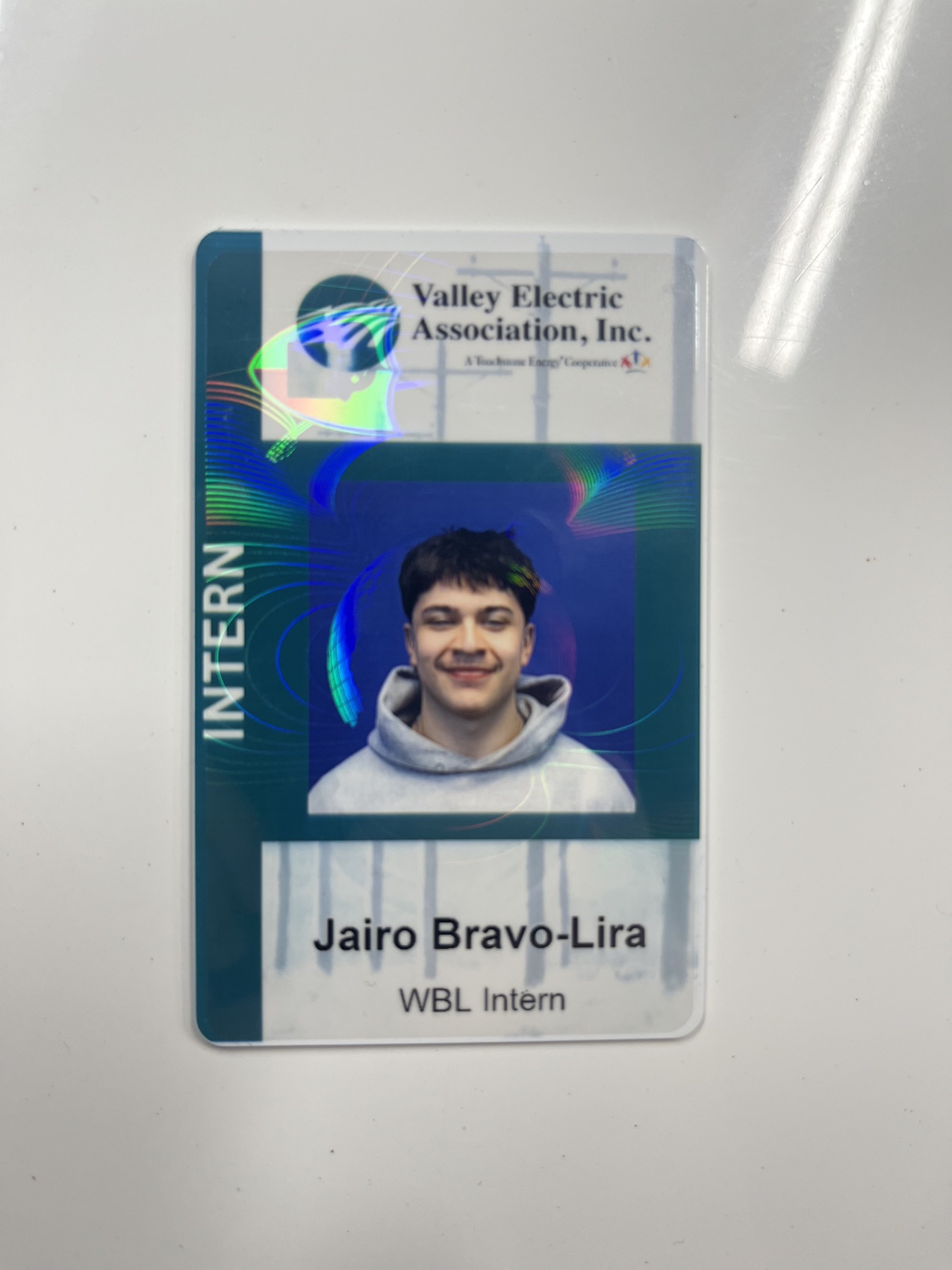
Bravo said learning the technology involved in the job was one of the hardest parts at first, and interacting with the public has brought its own lessons. “You can’t be rude or anything like that,” he said. “So you have to just do the best that you can with what you have.”
He already knows he wants to become an electrician, making the Valley placement especially valuable. “This is kind of a foot in the door with Valley Electric,” he said of the opportunity.
When asked what his first paycheck felt like, Bravo smiled at the memory. “It was rewarding,” he said. “I was happy. I was excited. It just felt good to have my own money and work for it.”
His advice to other students looking for their first job was grounded in experience. “Just be patient,” he said. “There’s going to be a lot of rejections out there.” For him, the Work-Based Learning program helped open a door that had previously been hard to unlock.
At the public library, twin sisters Miriam Jensen and Audrey Jensen are gaining a very different type of workplace experience, but one that is still shaping them in meaningful ways.
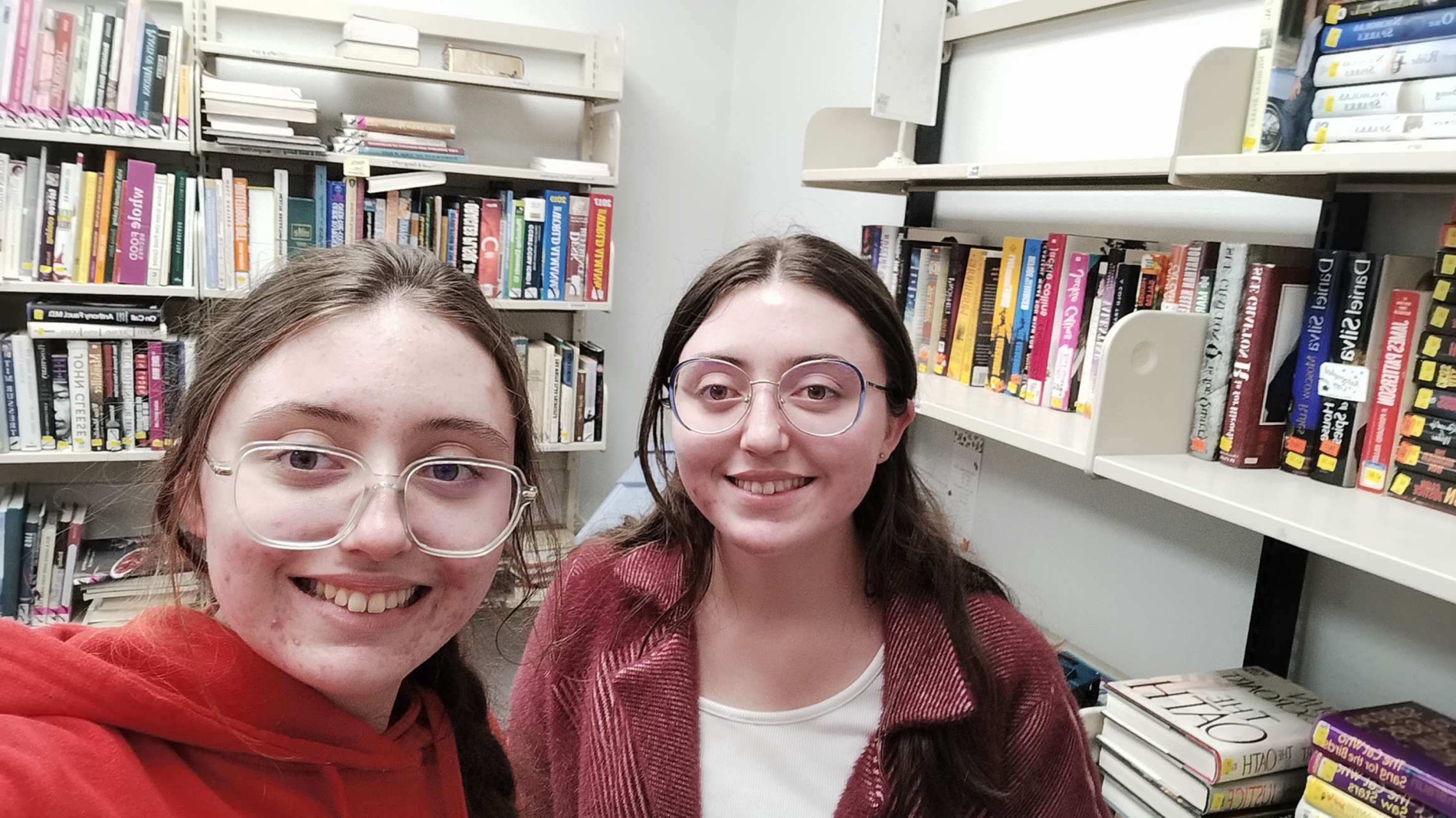
Miriam Jensen said her duties include shelving books, helping with children, assisting customers and keeping things tidy. Though her long-term goal is to attend trade school and become a chef, possibly a pastry chef, she said the position still connects with her interests. “I’ve always loved reading,” she said. “I just love being creative and stuff, so it definitely interests me.”
She said the job has taught her more than she expected, including how libraries function behind the scenes. “I’ve definitely learned more about what it takes to be a librarian,” she said. “I’ve learned how to use the Dewey Decimal System.”
Her advice to other students was practical and thoughtful: “Get some letters of recommendation,” she said. She also encouraged students to be open, communicate with coworkers and be ready to ask for help.
Like the others, Miriam said that first paycheck meant a lot. “It was really exciting,” she said. “I just started driving, so it was super nice to not have to worry about where I was going to get the money.”
Audrey Jensen, who also works at the library, said her duties include shelving books, helping direct visitors and assisting people in finding books they may enjoy. Although she currently plans to become a scientist, she said the job still fits well with her personal interests. “As of right now, I do really like reading, so it goes along with my hobbies,” she said.
She said one of the biggest things she has learned is how to interact with people more confidently. “Through the job, I’ve learned how to talk to people really,” she said, adding that she has also learned how to use workplace computer systems and work alongside colleagues.
One of the harder parts, she admitted, is when someone needs help and she does not yet know the answer. Still, that too has become part of the learning process.
Her advice to others was simple but important: “Do something that they like,” she said. “If you don’t, then you’re gonna be dreading your future.”
Receiving her first paycheck, she said, felt “very rewarding” because it reflected both her effort and the fact that she was being paid for doing something she enjoyed.
For Aydon Veloz, the Work-Based Learning program has provided valuable clarity. Working at Family Chiropractic under Dr. Kim Farrell, he began in the front office checking in patients and learning the flow of the practice before moving into the treatment area, where he now helps with heat pads, electrical muscle stimulation and patient preparation.
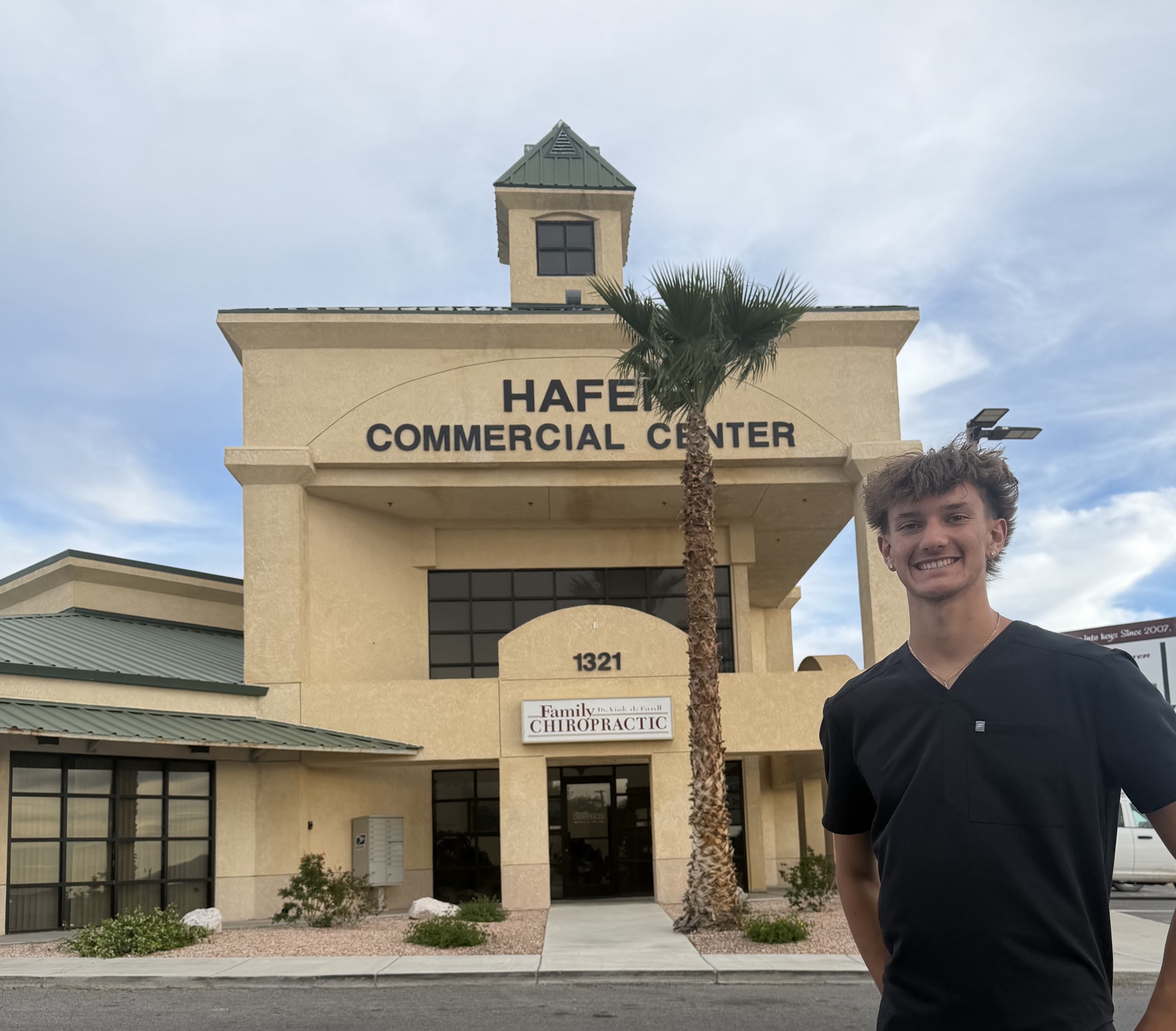
Veloz said the experience has helped confirm that he wants to pursue a future in the medical field. “It’s helped me realize, like, this is something I want to do in the future,” he said.
He has also gained technical knowledge along the way. “I’ve learned different muscles, the way they move throughout the body, how you’re supposed to move with the muscle and not against it,” he said. “I’ve learned about different patterns and how to set up EMS machines, heating, icing, and just how the body works in itself.”
After high school, Veloz plans to attend the University of Nevada, Reno to study kinesiology, with hopes of eventually becoming a physical therapist or physician assistant.
His advice to other students was to use opportunities like this to explore. “Don’t be afraid,” he said. “It’s important to explore those things so you don’t come to a road later on where it’s hard to change paths.”
Taken together, the stories from students and employers reveal that the Work-Based Learning program is about much more than filling hours after school. It is about helping students step into adulthood with support, responsibility and room to grow. It is about teaching young people how to show up, communicate, ask questions, solve problems and see themselves as capable contributors in a professional setting.
For businesses, it is an opportunity to invest directly in local youth while strengthening the future workforce. For students, it is a chance to discover interests, gain confidence and earn their own money. For the district, it is a bridge between education and employment, one that can help students feel better prepared for whatever path comes next.
Sawyer said the district hopes the program can continue beyond this first year, and local business partners appear to share that hope. Several employers have already expressed interest in retaining students beyond the current term, whether through summer work, internships or longer-term employment.
While the stories shared here represent just a small snapshot of the students and businesses participating in the Work-Based Learning program, the results have been remarkably consistent across the board. From large employers to small local businesses, and from students still exploring their interests to those already focused on a career path, the same themes continue to emerge—growth, confidence, responsibility and opportunity. In a community where those qualities matter deeply, Nye County School District’s Work-Based Learning program is doing more than connecting students with jobs. It is helping shape futures, one experience at a time, and showing what is possible when a community comes together to invest in its next generation.

